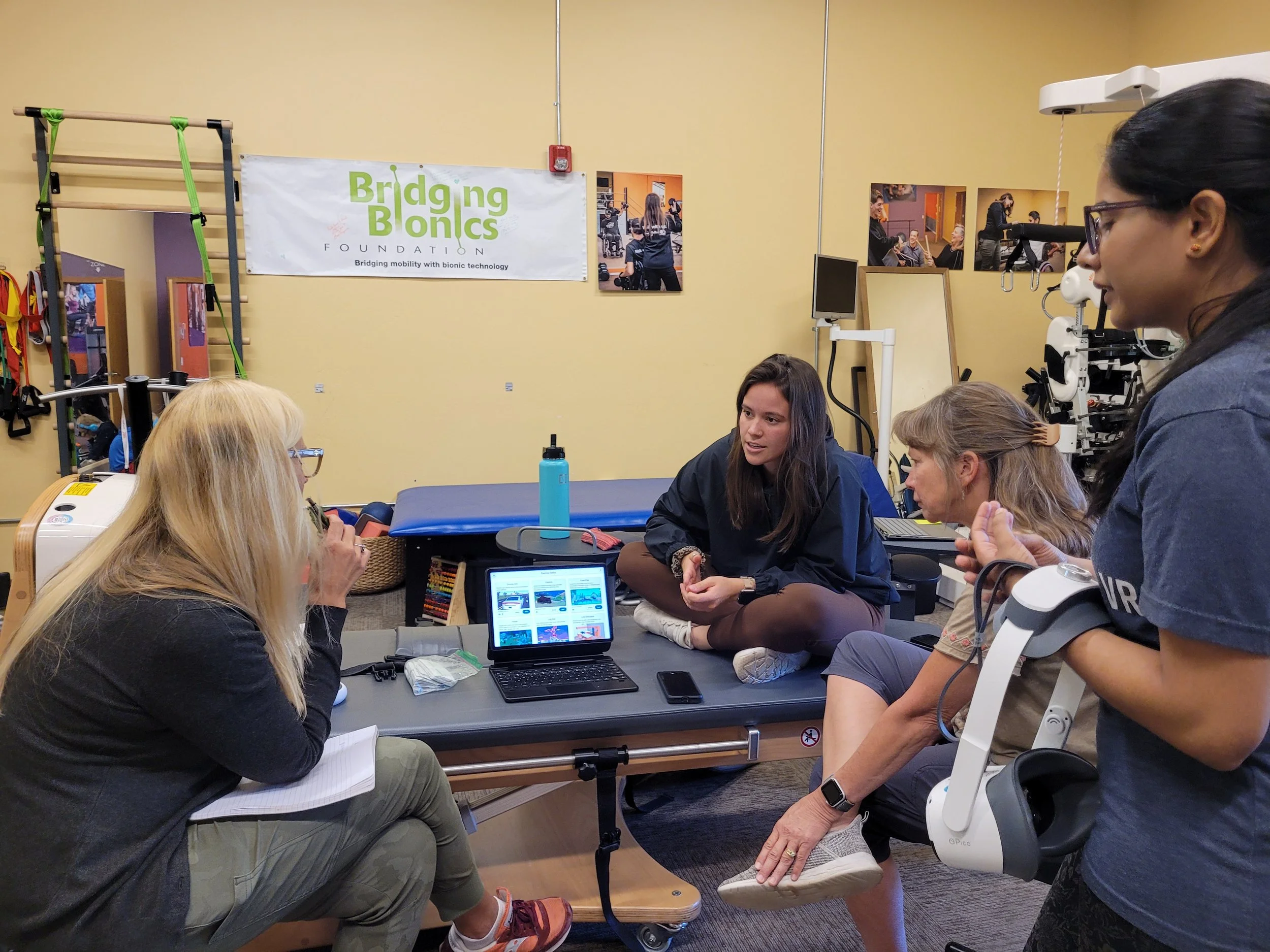
National Rural Health Day falls on Thursday, November 19, and this year marks the 15th anniversary of the observance (North Carolina Department of Health and Human Services).
Since 2011, the National Organization of State Offices of Rural Health has set aside the third Thursday of November to celebrate the "Power of Rural" (National Organization of State Offices of Rural Health), and few people embody that idea better than the rural physical therapists, occupational therapists, and assistants who keep their neighbors moving.
Rural therapists often care for a remarkably wide mix of patients, and they do that work with far less backup than their urban colleagues, since recent national data show that nonmetropolitan areas have roughly half as many physical and occupational therapists per resident as metropolitan areas (Burus and Semprini). Behind those numbers are therapists who feel the weight of every open position, along with patients and families who plan their weeks around the drive to therapy. In honor of the day, we want to look at what that gap means for the people living it, where immersive therapy can help each session go further, and why we are so grateful to the rural teams who make recovery possible close to home.
The Rural Therapist Gap, by the Numbers
The clearest recent picture comes from a June 2026 research letter in the Annals of Internal Medicine, in which Todd Burus of the University of Kentucky and Jason Semprini of Des Moines University analyzed 2019 to 2023 American Community Survey data across 23 patient-facing health care occupations. Nonmetropolitan areas, the category that includes rural communities, were home to 13.8 percent of the U.S. population but only 8.4 percent of the actively employed health care workforce, and they had fewer workers per resident in every one of the 23 occupation groups the researchers examined (Burus and Semprini).
Rehabilitation followed the same pattern, with nonmetropolitan areas having less than half the physical therapist rate of metropolitan areas (a rate ratio of 0.46) and about half the occupational therapist rate (0.50), while physical therapist assistants and aides (0.79) and occupational therapy assistants and aides (0.75) were spread much more evenly (Burus and Semprini). The researchers found that occupations requiring more formal training showed larger gaps than the support roles that work alongside them (Burus and Semprini), which suggests that many rural rehab teams rely on assistants and aides to extend a smaller number of licensed therapists.
Recruiting and keeping therapists in rural communities brings its own set of challenges, and a 2022 article in Physical Therapy, the journal of the American Physical Therapy Association (APTA), explained that therapists may avoid rural practice because of housing, transportation, technology, culture, and gaps in educational preparation (Felter et al.). The authors also described how distance and limited broadband can make it harder for rural therapists to attend continuing education and find mentorship, and they noted that rural areas are more likely to be served by contract therapists, an important but often transient part of the workforce (Felter et al.). For rural rehab managers, keeping care consistent for patients as staff come and go can be a constant balancing act.
What the Gap Means for Patients After a Stroke
Stroke rehabilitation offers one of the clearest views of how therapist supply shapes recovery, and the COMPASS trial gives us an unusually detailed look. In a secondary analysis that linked trial data to insurance claims for 6,754 patients discharged home from North Carolina hospitals after a stroke or transient ischemic attack, people living in rural areas were 5 percent less likely than people in metropolitan areas to receive physical or occupational therapy at home or in an outpatient clinic within 30 days, even after the researchers accounted for each patient's therapy needs (Freburger et al.). Among the people who did receive therapy within 90 days, those living in rural areas were 12 percent less likely to see both a physical therapist and an occupational therapist, a difference the authors said was likely due to therapist supply (Freburger et al.).
The gap shows up before patients even leave the hospital, according to a large national analysis of Medicare beneficiaries with ischemic stroke published in Stroke in 2026. Patients treated at rural hospitals were discharged to inpatient rehabilitation facilities less often than patients at urban hospitals (20.1 percent compared with 25.1 percent) and to skilled nursing facilities more often (24.5 percent compared with 20.9 percent), and rural patients spent less time at home over the following year (Man et al.).
Distance adds another layer to the picture, and research from Texas shows just how far some patients travel for care. Using Medicare claims from 2016 to 2019 along with a phone survey of more than 1,000 potential outpatient rehabilitation sites, researchers at UTHealth Houston found that among stroke survivors who received outpatient rehab, the median travel time was 23 minutes for people in urban counties and 52 minutes for people in rural counties that do not border a metro area, and many rural trips ran well over an hour (Wozny et al.).
For a stroke survivor who can no longer drive, each of those trips can depend on a spouse, an adult child, or a neighbor who is able to step away from work or home, and that is a lot to ask of a family week after week. The types of therapy available close to home matter as well, since among the clinics serving stroke survivors in rural counties that do not border a metro area, 95 percent offered physical therapy but only 36 percent offered occupational therapy (Wozny et al.). That leaves some patients who are relearning how to dress, cook, or manage a household with fewer local options for the help they need to get back to daily life.
The same study raised a point that matters for any conversation about technology in rural care, because nearly 30 percent of the population in rural Texas does not have broadband internet (Wozny et al.). The authors noted that home-based telerehabilitation depends on adequate internet access, and they concluded that until coverage reaches all rural communities, other ways of delivering therapy are needed to support recovery for stroke survivors (Wozny et al.).
Rural Caseloads Are Older, Broader, and More Complex
Rural therapists are also caring for a population that is growing older, since Felter and colleagues point out that the most rapidly aging areas in the United States are rural communities and that 54 of the 56 U.S. counties with the oldest populations are rural (Felter et al.). The same authors note that rural residents have more chronic health conditions, higher rates of disability, and higher fall rates than people living in urban areas (Felter et al.). With fewer specialists nearby, a rural therapist's caseload can span neurological, orthopedic, balance, and cognitive goals in the same week, which asks a great deal of clinicians who are already stretched thin.
Veterans are a big part of that picture, since nearly one quarter of U.S. veterans, about 4.4 million people, live in rural America (National Rural Health Association). For the rehabilitation teams who care for them, whether inside the VA or at community clinics closer to home, service-connected injuries, aging, and long drives to specialty care often come together in a single treatment plan, and every productive session is one more way of honoring the people who served.
Where Immersive Therapy Helps Rural Teams Do More
Closing the rural therapist gap will take sustained investment in the workforce, and in the meantime immersive therapy gives the clinicians already serving rural communities more ways to make every session count. Here are six places where immersive therapy fits the realities of rural practice especially well, along with what the research says wherever it applies.
-
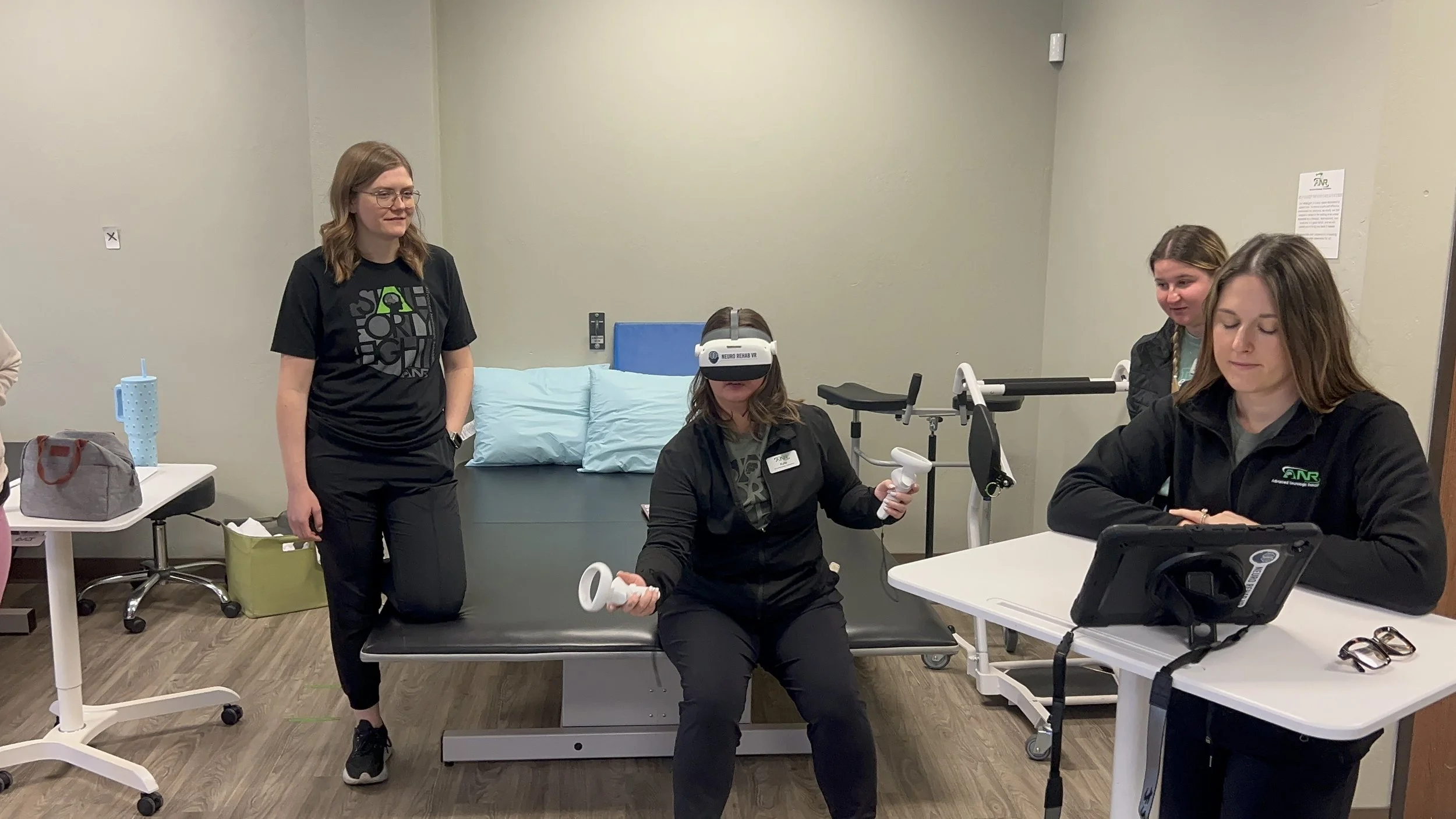
The 2025 Cochrane review of virtual reality for stroke rehabilitation pooled 190 trials with 7,188 participants and found that virtual reality may slightly improve arm function and activity compared with other therapy approaches, with greater benefits when it was added to usual care to increase overall therapy time (Laver et al.). The review also found it may help with balance and activity limitations (Laver et al.), and the Cochrane team described virtual reality as generally safe and well tolerated while pointing to immersive, task-specific programs as an important focus for future studies ("VR Could Be a Promising Tool"). For a rural clinic where therapist time is the most precious resource, an approach whose biggest gains come from adding engaging, purposeful practice deserves a close look.
-
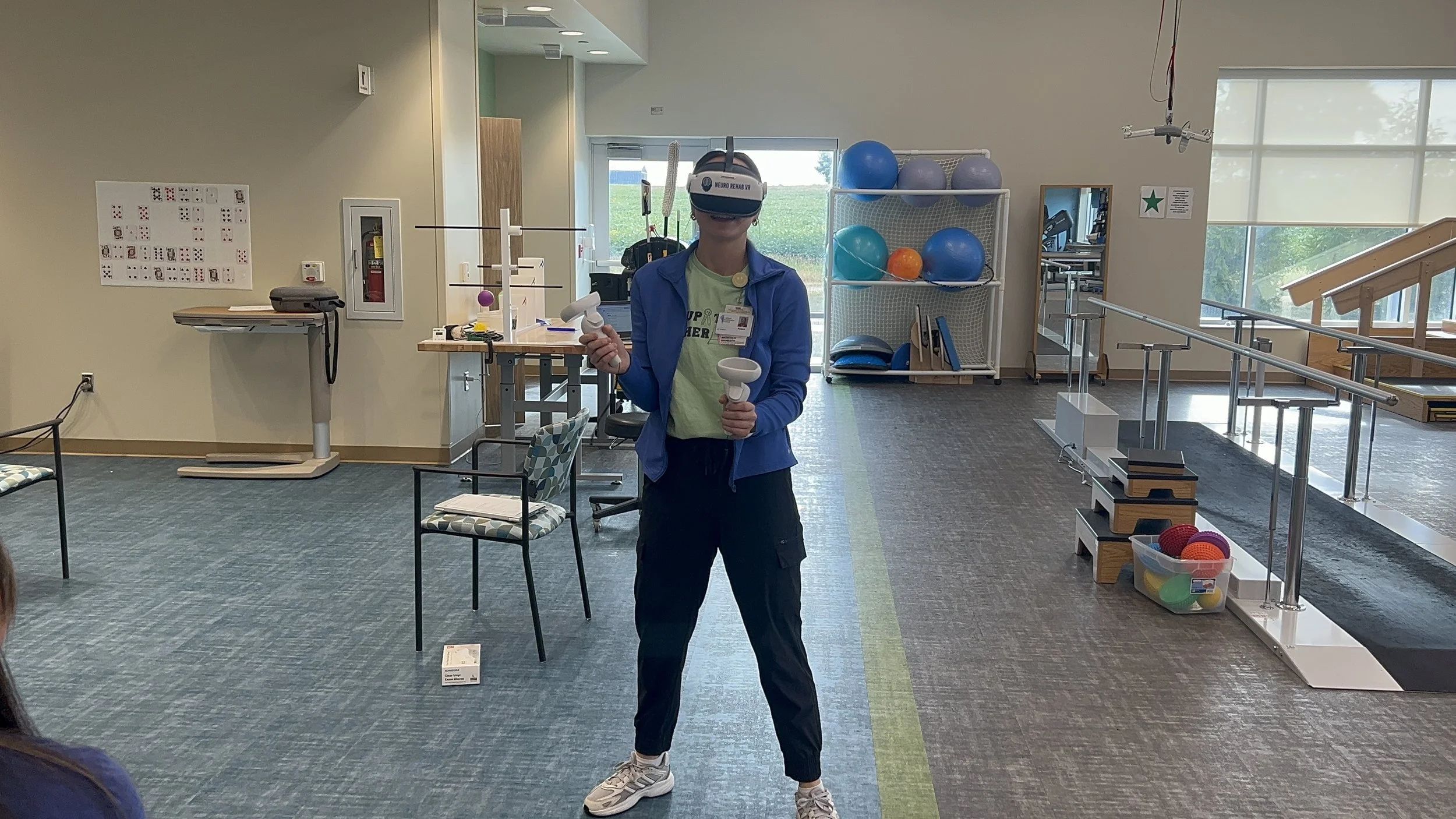
Many rural patients will eventually need to handle a grocery store aisle, a busy parking lot, or a crowded kitchen, and those settings can be hard to recreate in a small therapy gym. Immersive environments let a therapist bring those settings into the clinic, set the level of challenge, and build up difficulty as the patient improves, which is especially valuable for patients who would otherwise need to travel to a larger facility for community reintegration work.
-
Assistants and aides are distributed more evenly between rural and urban areas than licensed therapists are, and rural areas are more likely to be served by contract staff (Burus and Semprini; Felter et al.), so the people delivering care on a rural rehab team can change from week to week. A structured activity library with adjustable difficulty helps those sessions stay aligned with the therapist's plan of care, while the supervising therapist continues to set the goals and decide how quickly each patient progresses.
-
Session data such as range of motion, reaction time, and task performance give a generalist therapist a consistent way to track progress across very different diagnoses. Those numbers are also easy to share with a referring physician or specialist who may be hours away, which helps everyone involved in a patient's care stay on the same page about how recovery is going.
-
APTA's 2025 survey on administrative burden looked at the time and resources therapists spend on documentation and other administrative tasks such as prior authorization, and 90.8 percent of responding providers agreed or strongly agreed that administrative burden contributes to burnout (American Physical Therapy Association). In a rural clinic where losing even one therapist can leave a real gap in local care, documentation support that gives therapists time back can matter for retention as much as it does for efficiency.
-
Because immersive therapy happens in the clinic, a patient's access to it does not depend on home broadband, which matters in places like rural Texas, where nearly 30 percent of the population does not have broadband internet (Wozny et al.). That makes in-clinic immersive therapy a strong complement to telehealth, giving therapists another way to reach patients who can get to a nearby clinic but cannot count on a reliable connection at home.
How Smart Therapy™ Fits Rural Rehabilitation
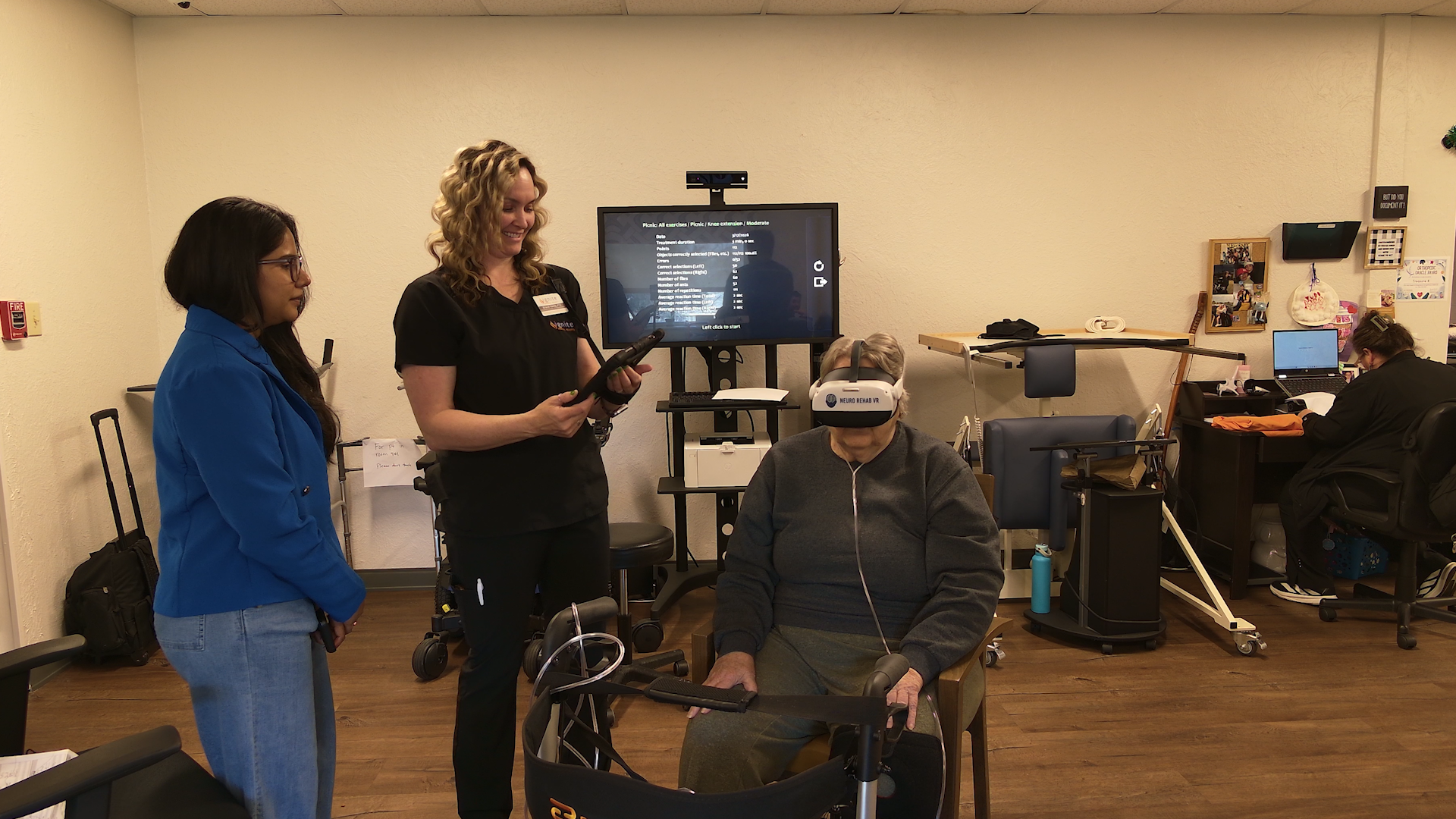
Smart Therapy™ Complete Solution was built inside a working neuro outpatient clinic, and that origin shows in how practical it is for small teams. The system pairs a portable headset with a therapist-controlled tablet, sets up in under 30 seconds without external sensors, and can be run by a single therapist, so a rural clinic can bring immersive therapy into its existing schedule without adding staff or dedicating a separate room. Therapists can start patients seated or at wheelchair level, adjust the challenge in real time from the tablet as strength and confidence grow, and move into the Life Simulator, a suite of everyday scenarios such as laundry, or into activities like a grocery store simulation that asks patients to scan shelves, reach beyond their base of support, and stay on task. Session data and AI-supported documentation help a generalist therapist follow progress across neurological, orthopedic, and cognitive goals while spending less time on notes, and eye tracking on supported headsets adds a clearer view of visual attention and scanning.
All of those tools work best in the hands of a skilled clinician, who chooses which activities fit a patient's goals, watches how each person responds, recognizes the moment a patient is ready for more, and decides when it is time to carry that practice into everyday life. Smart Therapy™ is designed to give that judgment more to work with, so rural therapists can spend more of each visit on the parts of care that only they can provide.
Thank You to the Rural Teams We Work With
Before we name a few of our partners, we want to thank every rural hospital, clinic, and rehab team that has made Smart Therapy™ part of the care they provide close to home. Whether you serve a single county or a whole region, your therapists are bringing new tools to patients who often have to travel far for specialized care, and we are honored to work alongside you. If your team is one of them and your name does not appear below, please know this thank-you is meant for you too.
St. Bernards Healthcare in Northeast Arkansas has been one of those partners since 2022, and on an American Hospital Association podcast it was described as the most extensive regional health system serving rural communities in northeast Arkansas and southeast Missouri, with a catchment area of approximately 624,000 people (American Hospital Association). Its commitment to rural care also includes St. Bernards Five Rivers Medical Center in Pocahontas, the first hospital in Arkansas designated as a Rural Emergency Hospital ("St. Bernards to Add 20 Physicians").
In 2022, St. Bernards physical therapists became some of the first virtual reality certified physical therapists in Arkansas and launched a pilot program for residents of St. Bernards Villa, many of whom spent most of their time indoors, so they could move through simulated real-world environments and take part in rehabilitation without traveling to a provider (Jared). Their therapists reported that residents received the program well and that it was safe when guided by trained therapists (Jared), and the Villa team went on to provide more than 500 activity sessions in less than six months ("Q & A With a Practicing Rehab Director"). Thank you to the St. Bernards therapists and leaders for showing what thoughtful, community-centered care looks like in rural health.
Closer to home for us in Texas, Hamilton Healthcare System brings immersive therapy to patients in and around Hamilton, a small town in Central Texas. Its flagship, Hamilton General Hospital, is a 25-bed critical access hospital (American Hospital Directory), and in 2022 it was named one of the 20 highest-ranked critical access hospitals in the country by the Chartis Center for Rural Health, the only Texas hospital on that list ("Hamilton Hospital Named Among Tops"). Thank you to the Hamilton therapy team for showing every day that innovative rehabilitation does not require a big-city address.
We are equally grateful to the VA rehabilitation teams we work with, many of whom care for veterans who travel in from rural communities, and to every rural PT, OT, PTA, COTA, aide, and rehab director who chooses to build a career close to the people they serve.
Looking Ahead This National Rural Health Day
Rural health technology is also getting new federal attention, since in December 2025 the Centers for Medicare & Medicaid Services (CMS) announced that all 50 states would receive awards under the $50 billion Rural Health Transformation Program, with $10 billion available each year from 2026 through 2030 (Centers for Medicare & Medicaid Services). Driving technology innovation is one of the program's stated goals, alongside improving access, building workforce capacity, and advancing innovative models of care (National Association of Counties). Each state is shaping its own plan, so rural rehab leaders will want to follow how their state puts those dollars to work, and the overall direction is encouraging for clinics that want to give their therapists better tools.
This Thursday, and every day after it, we are celebrating the rural therapists, assistants, and rehab leaders who make recovery possible close to home, often with fewer hands and longer drives than their urban colleagues, and who keep showing up for their neighbors anyway. If your team serves a rural community and you would like to see how Smart Therapy™ fits a small clinic, visit neurorehabvr.com to request a demo.
-
Advancing Health, and American Hospital Association. “The Effects of Medicare Advantage on Rural Hospitals With St. Bernards Healthcare | AHA.” American Hospital Association, 31 Jan. 2024, www.aha.org/advancing-health-podcast/2024-01-30-effects-medicare-advantage-rural-hospitals-st-bernards-healthcare. Accessed 17 Nov. 2026.
American Physical Therapy Association. The Impact of Administrative Burden on Physical Therapist Services. 2025.
Burus, Todd, and Jason Semprini. “A Cross-Sectional Assessment of Differences in the U.S. Health Care Workforce by Urbanicity, 2019 To 2023.” Annals of Internal Medicine, vol. 179, no. 9, Sept. 2026, pp. 1361–1363, www.ajmc.com/view/every-health-care-occupation-is-scarcer-in-rural-america, 10.7326/annals-26-00239. Accessed 17 Nov. 2026.
Center for Medicaid and CHIP Services (CMCS). “CMS Announces $50 Billion in Awards to Strengthen Rural Health in All 50 States.” Medicaid.Gov, 29 Dec. 2025, content.govdelivery.com/accounts/USCMSMEDICAID/bulletins/401499c. Accessed 17 Nov. 2026.
Cochrane Jun 20 2025 Reviewed. “VR Could Be a Promising Tool to Boost Rehabilitation for Stroke Survivors.” News-Medical, 20 June 2025, www.news-medical.net/news/20250620/VR-could-be-a-promising-tool-to-boost-rehabilitation-for-stroke-survivors.aspx. Accessed 17 Nov. 2026.
Felter, Cara E, et al. “Rural Health: The Dirt Road Less Traveled.” Physical Therapy, vol. 102, no. 11, 4 Aug. 2022, 10.1093/ptj/pzac112.
Freburger, Janet K., et al. “Disparities in Community‐Based Rehabilitation Following Stroke: Findings From the COMPASS Trial.” Journal of the American Heart Association, vol. 14, no. 20, 21 Oct. 2025, doi.org/10.1161/jaha.124.040736, 10.1161/jaha.124.040736. Accessed 17 Nov. 2026.
Jared, George. “St. Bernards Part of Virtual Reality Treatment Pilot Program.” Talk Business & Politics, 20 Apr. 2022, talkbusiness.net/2022/04/st-bernards-part-of-virtual-reality-treatment-pilot-program/. Accessed 17 Nov. 2026.
Laver, Kate E, et al. “Virtual Reality for Stroke Rehabilitation.” Cochrane Database of Systematic Reviews, vol. 2025, no. 6, 20 June 2025, www.cochranelibrary.com/cdsr/doi/10.1002/14651858.CD008349.pub5/full, 10.1002/14651858.cd008349.pub5. Accessed 17 Nov. 2026.
Man, Shumei, et al. “Rural-Urban Disparity in Postacute Care and 1-Year Outcomes After Ischemic Stroke.” Stroke, vol. 57, no. 7, July 2026, pp. 2138–2149, 10.1161/strokeaha.125.054423.
Naco. “CMS Announces Rural Health Transformation Program Funding.” National Association of Counties, 29 Dec. 2025, www.naco.org/news/cms-announces-rural-health-transformation-program-funding. Accessed 17 Nov. 2026.
NEA Report. “St. Bernards to Add 20 Physicians, Expand Medical Services Across Northeast Arkansas.” NEA Report, 3 June 2025, neareport.com/2025/06/03/st-bernards-to-add-20-physicians-expand-medical-services-across-northeast-arkansas/. Accessed 17 Nov. 2026.
North Carolina Department of Health and Human Services (NCDHHS). “NCDHHS Office of Rural Health Honors National Rural Health Day on Nov. 19, Hosts Celebration in Greenville.” Ncdhhs, 12 Nov. 2026, www.ncdhhs.gov/news/press-releases/2026/11/12/ncdhhs-office-rural-health-honors-national-rural-health-day-nov-19-hosts-celebration-greenville. Accessed 17 Nov. 2026.
Nosorh. “National Rural Health Day | National Organization of State Offices of Rural Health.” Nosorh.Org, 2024, nosorh.org/nrhd/. Accessed 17 Nov. 2026.
NRHA. “NRHA National Rural Veteran’s Health Initiative | National Rural Health Association - NRHA | NRHA.” National Rural Health, 2026, www.ruralhealth.us/programs/center-for-rural-public-population-health/national-rural-veteran-s-health-initiative. Accessed 17 Nov. 2026.
Veena Somareddy. “Q & a With a Practicing Rehab Director About the XR Therapy System.” EIN Presswire, 12 Sept. 2022, www.einpresswire.com/article/590556467/q-a-with-a-practicing-rehab-director-about-the-xr-therapy-system. Accessed 17 Nov. 2026.
Wozny, Joseph, et al. “Geographic Disparities in Access to Outpatient Stroke Rehabilitation in Texas.” PLOS One, vol. 20, no. 8, 12 Aug. 2025, p. e0328267, doi.org/10.1371/journal.pone.0328267, 10.1371/journal.pone.0328267. Accessed 17 Nov. 2026.