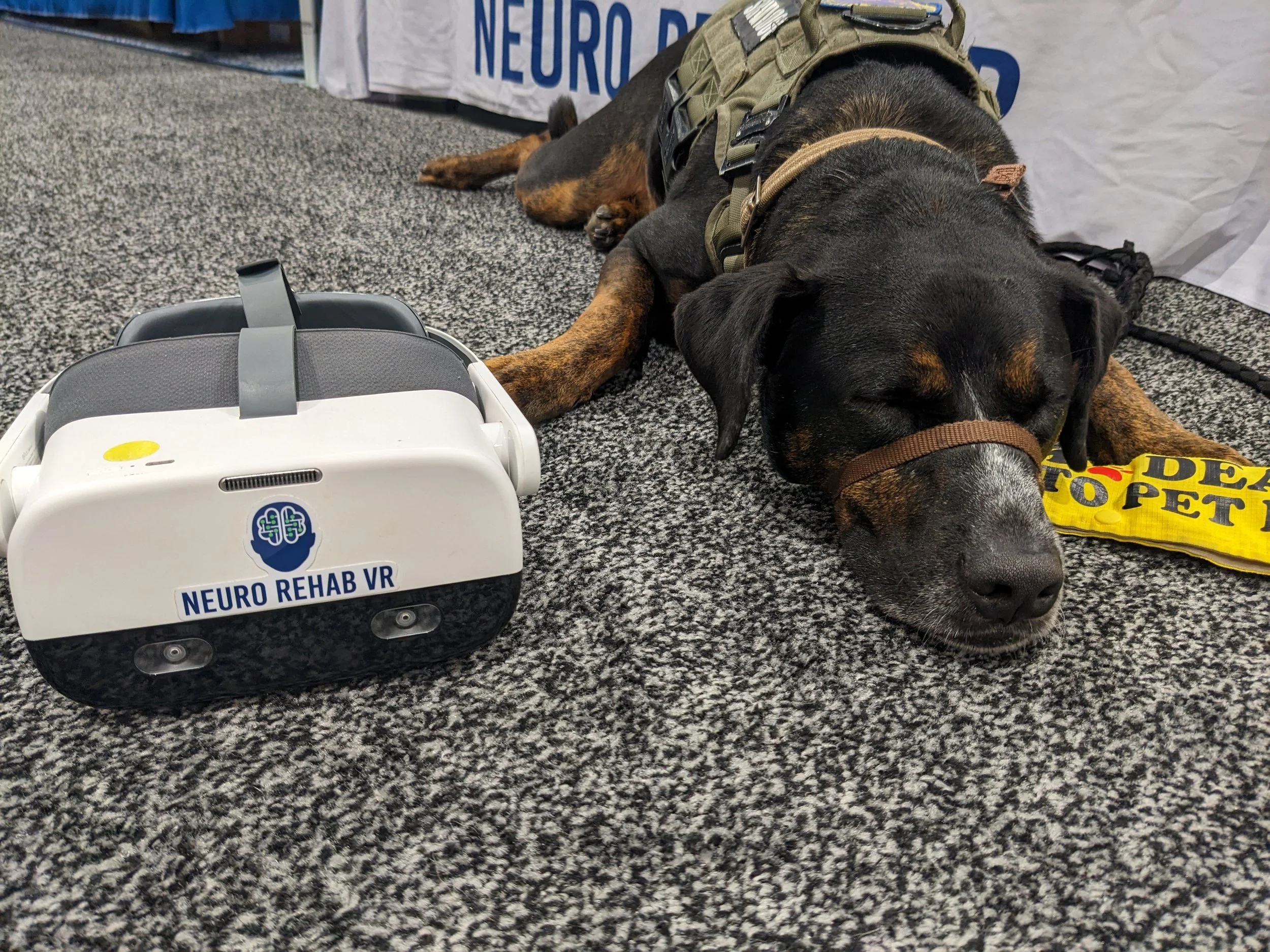
Veterans Day falls on Wednesday, November 11, and it is a good moment to look past the parades and flag ceremonies and think about where most of the people we are honoring actually spend their days.
According to the Census Bureau, about 8.1 million of the nation's 16.5 million living veterans, or 49 percent, were 65 or older in 2021, and more than two-thirds of those older veterans served during the Vietnam era (Vespa 3–4). For many of them, home is where a lifetime of family, routine, and hard-won independence comes together, and helping them keep it is a goal worth taking seriously.
They are far from alone in that wish, since AARP's 2024 Home and Community Preferences Survey found that 75 percent of adults 50 and older want to remain in their current homes as they age and 73 percent hope to stay in their communities (AARP). Many older veterans are already managing it well, because almost two-thirds live with a spouse and only about 1.4 percent live in a nursing facility, but staying home gets harder when balance, strength, or confidence begins to slip (Vespa 5–6).
This post looks at what helps older veterans hold on to that independence, starting with the health challenges that can make it harder and the VA programs and rehabilitation work that make it possible. The second half turns to immersive therapy and how it gives clinicians another way to help veterans practice the everyday tasks, like doing laundry or reaching for an item on a grocery shelf, that decide whether someone can keep living on their own terms.
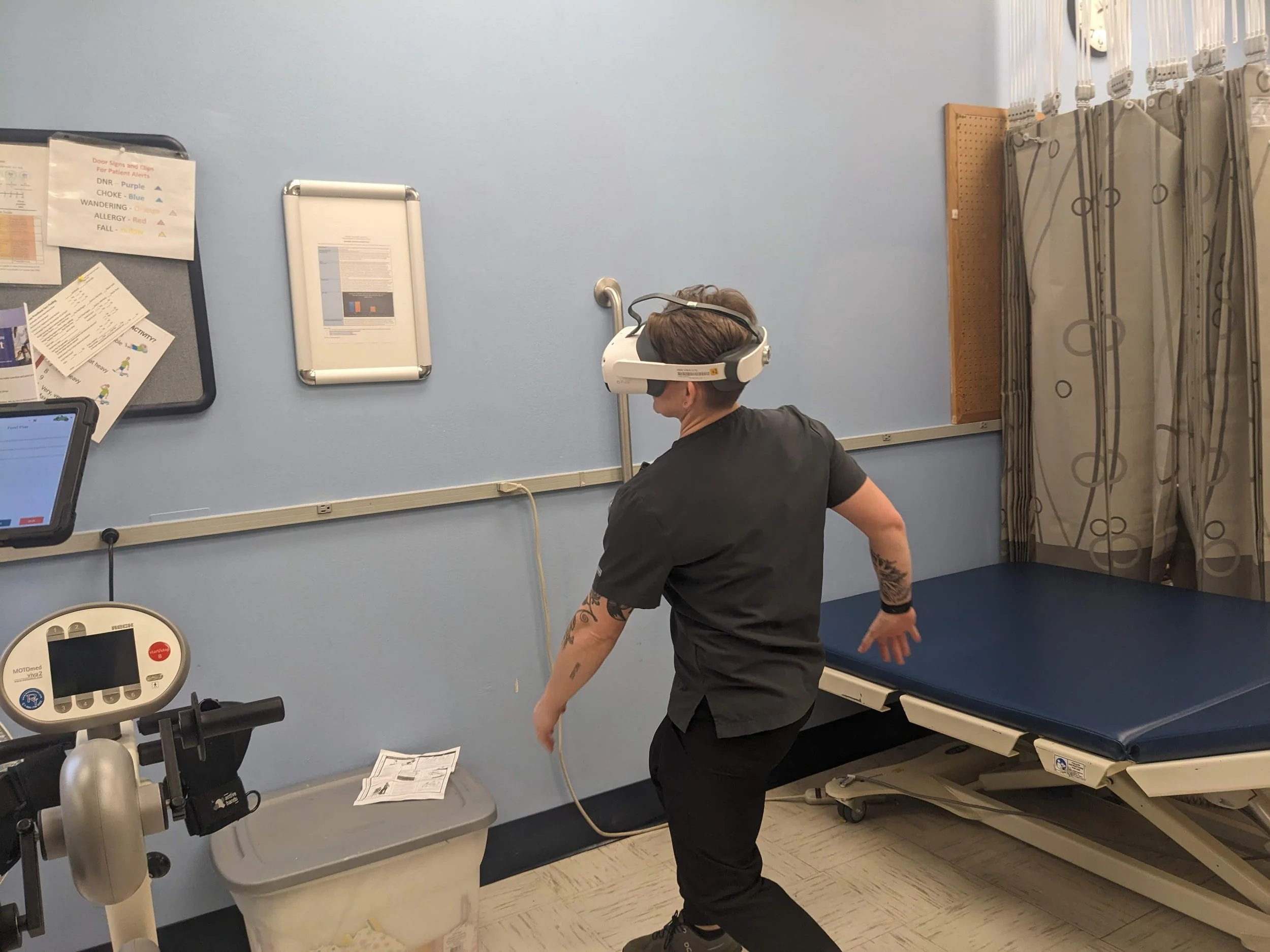
Why Staying Home Can Get Harder for Older Veterans
Older veterans tend to be in a stronger financial position than other older adults, yet the Census Bureau found that they carry a heavier physical load (Vespa 6). About 42 percent of veterans 65 and older report a disability, compared with 33 percent of older adults who never served, and more than one in five report two or more, with the Census measure covering difficulty walking, climbing stairs, dressing, bathing, or running errands alone (Vespa 6–7). Mobility stands out in particular, since about 23 percent of older veterans have serious difficulty walking or climbing stairs, and veterans of all ages are almost twice as likely as nonveterans to report that difficulty (Vespa 8).
Some of that load can be traced back to service, because for veterans who served in Vietnam or in other locations where the VA presumes exposure to Agent Orange, the VA recognizes type 2 diabetes, Parkinson's disease, parkinsonism, and early-onset peripheral neuropathy as conditions connected to that exposure (U.S. Department of Veterans Affairs, "Agent Orange"). Each of these can change how a person moves, since Parkinson's disease brings slowed movement and impaired balance and coordination that can lead to falls (National Institute on Aging), and diabetic nerve damage can reduce feeling in the feet and cause balance and coordination problems that also lead to falls (National Institute of Diabetes and Digestive and Kidney Diseases). For a veteran living with one or more of these conditions, a cluttered kitchen floor or a bathroom tile still wet from the shower can feel far less forgiving than it once did.
Geography adds another layer for many families, since almost a quarter of all veterans, more than 4.4 million people, live in rural communities where long travel distances and unreliable internet access can make regular care harder to reach (Elnahal). When a round trip to the nearest clinic can take much of a day, every therapy session carries more weight, and so does everything a veteran is able to practice and maintain between visits.
None of this means a veteran cannot stay home, and the numbers are better read as a map of what to work on. About 22 percent of older veterans live alone and about 14 percent have difficulty running errands without help, two of the markers the Census Bureau uses to gauge the risk of becoming homebound, although older veterans are slightly less likely than other older adults to show these risk markers, partly because more of them live with a spouse (Vespa 8). Those markers point to exactly the areas where good care, practical support, and steady rehabilitation can make the difference between managing at home and needing to move.
Falls, Confidence, and the Everyday Tasks That Keep Someone Home
Falls are the leading cause of injury for adults 65 and older, and more than 14 million older Americans, roughly one in four, report a fall each year (Centers for Disease Control and Prevention). Veterans show an interesting pattern within that picture, according to a national study of 14,831 older adults in which veterans reported slightly more falls that did not cause injury (26.6 percent compared with 24.0 percent) but fewer falls that did (8.9 percent compared with 12.3 percent) (Marciniak et al.). Among people who exercised regularly, veterans also had lower odds of a non-injury fall than nonveterans, which led the researchers to suggest that staying active may be an especially effective way for veterans to reduce aging-related fall risk (Marciniak et al.).
That matters because falls are closely tied to where someone ends up living, and in a well-known study of community-living older adults, Tinetti and Williams found that falls were a strong predictor of placement in a skilled nursing facility and concluded that preventing falls and their aftermath could delay or reduce nursing home admissions (Tinetti and Williams 1279). Keeping a veteran steady on their feet, in other words, is one of the most direct ways to help them keep their own front door.
Confidence plays a bigger role than many people expect, as Cumming and colleagues showed when they followed 528 older adults recruited from two Sydney hospitals for about a year. People with less confidence in their ability to avoid falls lost more ability to handle daily activities, and people who had never fallen but were afraid of falling still faced a higher risk of moving into residential care (Cumming et al. M299). That fear is completely understandable, especially after a close call, and the natural response is to avoid the step into the shower or the trip down to the laundry room, even though researchers note that falls can set off a downward spiral of reduced mobility, lost confidence, and declining ability that can end in a move to institutional care (Clemson et al. 1).
Those everyday tasks are the real measure of independence, and clinicians often describe them as activities of daily living, such as bathing, dressing, and moving from a bed to a chair, and instrumental activities of daily living, a category Lawton and Brody defined to include shopping, food preparation, housekeeping, laundry, and managing medications (Lawton and Brody). A veteran who can reach the washing machine, carry a basket of folded clothes, and push a cart through a grocery store with confidence is a veteran who can keep running their own household.
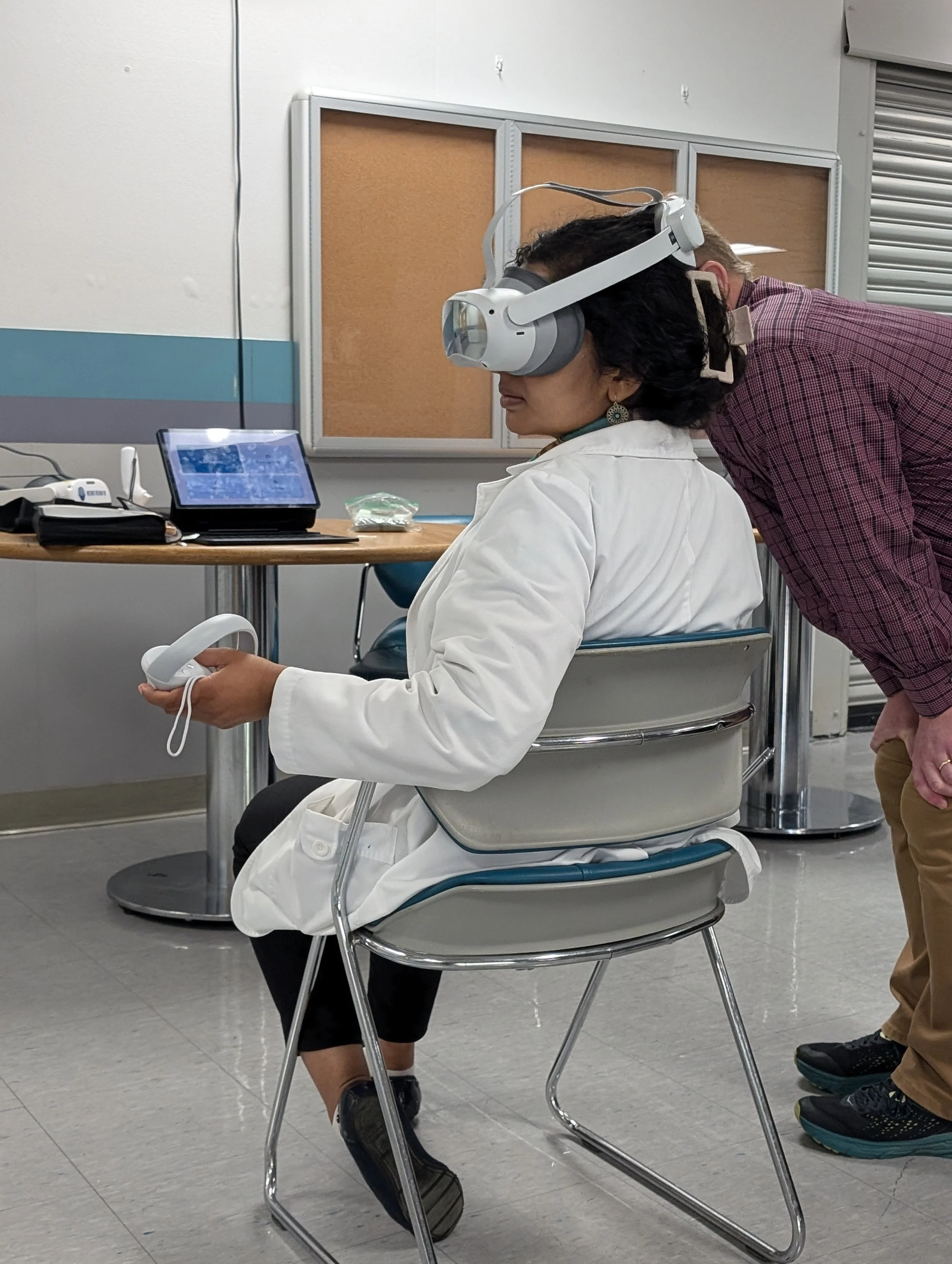
How the VA Already Builds Support Around Staying Home
The VA offers a wide range of services meant to help veterans age where they live, and its Geriatrics and Extended Care programs include Home Based Primary Care, homemaker and home health aide visits, adult day health care, and respite care that gives family caregivers a break. They also include Veteran-Directed Care, which gives a veteran and their caregiver a flexible budget to choose the mix of in-home help that fits their needs (U.S. Department of Veterans Affairs, Home and Community Services 3–5).
Home Based Primary Care is one of the clearest examples of that approach, bringing a team supervised by a VA doctor, which can include nurses, social workers, rehabilitation therapists, dietitians, pharmacists, and mental health staff, into the homes of veterans whose complex health needs are hard to manage through clinic visits alone (U.S. Department of Veterans Affairs, Home and Community Services 4). When Edes and colleagues studied the program, they found that enrollment was associated with fewer hospital admissions and hospital days across VA and Medicare combined, along with lower total costs, and veterans and family caregivers reported better access to care, stronger relationships with staff, and improved quality of life (Edes et al. 1954).
Rehabilitation professionals sit at the center of that work, and the VA describes itself as the single largest employer of occupational therapists in the nation. Within Home Based Primary Care, those therapists assess how a veteran is functioning in their actual home and work to maximize function and safety in support of the veteran's goal of remaining there as they age (U.S. Department of Veterans Affairs, "Occupational Therapists").
The home itself can be adjusted, too, through the Home Improvements and Structural Alterations program, known as HISA, which helps eligible veterans with medically necessary changes such as making it easier to get in and out of the house, installing roll-in showers, and lowering kitchen and bathroom sinks and counters so they are easier to reach (U.S. Department of Veterans Affairs, "Home Improvements"). Veterans and families can contact their local Prosthetic and Sensory Aids Service office to learn about eligibility and the lifetime benefit available to them.
Modifications and home visits change the environment around a veteran, and rehabilitation changes what the veteran can bring to that environment. Both matter, because a grab bar helps most when the person reaching for it has the strength, balance, and confidence to use it well.
Where Rehabilitation Makes the Biggest Difference
Fortunately, the evidence that targeted exercise helps older adults avoid falls is strong, and an abridged Cochrane systematic review of exercise trials in community-dwelling adults 60 and older found that exercise reduced the rate of falls by 23 percent across 59 studies and nearly 13,000 participants (Sherrington et al.). Balance and functional exercises reduced it by 24 percent, and the benefit was larger when a health professional, usually a physical therapist, delivered the program (Sherrington et al.). Given how certain that evidence was, the authors concluded that effective programs should now be put into practice (Sherrington et al.).
The type of practice matters as much as the amount, as researchers in Australia showed in the LiFE trial, which recruited 317 adults aged 70 and older who had fallen at least twice, or had one injurious fall, in the past year, partly through mailings to veterans, their spouses, and war widows listed in Department of Veterans' Affairs databases (Clemson et al. 1–2). Rather than adding a separate workout, physical and occupational therapists taught participants to build balance and strength into routines they already had, like standing heel to toe while working at the kitchen counter, squatting instead of bending at the waist to close a drawer, or squatting to pick an item from a low supermarket shelf (Clemson et al. 2, 5). That lifestyle-integrated approach cut the rate of falls by 31 percent compared with a gentle-exercise control group, while a traditional structured exercise program did not produce a significant reduction, and LiFE participants also improved in balance, ankle strength, daily function, and participation in daily life (Clemson et al. 1). The authors concluded that functional exercise should be a focus for protecting older, high-risk adults from falling (Clemson et al. 1).
Confidence has to be rebuilt alongside strength, and Cumming and colleagues concluded that interventions which reduce fear of falling and improve a person's belief in their ability to avoid falls are likely to have major health benefits (Cumming et al. M299). Psychologist Albert Bandura's research on self-efficacy helps explain how that belief grows, identifying personal experiences of success, which he called performance accomplishments, as an especially powerful source of confidence because they rest on a person's own mastery (Bandura). In practice, that means a veteran who once hesitated at the laundry room door rebuilds trust in their own body one successful attempt at a time.
That combination of functional practice, steady progression, and growing confidence is the heart of helping a veteran stay home, and it is also where clinicians have always faced a practical puzzle. A clinic gym is built for safety and repetition, while a veteran's daily life happens in kitchens, laundry rooms, and grocery aisles, so therapists keep looking for ways to bring more of those real-world demands into a session without giving up control over safety and difficulty.
What Research Shows About Immersive Therapy for Older Adults
Immersive therapy gives clinicians a way to bring more of the real world into the treatment room, because with a headset on, a patient sees and responds to a three-dimensional environment while the therapist decides what that environment contains and how demanding it should be. For older adults working on balance and fall risk, a growing body of research, including several recent systematic reviews, has examined how well this kind of training works.
A 2025 systematic review in the Journal of Clinical Medicine looked at randomized trials comparing virtual reality training with conventional exercise or usual care in adults 60 and older, including people with Parkinson's disease, mild cognitive impairment, osteoporosis, and chronic dizziness (Kasicki et al.). Across seven trials and 664 participants, virtual reality training was at least as effective as conventional exercise for improving balance and mobility, some studies showed added benefits, attendance ranged from 75 to 100 percent of scheduled sessions where it was reported, and none of the trials reported serious adverse events (Kasicki et al.). The authors concluded that this kind of training is a safe and engaging supplement to geriatric rehabilitation (Kasicki et al.).
Research focused specifically on immersive training points in the same direction, with a 2024 meta-analysis in Gait & Posture finding that immersive training improved standing balance and Berg Balance Scale scores in older adults once participants reached roughly four and a half hours of total training (Lee et al.). The authors noted that its effects on walking, mobility, and fear of falling still need more study, which is one more reason the therapist's judgment in shaping each session matters so much.
The V-TIME study, one of the largest trials of virtual training for fall prevention, is especially relevant to aging veterans because many of its participants were living with Parkinson's disease. Older adults at high risk of falling walked on a treadmill while a screen in front of them showed a virtual path with obstacles and distractions, and over the following six months they fell 42 percent less often than people who did treadmill training alone, with an even larger reduction among participants with Parkinson's (Mirelman et al.). For veterans living with Parkinson's disease, that finding is a meaningful signal that practicing movement inside a realistic, challenging environment can pay off in daily life.
Practicing the Everyday Tasks That Keep a Veteran Home
Balance scores matter, but the real test is whether someone can do the things their household depends on, and virtual environments give therapists a way to rehearse those things directly. The 2025 review described virtual reality training as a way to safely simulate daily activities and fall-related situations under controlled conditions (Kasicki et al.), and researchers studying how training carries over into daily life have pointed to earlier studies in which people who practiced shopping in a virtual supermarket went on to improve those skills in real-life situations (Boller et al.).
The LiFE results help explain why realistic practice is so promising, since the approach that built balance training into everyday movements was the one that significantly reduced falls (Clemson et al. 1). Doing laundry, for example, asks someone to bend toward a low basket, reach into a machine, turn while holding a load, and stand at a counter long enough to fold, which is a very different balance challenge from standing still in a clinic. Practicing those exact demands, with a therapist watching and adjusting, gives a veteran a chance to build the specific strength and confidence the task requires before trying it alone at home.
The Life Simulator in Smart Therapy™ applies that same idea through a set of immersive scenarios built around activities of daily living. At Ignite Medical Resorts in Norman, therapists have used it with patients who are preparing to return home independently, letting them work on balance through everyday tasks like laundry, and the director of rehabilitation shared that patients came back the next day asking to do it again because they had so much fun (Neuromersive, "Ignite Medical Resorts"). At the Texas NeuroRehab Center's post-acute brain injury program in Austin, a clinician described the platform's grocery store simulation as a practical way to work on visual scanning, reaching beyond a patient's base of support, and task endurance, and one patient said afterward that the store felt so real it was like being there with his cart (Neuromersive, "Texas NeuroRehab").
For an older veteran, scenarios like these connect directly to independence, because difficulty running errands without help is one of the signs the Census Bureau uses to gauge the risk of becoming homebound, so practicing a trip down a grocery aisle, scanning shelves, and reaching for items is rehabilitation work that ties straight back to life outside the clinic (Vespa 8).
Starting at Wheelchair Level and Building Toward Standing
Some older veterans begin rehabilitation unable to stand safely for long, whether they are recovering after a hospital stay, managing advancing Parkinson's disease, or working around numbness in their feet, and that can feel discouraging at first. Seated work is a real starting point rather than a waiting period, and a meta-analysis of 22 randomized trials with 394 stroke survivors shows why, finding that trunk training such as core stability, reaching, and weight-shifting exercises produced large improvements in trunk control, standing balance, and mobility, with the authors describing the evidence as strong (Van Criekinge et al.). That research focused on stroke survivors, but it offers a hopeful picture of how much seated work can contribute to standing and moving with confidence later on.
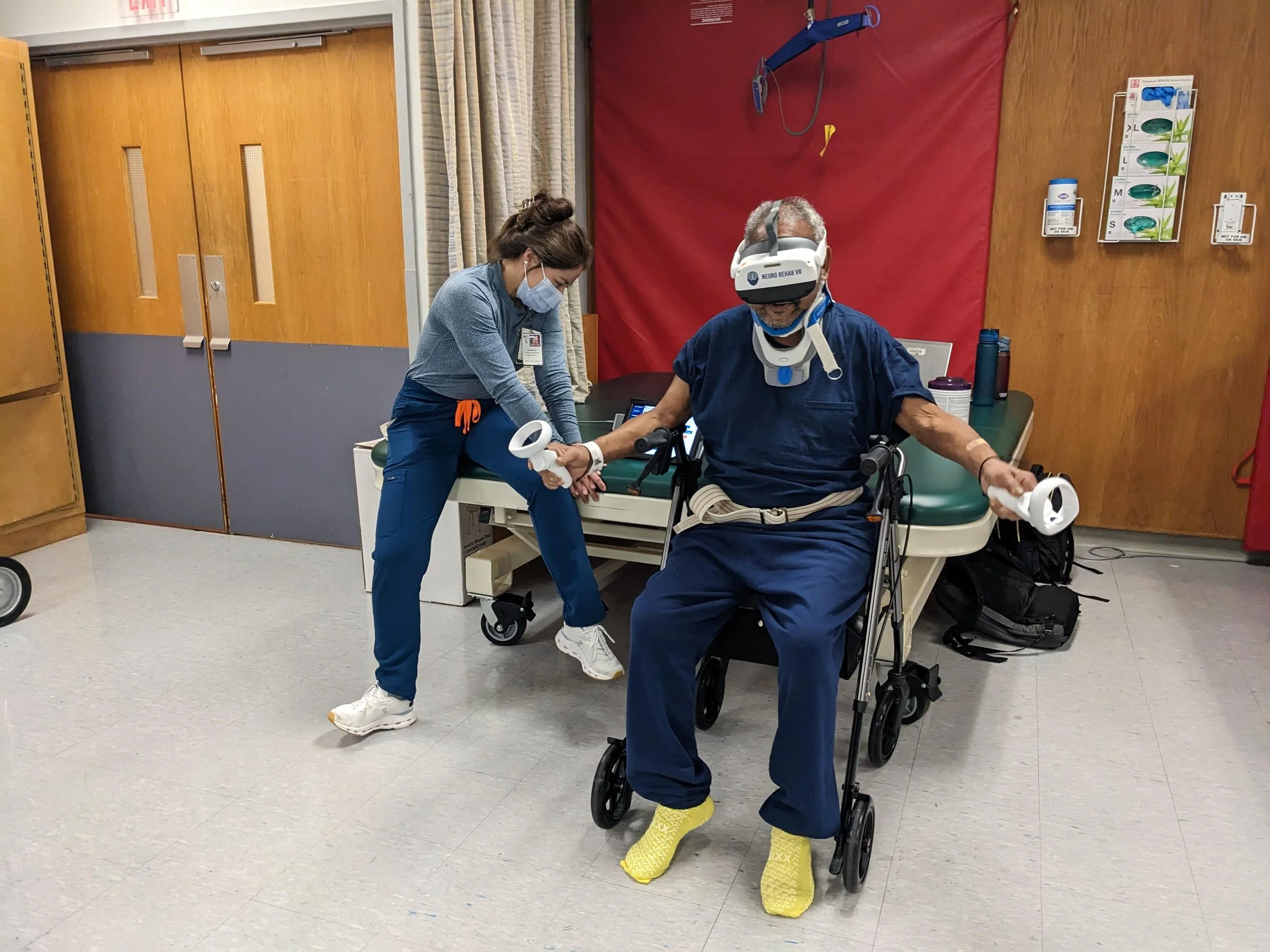
Immersive therapy makes that early seated work more engaging and more functional, and the director of rehabilitation at Ignite Medical Resorts described Smart Therapy™ as a great tool for patients who cannot stand yet, explaining that they are still able to work on trunk control, sitting balance, and day-to-day activities from wheelchair level (Neuromersive, "Ignite Medical Resorts"). For a veteran, that means even the first sessions can center on familiar everyday activities, so the foundation for standing is built through meaningful tasks rather than abstract drills.
The key is keeping each session at the right level of difficulty as abilities change, which motor learning researchers describe through the challenge point framework, the idea that people learn best when a task is challenging enough to push them but not so hard that they cannot succeed, and that this ideal point shifts as skill grows (Guadagnoli and Lee). Researchers who tested the framework in adults with moderately severe Parkinson's disease found that its predictions were generally supported (Onla-or and Winstein). The 2025 review of virtual reality fall-prevention trials offers similar practical guidance, recommending that older adults begin with short, lower-intensity sessions under close supervision and progress gradually as they adapt (Kasicki et al.).
This is where the therapist's tablet does its most important work, because during a Smart Therapy™ session the therapist sees what the patient sees and can adjust the exercise settings to keep the activity challenging but doable, making it more demanding when the veteran is ready and easing it back when fatigue or unsteadiness shows. The Texas NeuroRehab Center's announcement described this as tailoring therapy sessions in real time, adjusting intensity to each patient's needs while tracking progress through a connected analytics platform (Neuromersive, "Texas NeuroRehab"). Over weeks of sessions, a veteran might move from seated reaching to supported standing and then to standing tasks with less support, with each step guided by what the therapist observes and what the veteran feels ready to try.
Where Smart Therapy™ Fits in Care for Aging Veterans
Smart Therapy™ was built inside a working neuro outpatient clinic nearly a decade ago, and it is designed to support the kind of care described throughout this post. The system pairs a headset with a therapist-controlled tablet, so a single therapist can run the session, see what the veteran sees, and adjust the activity in real time. Its Life Simulator scenarios give veterans a place to practice familiar household tasks, activities can begin at wheelchair level and progress toward standing work, and the platform tracks progress and supports documentation with AI so it is easier to follow a veteran's gains from one session to the next (Neuromersive, "Ignite Medical Resorts"; Neuromersive, "Texas NeuroRehab"). For VA clinicians and the community providers who care for veterans, that combination offers another way to rehearse the exact tasks a veteran needs at home, inside an environment the therapist controls.
The decisions that matter most stay with the care team, since a physical or occupational therapist still chooses which tasks to prioritize, how much guarding and support each session needs, and when a veteran is ready for something harder, drawing on everything they know about that person's home, health, and goals. Immersive therapy works best as one part of that bigger picture, alongside Home Based Primary Care visits, home modifications, caregiver support, and the steady, hands-on rehabilitation that has always helped veterans stay where they want to be. That matches the 2025 review's observation that virtual reality may be most effective as a supplement to traditional therapy, since in one of its trials the group that paired it with conventional balance exercises made the largest gains (Kasicki et al.).
Honoring Independence This Veterans Day
For most older veterans, independence is less a single milestone than a long list of ordinary moments, like making coffee in their own kitchen, carrying a load of laundry from the dryer, or picking out groceries without needing someone else to drive and push the cart. Each of those moments rests on balance, strength, and the quiet confidence that comes from having practiced, and the research on fall prevention, functional training, and immersive therapy keeps pointing toward the same hopeful conclusion, which is that the right practice at the right level of challenge helps people keep doing the things that let them stay home.
This Veterans Day, we are grateful to the veterans who served and to the VA physical therapists, occupational therapists, nurses, social workers, caregivers, and family members who help them stay in the homes and communities they love. Their work rarely makes headlines, but it shows up every day in a veteran who can still answer their own front door, make their own breakfast, and live life on their own terms.
-
AARP Press Team . “New AARP Report: Majority of Adults 50-Plus Want to Age in Place, but Policies and Communities Must Catch Up.” AARP, 2026, www.aarp.org/press/releases/2024-12-10-new-aarp-report-majority-adults-50-plus-age-place-policies-communities-catch-up.html. Accessed 6 Nov. 2026.
Administration, Veterans Health. “Occupational Therapists in Home Based Primary Care.” Www.Va.Gov, 2016, www.va.gov/health/newsfeatures/2016/april/occupational-therapists-in-home-based-primary-care.asp. Accessed 6 Nov. 2026.
Bandura, Albert. “Self-Efficacy: Toward a Unifying Theory of Behavioral Change..” Psychological Review, vol. 84, no. 2, 1977, pp. 191–215.
Boller, Benjamin, et al., 33776848. “Using Virtual Reality to Assess and Promote Transfer of Memory Training in Older Adults With Memory Complaints: A Randomized Controlled Trial.” Frontiers in Psychology, vol. 12, 12 Mar. 2021, p. 627242. PubMed Central, pubmed.ncbi.nlm.nih.gov/33776848/, 10.3389/fpsyg.2021.627242. Accessed 6 Nov. 2026.
Centers for Disease Control and Prevention. “Older Adult Falls Data.” Older Adult Fall Prevention, 28 Oct. 2024, www.cdc.gov/falls/data-research/index.html. Accessed 6 Nov. 2026.
Clemson, Lindy . “Integration of Balance and Strength Training Into Daily Life Activity to Reduce Rate of Falls in Older People (the LiFE Study): Randomised Parallel Trial.” BMJ, 15 Aug. 2012, p. e5528, www.researchgate.net/publication/230633177_Integration_of_balance_and_strength_training_into_daily_life_activity_to_reduce_rate_of_falls_in_older_people_the_LiFE_study_Randomised_parallel_trial, 10.1136/bmj.e5528. Accessed 6 Nov. 2026.
Cumming, R. G., et al. “Prospective Study of the Impact of Fear of Falling on Activities of Daily Living, SF-36 Scores, and Nursing Home Admission.” The Journals of Gerontology Series A: Biological Sciences and Medical Sciences, vol. 55, no. 5, 1 May 2000, pp. M299-M305, 10.1093/gerona/55.5.m299.
Elnahal, Shereef. “Rural Access: IS VA Meeting ALL Veterans Where THEY LIVE?” U.S. House of Representatives.
Guadagnoli, Mark A., and Timothy D. Lee. “Challenge Point: A Framework for Conceptualizing the Effects of Various Practice Conditions in Motor Learning.” Journal of Motor Behavior, vol. 36, no. 2, July 2004, pp. 212–224, 10.3200/jmbr.36.2.212-224.
“Ignite Medical Resorts, Norman Enhances Patient Engagement and Outcomes With Smart TherapyTM.” EIN Presswire, 9 Apr. 2026, www.einpresswire.com/article/904758398/ignite-medical-resorts-norman-enhances-patient-engagement-and-outcomes-with-smart-therapy. Accessed 6 Nov. 2026.
Kasicki, Krzysztof, et al. “Effectiveness of Virtual Reality-Based Training Versus Conventional Exercise Programs on Fall-Related Functional Outcomes in Older Adults With Various Health Conditions: A Systematic Review.” Journal of Clinical Medicine, vol. 14, no. 15, 6 Aug. 2025, p. 5550, 10.3390/jcm14155550.
Lawton, M. P., and E. M. Brody. “Assessment of Older People: Self-Maintaining and Instrumental Activities of Daily Living.” The Gerontologist, vol. 9, no. 3, 1969, pp. 179–186, pubmed.ncbi.nlm.nih.gov/5349366/. Accessed 6 Nov. 2026.
Lee, J., et al. “Effects of Immersive Virtual Reality Training on Balance, Gait and Mobility in Older Adults: A Systematic Review and Meta-Analysis.” Gait & Posture, vol. 110, May 2024, pp. 129–137, www.researchgate.net/publication/379165821_Effects_of_immersive_virtual_reality_training_on_balance_gait_and_mobility_in_older_adults_a_systematic_review_and_meta-analysis, 10.1016/j.gaitpost.2024.03.009. Accessed 6 Nov. 2026.
Marciniak, Dan, et al. “Physical Activity and Falls Among a National Cohort of Older Veterans.” Journal of Applied Gerontology, 10 Apr. 2020, p. 073346482091580, 10.1177/0733464820915807.
Mirelman, Anat, et al. “Addition of a Non-Immersive Virtual Reality Component to Treadmill Training to Reduce Fall Risk in Older Adults (V-TIME): A Randomised Controlled Trial.” The Lancet, vol. 388, no. 10050, Sept. 2016, pp. 1170–1182, www.thelancet.com/article/S0140-6736(16)31325-3/fulltext, 10.1016/s0140-6736(16)31325-3. Accessed 6 Nov. 2026.
National Institute of Diabetes and Digestive and Kidney Diseases. “What Is Diabetic Neuropathy? | NIDDK.” National Institute of Diabetes and Digestive and Kidney Diseases, Feb. 2018, www.niddk.nih.gov/health-information/diabetes/overview/preventing-problems/nerve-damage-diabetic-neuropathies/what-is-diabetic-neuropathy. Accessed 6 Nov. 2026.
National Institute on Aging. “Parkinson’s Disease: Causes, Symptoms, and Treatments.” National Institute of Aging, 14 Apr. 2022, www.nia.nih.gov/health/parkinsons-disease/parkinsons-disease-causes-symptoms-and-treatments. Accessed 6 Nov. 2026.
Onla-or, Somporn, and Carolee J. Winstein. “Determining the Optimal Challenge Point for Motor Skill Learning in Adults With Moderately Severe Parkinson’s Disease.” Neurorehabilitation and Neural Repair, vol. 22, no. 4, 11 Dec. 2007, pp. 385–395, 10.1177/1545968307313508.
Sherrington, Cathie, et al. “Exercise for Preventing Falls in Older People Living in the Community: An Abridged Cochrane Systematic Review.” British Journal of Sports Medicine, vol. 54, no. 15, 2 Dec. 2020, pp. bjsports-2019–101512, bjsm.bmj.com/content/54/15/885.abstract, 10.1136/bjsports-2019-101512. Accessed 6 Nov. 2026.
“Texas NeuroRehab Center in Austin Is Leading a Powerful Shift in Rehabilitation.” EIN Presswire, June 2026, www.einpresswire.com/article/907165594/texas-neurorehab-center-in-austin-is-leading-a-powerful-shift-in-rehabilitation. Accessed 6 Nov. 2026.
Tinetti, Mary E., and Christianna S. Williams. “Falls, Injuries Due to Falls, and the Risk of Admission to a Nursing Home.” New England Journal of Medicine, vol. 337, no. 18, 30 Oct. 1997, pp. 1279–1284, www.nejm.org/doi/full/10.1056/NEJM199710303371806, 10.1056/nejm199710303371806. Accessed 6 Nov. 2026.
U.S. Department of Veteran Affairs. “Agent Orange Exposure.” VA.Gov, 2018, www.va.gov/disability/eligibility/hazardous-materials-exposure/agent-orange/. Accessed 6 Nov. 2026.
VA . Home and Community Services, Residential Settings and Nursing Homes Short and Long Term Services and Supports. 2022.
VA. “VA.Gov | Veterans Affairs.” Www.Prosthetics.Va.Gov, www.prosthetics.va.gov/psas/HISA2.asp. Accessed 6 Nov. 2026.
Van Criekinge, Tamaya, et al. “The Effectiveness of Trunk Training on Trunk Control, Sitting and Standing Balance and Mobility Post-Stroke: A Systematic Review and Meta-Analysis.” Clinical Rehabilitation, vol. 33, no. 6, 22 Feb. 2019, pp. 992–1002, 10.1177/0269215519830159.
Vespa, Jonathan. Aging Veterans: America’s Veteran Population in Later Life. 2023.