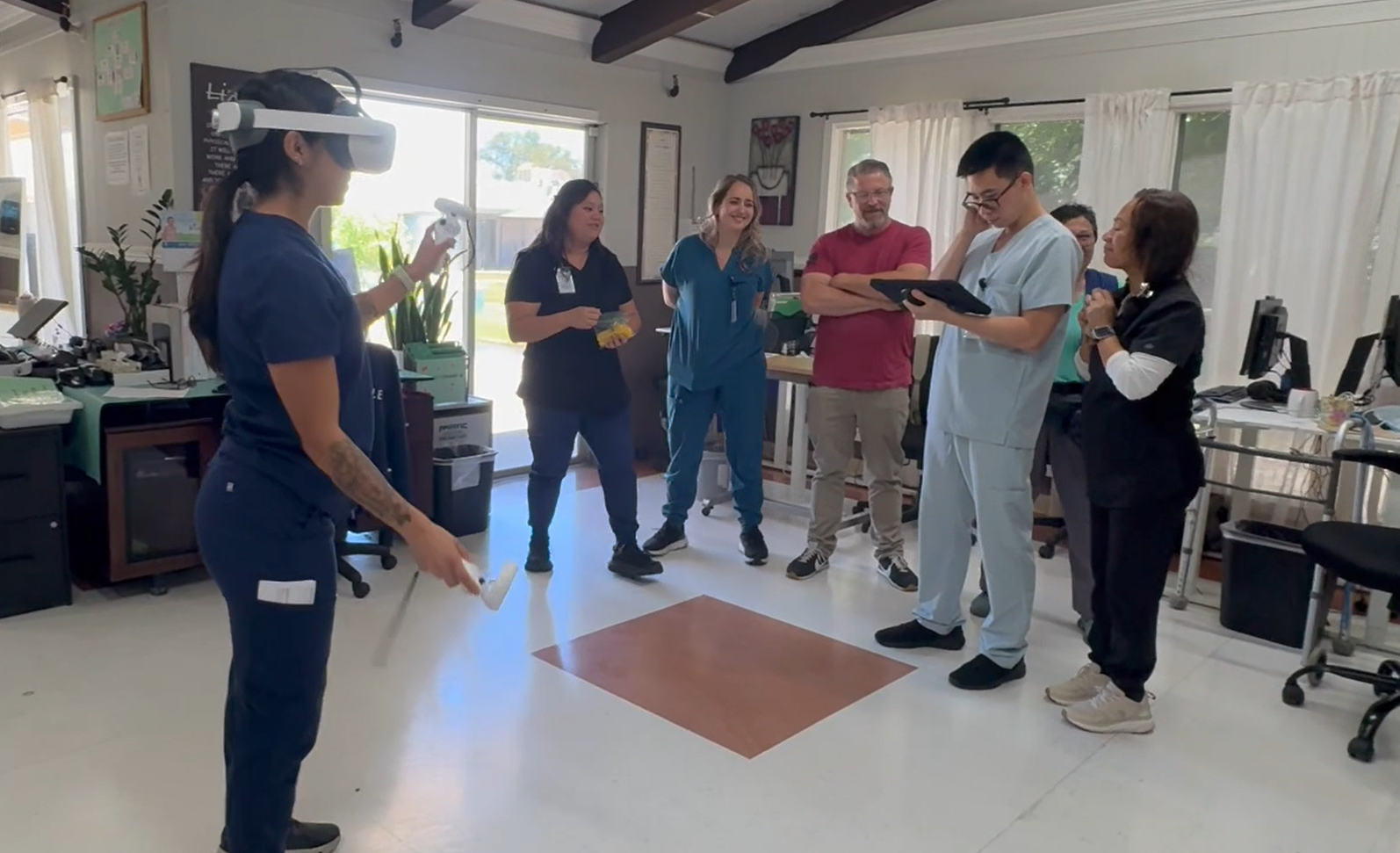
Ask a clinic how its immersive therapy program got started, and you may hear about one person. Usually it is a physical or occupational therapist who saw the potential early, learned the system inside and out, and became the person everyone turns to when a headset needs attention or a patient might be a good fit. That kind of enthusiasm is valuable, and it is often exactly what a new program needs to get started.
The challenge shows up on the days that person is out, because a vacation, a sick day, a schedule change, or a move to another clinic can leave the headsets waiting in the cabinet even though patients have been responding well to them. Immersive therapy works best when the whole team can use it, from the therapist who evaluates and sets goals to the assistant who carries out sessions and the aide who gets the room ready.
This post looks at how to build that kind of shared program, starting with why single-champion programs tend to stall and how responsibilities can be divided across licensed and support staff. From there, we cover how the Smart Therapy™ Complete Solution is set up for team use, what a simple session handoff looks like, and a few training habits that help new users get comfortable quickly. If you are looking for how PTs, OTs and SLPs each use immersive therapy within their own disciplines, our earlier post on that topic is a good companion read, since this one focuses on roles and coverage.
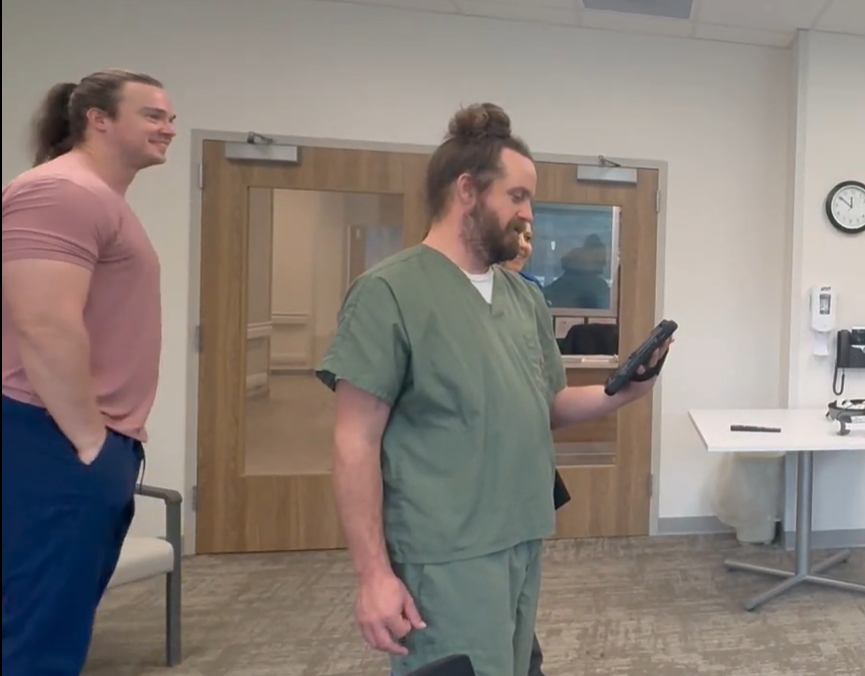
Why a Program Built Around One Champion Stalls
Champions themselves are not the problem, and the research backs up their value. An integrative review of 199 research articles on champions in healthcare implementation, led by researchers at the VA's Richard L. Roudebush Medical Center, found that individual studies consistently identified champions as important positive influences on implementation effectiveness, meaning how well a new practice takes hold (Miech et al.).
The risk comes when the program lives entirely inside that one person, as a 2025 study of champions in the CDC's Colorectal Cancer Control Program illustrates. One site explained that when a departing champion had held much of the program knowledge, the transition to the next person could be tough, because knowledge of where things stood and which processes were in place sometimes left with them (Escoffery et al.). The topic was cancer screening rather than rehabilitation, but the pattern may sound familiar to clinic managers who have inherited a program binder that only one person ever opened.
Rehab teams feel this risk regularly because staffing across the field is constantly in motion. APTA's 2024 benchmark survey of outpatient practices put the vacancy rate at 9.5%, nearly double the 4.8% average across all U.S. industries, with roughly 13% of physical therapist and physical therapist assistant positions open. Company growth was the most common reason for those openings, followed by turnover tied to relocation, better pay elsewhere, and work-life balance concerns (American Physical Therapy Association, "APTA Report"). Add in vacations, part-time schedules, float coverage, and the occasional sick day, and there will be plenty of days when your immersive therapy expert is not on the schedule.
Research on how rehab teams adopt immersive therapy points in the same direction. A scoping review of the factors that shape whether clinicians take up these tools found that the most frequently cited ones included knowledge, skills, confidence in their own abilities, available resources, and social influences (Glegg and Levac). A 2023 scoping review of 29 studies on bringing immersive technology into healthcare practice, 11 of them set in rehabilitation clinics, found that clinicians want training, knowledge, and experience so they can feel confident using it with patients, and that organizational support such as dedicated time, space, and technical help ranked among the most frequently reported facilitators (Kouijzer et al.). For clinic leaders, the practical takeaway is that confidence needs to be built across the whole team, which is much easier to do when hands-on experience is shared across the team rather than concentrated in one champion's schedule.
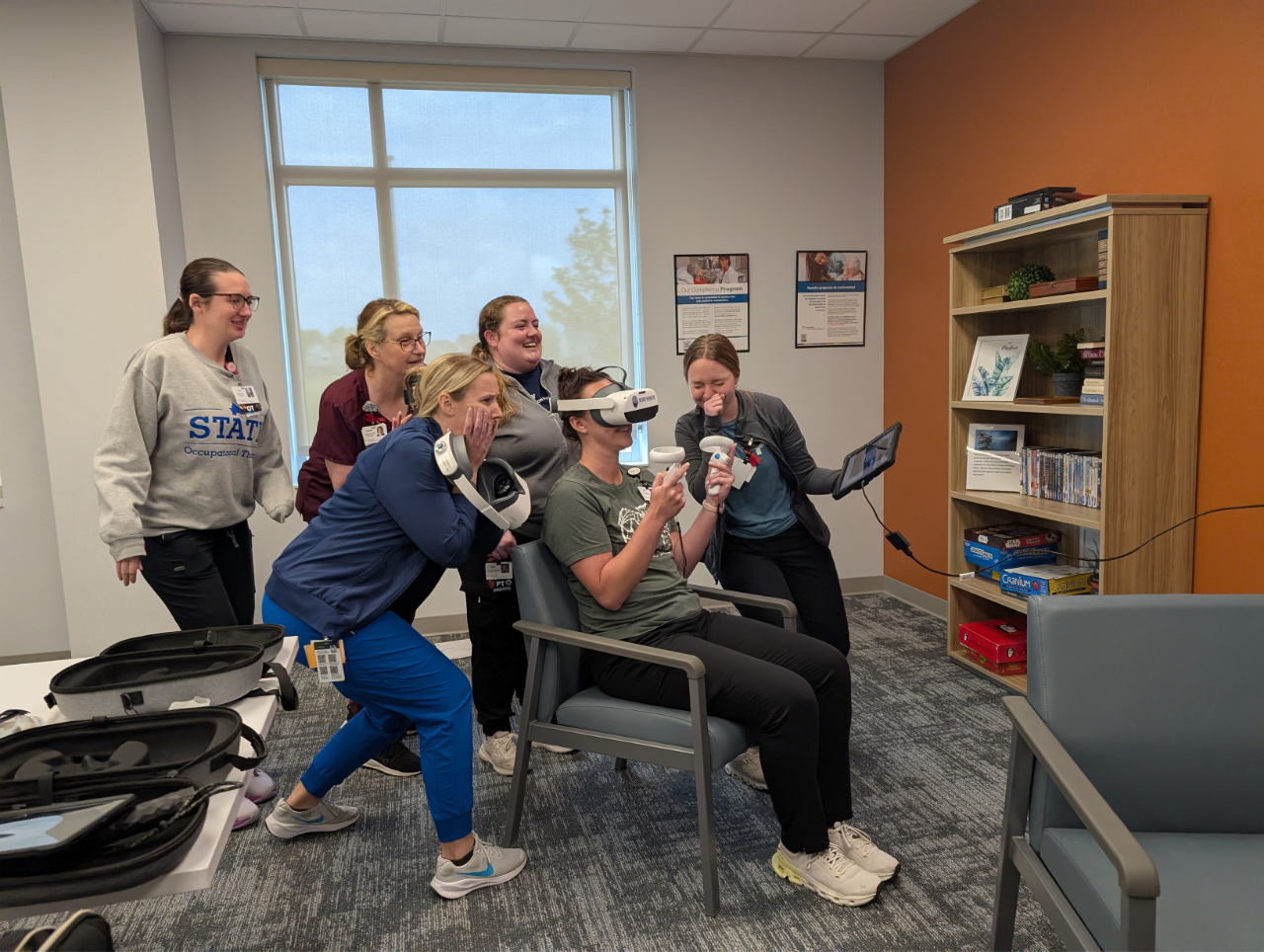
Who Does What: Matching Each Task to the Right Role
Spreading the work is not the same as handing the tablet to whoever happens to be free, because a team-based program works best when each part of immersive therapy is matched to the person licensed and trained for it. Professional guidance from APTA and AOTA draws those lines clearly, and your state practice act adds the details that apply to your clinic.
-
APTA's position on the direction and supervision of the physical therapist assistant lists the responsibilities that stay with the physical therapist in every setting. They include the initial examination and reexamination, evaluation and prognosis, developing or modifying the plan of care, deciding when it is appropriate to involve a PTA, concluding the episode of care, oversight of documentation, and responsibility for any handoff communication (American Physical Therapy Association, "Direction"). AOTA's supervision guidelines set up a similar structure for occupational therapy, with the occupational therapist directing the evaluation, interpreting the data, developing the intervention plan, and deciding whether services should continue, change, or stop (American Occupational Therapy Association).
For immersive therapy, that means the evaluating therapist decides whether it fits the patient's goals in the first place. The PT or OT chooses which exercises target which impairments, sets the starting parameters and position (seated, standing, or elevated supine), notes any precautions such as fall risk or balance limitations, and defines what progress should look like before the plan changes. Those decisions give the rest of the team a clear, consistent framework to work within from one session to the next.
-
Once the plan is set, assistants can carry much of the day-to-day delivery, and APTA's position states that the PTA provides services under the direction and at least general supervision of the physical therapist, who does not have to be on site but must be reachable by telecommunication. It also recognizes that the PTA modifies elements of an intervention to progress the patient as directed by the PT, or to keep the patient safe and comfortable (American Physical Therapy Association, "Direction"). AOTA's guidelines similarly describe the occupational therapy assistant selecting, implementing, and modifying interventions in collaboration with the OT, consistent with the assistant's demonstrated competence and the client's goals (American Occupational Therapy Association).
In practice, a PTA or OTA can run an immersive therapy session from the tablet, adjust difficulty within the ranges the therapist established, scale back when a patient is fatigued, and report how the patient responded. When a patient clearly needs a new goal or a different approach, that question goes back to the PT or OT.
Supervision rules are where clinics need to do their homework, starting with Medicare, where CMS finalized a change for 2025 that allows general supervision of PTAs and OTAs by therapists in private practice for all applicable services, aligning private practice with the policy already used in institutional settings (Centers for Medicare & Medicaid Services). That federal change does not override a stricter state law, and APTA notes that physical therapists and PTAs must follow their state practice act when its requirements are more stringent than Medicare's (American Physical Therapy Association, "Eliminating"), so occupational therapy teams should check their own state rules the same way. Washington State, for example, limits a physical therapist to supervising three assistive personnel at a time in most settings and requires physical therapy aides to work under direct supervision at all times (Washington State Legislature). Before you build a schedule around assistants running immersive therapy sessions, confirm what your state and your payers require.
-
Aides keep an immersive therapy program running smoothly, as long as their role stays clearly supportive. APTA's position on aides, updated in 2026, describes them as support personnel who perform designated tasks that do not require the clinical decision-making of the PT or the clinical problem-solving of the PTA. Aides may not perform, adjust, or progress components of patient and client management, and the physical therapist remains responsible even for the supportive tasks an aide completes (American Physical Therapy Association, "Role"). AOTA's guidelines note that aides do not provide skilled occupational therapy, that preparing the work area or equipment counts as a non-client task, and that an aide must demonstrate competence before taking on any delegated task (American Occupational Therapy Association).
That still leaves aides plenty of useful work, from keeping headsets and tablets charged to cleaning headsets and controllers between patients following the manufacturer's guidance, clearing and setting up the treatment space, and helping with room turnover so the next session starts on time. Exercise selection, difficulty changes, and decisions about when a patient is ready for more stay with the therapist or assistant running the session, a clear division that protects patients and keeps the clinic aligned with both professional standards and payer rules.
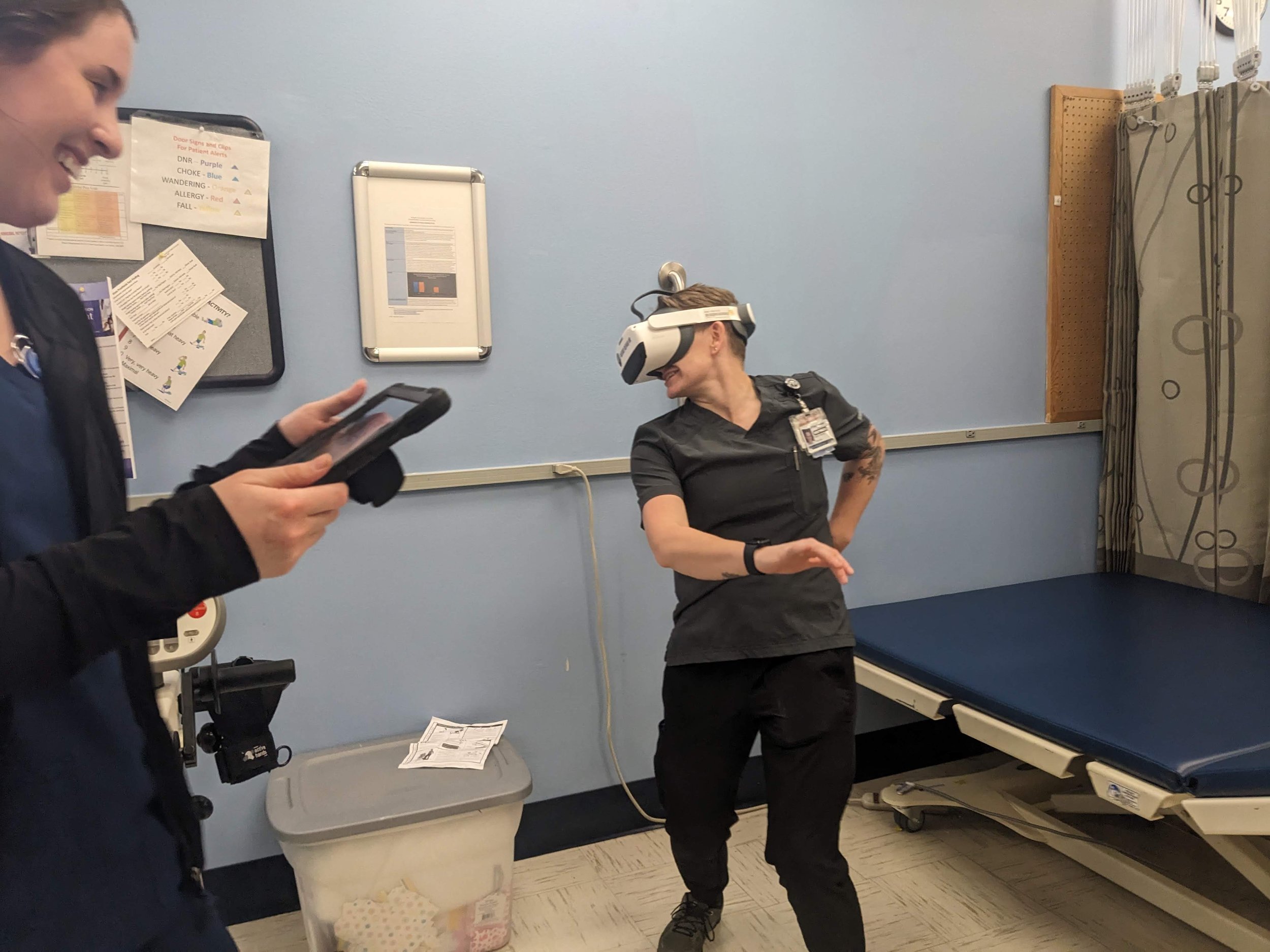
How Smart Therapy™ Supports a Team-Based Program
A team-based program runs best on equipment that belongs to the whole clinic rather than to any one clinician, so that whoever is on the schedule can pick up a tablet, connect to a headset, and begin the session with confidence.
The Smart Therapy™ Complete Solution was designed inside a working neuro outpatient clinic, and the system pairs a Pico Neo 3 Pro headset with a Samsung tablet, and any clinic tablet can control any headset assigned to the clinic the therapist is logged into, so sessions are never tied to one person's equipment. The PTA covering Tuesday afternoon can start a session on whichever tablet is free, and a tablet left charging in the back office simply means grabbing another one. Because headsets are assigned at the clinic level, the equipment belongs to the program rather than to any one clinician, which is exactly the mindset a team-based approach needs. Smart Therapy™ is built as a Rehabilitation Intelligence Platform that connects planning, treatment, measurement, and documentation in one clinical workflow, which gives each role a natural place to contribute, from the PT or OT setting the plan to the assistant delivering sessions and the documentation that carries progress forward.
The tablet view matters for teams, too, because while the patient wears the headset, the clinician at the tablet sees what the patient sees and can adjust the exercise in real time to find a level that is challenging but still doable. That gives a PTA or OTA running the session the same view the evaluating therapist would have, and a supervising PT or OT who stops by for a check-in can see exactly what the patient is working on without interrupting the session. The VA Immersive Playbook, written for Veterans Health Administration facilities building their own immersive technology programs, highlights this kind of screen-casting as especially helpful for Veterans who are still learning to navigate immersive environments or who have functional or cognitive limitations, because it lets the clinician help guide them (VA Immersive).
The same playbook offers practical advice any clinic can borrow, recommending that devices stay in a locked cabinet or cart when not in use and that every facility have a plan to train clinicians on safety considerations, and it points programs to shared resources such as cleaning instructions and a step-by-step guide for new programs (VA Immersive). In a team-based program, that translates into one charging station, one cleaning routine, and one place where everyone knows the equipment lives, so the whole team can use the system with the same confidence as the person who first unboxed it.
A Simple Handoff That Keeps Progress Moving
When several people share a patient's immersive therapy sessions, one risk that is easy to overlook is lost ground, because if Monday's session found the right level and Wednesday's clinician does not know what it was, the patient risks repeating work that has become too easy or jumping to something too hard. Motor learning research explains why that matters, since the challenge point framework proposed by Guadagnoli and Lee holds that learning is best supported when task difficulty is matched to the learner's skill level, since practice that offers too little or too much challenge provides less useful information for learning, and that the ideal level shifts as skill improves (Guadagnoli and Lee). A good handoff protects that match from one session to the next and keeps each patient working at the right level of challenge.
Healthcare has learned a great deal about handoffs over the years, and the Joint Commission's Sentinel Event Alert on inadequate hand-off communication notes that its sentinel event database includes adverse events such as falls and delays in treatment linked to poor handoffs. It names the lack of standardized procedures among the contributing factors, and it recommends standardizing both the critical content of a handoff and the tools used to share it, such as forms, templates, and checklists, along with using the electronic health record and other technology to support the process (The Joint Commission). The alert also advises against relying solely on written or electronic handoffs, so when the next clinician is on site, a quick conversation alongside the note is worth the extra minute. Rehab clinics do not need a hospital-style shift report for every immersive therapy session, but the same principle applies on a smaller scale.
A useful immersive therapy handoff can be short, as long as the clinician who ran the session records the same few details every time:
• The exercises used, in the order the patient completed them
• The settings that worked, such as difficulty, speed, position, and whether single-side mode was on
• How the patient responded, including fatigue, effort, and overall comfort during the session
• What to try next, based on the progression criteria the PT or OT set in the plan of care
• Anything that needs the evaluating therapist's attention before the next session
Ownership of the handoff process matters as much as the content, and APTA's position assigns responsibility for handoff communication and oversight of documentation to the physical therapist (American Physical Therapy Association, "Direction"). In practice, the PT or OT does not need to write every note but does decide what a complete handoff includes, and the rest of the team follows that same format every time.
Where that handoff lives matters as well, and patient-specific details belong in the medical record or your clinic's approved documentation system rather than on a whiteboard, sticky note, or shared spreadsheet. If your clinic uses Smart Therapy™ Pro, the AI-powered SOAP note feature can help capture session details in one place. Whatever system you use, the goal is the same: the next clinician should be able to open the chart, see what worked last time, and pick up right where the last session left off.
Training Tips That Build Confidence on Every Shift
Training for immersive therapy is as much about building confidence and the skill to match exercises to each patient's needs as it is about learning which buttons to press. A 2023 scoping review of implementation research found that the strategies used to support clinicians included hands-on interactive training, e-learning modules, mentorship for support and troubleshooting, and protocols and guidelines on how to use the technology (Kouijzer et al.). The review also identified dedicated time to learn as a common strategy, recommended having enough support staff available to help during sessions and maintain equipment, and urged a focus on the behavior of everyone involved, including healthcare providers, patients, support staff, and managers, rather than any single group (Kouijzer et al.). The three habits below put those recommendations into practice and are designed to fit into a busy clinic schedule.
-
It is tempting to schedule a single afternoon in-service and call the team trained, but skill-learning research points toward a better approach. In a randomized controlled trial with 38 junior surgical residents, one group learned a new microsurgical skill in a single day while the other practiced in weekly sessions, with both groups spending the same total time training. The group that spread its practice out performed significantly better on most measures at retention testing a month later and on a transfer test in a more realistic setting (Moulton et al.).
For immersive therapy, try several 15 to 20 minute practice rounds spread across a few weeks. Pair staff up so one person wears the headset while the other runs the session from the tablet, then switch. Each round can cover a small set of tasks: starting a session on any available tablet, choosing an exercise, adjusting settings, pausing and ending safely, and completing the handoff note. Spending a few minutes in the headset also gives clinicians a firsthand look at the environment their patients will see before they start cueing someone else through it. Aides can run their own rounds focused on charging, cleaning, and room setup.
-
A one-page reference posted at the charging station does a lot of quiet work when it stays practical, covering how to connect a clinic tablet to an available headset, how to start, pause, and end a session, the cleaning steps your clinic follows, the handoff fields to complete, who to contact for technical questions, and a short reminder of who can change exercise settings. Leave patient information off it entirely, since that belongs in the medical record.
This kind of tool shows up repeatedly in implementation guidance, from the Joint Commission's recommendation of standardized checklists and templates for handoffs (The Joint Commission) to the VA Immersive Playbook's shared cleaning instructions and step-by-step guide for new programs (VA Immersive). The Joint Commission also notes that a simple structured prompt helps team members perform handoffs more consistently, and it pairs that advice with a reminder that the prompt works best when it is backed by training (The Joint Commission), which is why the practice rounds above and the cheat sheet work best together.
-
The goal is not to eliminate the champion but to multiply the number of people who can do what the champion does. Naming a go-to person for immersive therapy on each shift, or on each day of the week, gives every team member someone nearby to ask without waiting for one expert's schedule. The VA Immersive Playbook itself allows for more than one champion, describing champions as the main points of contact for a department, medical center, or outpatient clinic (VA Immersive). The 2023 scoping review points the same way, recommending champions or mentors, experienced colleagues who share what they have learned, as a way to promote uptake and build confidence among other clinicians (Kouijzer et al.). A small network of go-to people turns immersive therapy into something the whole team does together, and a program built that way is better positioned to keep running through a vacation, a resignation, or a busy season.
Training Under Pressure: Why a Little Fear in Practice Carries Over
Anyone who has walked a nervous patient up a curb or into a crowded lobby knows that a skill mastered in the therapy gym doesn't always survive the real world. Sports psychologists call the extreme version of this choking, and researchers at Vrije Universiteit Amsterdam wanted to know whether practicing with a little fear could prevent it. In one study, novices practiced throwing darts while hanging low on a climbing wall, either with or without mild anxiety, and were then tested under low, mild, and high anxiety, with the high-anxiety test taking place high up on the wall (Oudejans and Pijpers, "Training with Mild Anxiety"). Even though anxiety, heart rate, and perceived effort rose steadily from one test to the next, the group that had trained with anxiety performed equally well on all three, while the group that trained without it saw their performance drop under high anxiety (Oudejans and Pijpers, "Training with Mild Anxiety").
An earlier set of experiments with skilled performers found the same pattern, with performance holding up under pressure only after people had practiced under anxiety. The authors concluded that practicing with anxiety helps prevent choking because performers get used to the specific changes that come along with feeling anxious (Oudejans and Pijpers, "Training with Anxiety").
These studies involved dart throwers, not rehab patients, so they aren't proof that the same thing happens after a stroke or a joint replacement. They do, however, offer a strong explanation for a problem clinicians see all the time, which is that practice under perfectly calm, predictable conditions may not prepare someone for the moments in daily life that come with nerves attached, like crossing a busy intersection, stepping onto an icy porch, or showering at home for the first time after discharge. Immersive therapy makes it possible to add mild, controlled pressure to practice, such as a busier environment, a time limit, or a distraction, so patients can get used to performing while a little nervous before they have to do it for real.
Making Immersive Therapy Everyone's Tool
Immersive therapy works best as a team tool, not one therapist's specialty, and champions still matter because every program needs someone willing to go first. What changes in a team-based program is everything that happens after that first step: the PT or OT sets the plan, assistants carry sessions within it, aides keep the space and equipment ready, and a consistent handoff connects one session to the next.
For clinic leaders, the first move can be small: over the next month, write down who handles evaluation, session delivery, and setup under your state's rules, draft a short handoff template with your evaluating therapists, and schedule a first round of brief practice sessions with a go-to person named for each shift. None of that requires new equipment, and the Smart Therapy™ Complete Solution is already built for it, since any clinic tablet can run any headset assigned to the clinic.
When every clinician on the schedule can pick up where the last session left off, immersive therapy stops depending on who happens to be working that day and starts depending on what the patient needs. To see how the platform fits into your team's workflow, visit the Smart Therapy™ Complete Solution page or reach out to our team for a walkthrough.
-
American Occupational Therapy Association. “Guidelines for Supervision, Roles, and Responsibilities During the Delivery of Occupational Therapy Services.” American Journal of Occupational Therapy, vol. 74, no. Supplement_3, 30 Sept. 2020, p. 7413410020p1, research.aota.org/ajot/article/74/Supplement_3/7413410020p1/6690/Guidelines-for-Supervision-Roles-and, 10.5014/ajot.2020.74s3004. Accessed 4 Nov. 2026.
APTA. “Advocacy Issue | Eliminating the Direct Supervision Requirement of PTAs Under Medicare Part B.” APTA, 2025, www.apta.org/advocacy/issues/pta-supervision. Accessed 4 Nov. 2026.
APTA . “APTA Report Points to Hiring Challenges for Outpatient Practices Amid Growth.” Apta.Org, 16 Oct. 2024, www.apta.org/article/2024/10/16/report-on-hiring-challenges-2024. Accessed 4 Nov. 2026.
APTA. HOD P08. 2022.
---. The ROLE of AIDES in a PHYSICAL THERAPY SERVICE HOD P06-19-12-07. 2017.
Centers for Medicare & Medicaid Services (CMS) Medicare Learning Network (MLN). Medicare Physician Fee Schedule Final Rule Summary: CY 2025. 25 Nov. 2024.
Escoffery, Cam, et al., 40731371. “Characterizing Screening Champions in the Center for Disease Control and Prevention’s Colorectal Cancer Control Program (CRCCP).” Implementation Science Communications, vol. 6, no. 1, 29 July 2025, p. 79. PubMed, pubmed.ncbi.nlm.nih.gov/40731371/, 10.1186/s43058-025-00759-0. Accessed 4 Nov. 2026.
Glegg, Stephanie Miranda Nadine, and Danielle Elaine Levac. “Barriers, Facilitators and Interventions to Support Virtual Reality Implementation in Rehabilitation: A Scoping Review.” PM&R, vol. 10, no. 11, Nov. 2018, p. 1237, 10.1016/j.pmrj.2018.07.004.
Guadagnoli, Mark A., and Timothy D. Lee. “Challenge Point: A Framework for Conceptualizing the Effects of Various Practice Conditions in Motor Learning.” Journal of Motor Behavior, vol. 36, no. 2, July 2004, pp. 212–224, 10.3200/jmbr.36.2.212-224.
Kouijzer, Marileen , et al. “Implementation of Virtual Reality in Healthcare: A Scoping Review on the Implementation Process of Virtual Reality in Various Healthcare Settings.” Implementation Science Communications, vol. 4, no. 1, 16 June 2023, 10.1186/s43058-023-00442-2.
Miech, Edward J, et al. “Inside Help: An Integrative Review of Champions in Healthcare-Related Implementation.” SAGE Open Medicine, vol. 6, no. 1, Jan. 2018, p. 205031211877326, www.ncbi.nlm.nih.gov/pmc/articles/PMC5960847/, 10.1177/2050312118773261. Accessed 4 Nov. 2026.
Moulton, Carol-Anne E, et al., 16926566. “Teaching Surgical Skills: What Kind of Practice Makes Perfect?: A Randomized, Controlled Trial.” Annals of Surgery, vol. 244, no. 3, Sept. 2006, pp. 400–9. PubMed Central, pubmed.ncbi.nlm.nih.gov/16926566/, 10.1097/01.sla.0000234808.85789.6a. Accessed 4 Nov. 2026.
The Joint Commission. Sentinel Event Alert, Issue 58: Inadequate Hand-Off Communication. 12 Sept. 2017.
U.S. Department of Veterans Affairs. VA ImmersivePlaybook. July 2023, www.innovation.va.gov/hil/assets/documents/va-immersive-playbook-summer-2023-public.pdf. Accessed 4 Nov. 2026.
Washington State Legislature. “RCW 18.74.180: Professional and Legal Responsibility—Supervision of Assistive Personnel..” App.Leg.Wa.Gov, app.leg.wa.gov/RCW/default.aspx?cite=18.74.180. Accessed 4 Nov. 2026.