
Powerful Ways Your Daily Treatment Can Boost Section GG Scores
Written by: Brianna Hodge
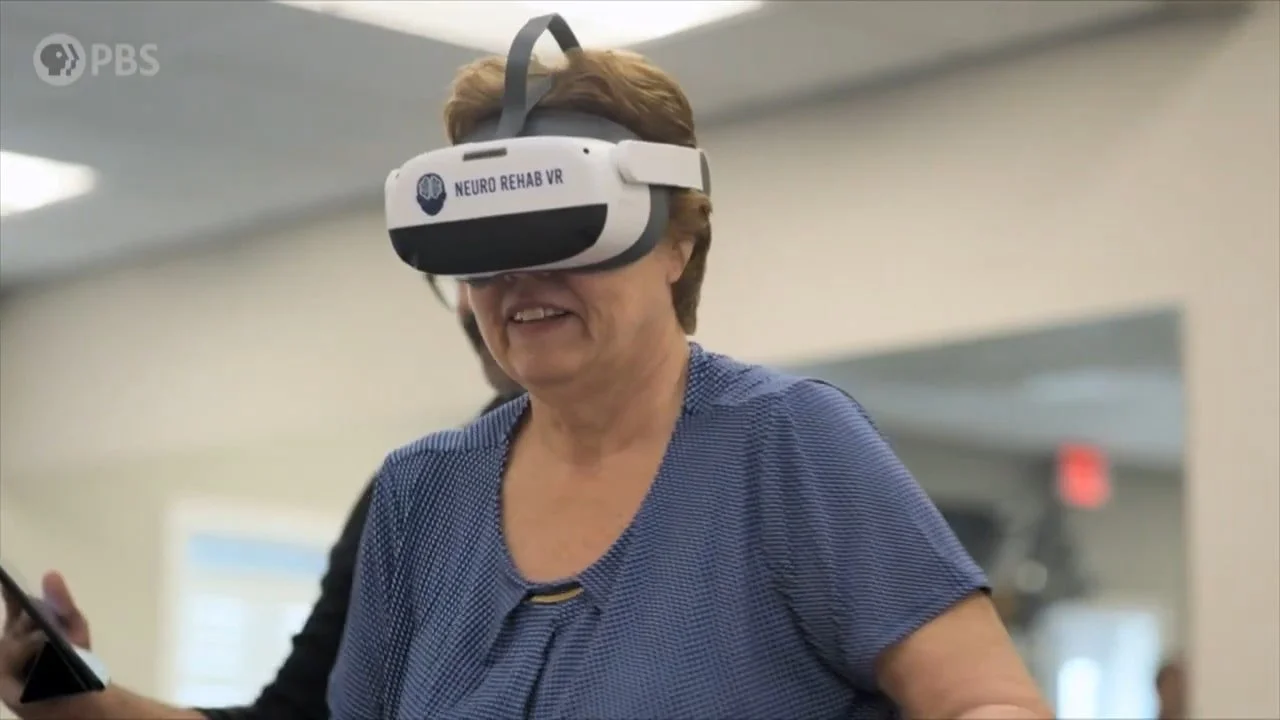
Every post-acute rehabilitation organization in the United States knows the rhythm of Section GG. Near the start of a stay, a clinician observes how much help a patient needs with eating, toileting, dressing, transfers, and walking, codes that usual performance on a six-point scale, and then repeats the process at discharge. Those two snapshots now influence how Medicare pays skilled nursing facilities and inpatient rehabilitation facilities, how quality is publicly reported, and how referral partners judge whether a program actually helps people regain independence. What the two snapshots cannot show is the treatment that happened between them, which is where clinicians spend nearly all of their time and where the discharge score is ultimately earned.
Smart Therapy™ was built inside a working neuro outpatient clinic, so the connection between daily treatment and measurable function is not an abstract idea for our team, because it is the problem the platform was created to solve. This post looks at what Section GG measures, why it carries so much weight for rehab organizations, what the research says about treatment that moves functional scores, and how Smart Therapy helps clinicians connect the work done in each session to the functional outcomes their organizations already care about.
What Section GG Actually Measures
Section GG grew out of the Improving Medicare Post-Acute Care Transformation Act of 2014, known as the IMPACT Act, which required cross-setting quality measures and standardized functional data for long-term care hospitals, skilled nursing facilities, home health agencies, and inpatient rehabilitation facilities (Centers for Medicare & Medicaid Services, "Functional Measures"). Long-term care hospitals began collecting the items in April 2016, skilled nursing facilities and inpatient rehabilitation facilities followed that October, and home health agencies started on January 1, 2019 ("Section GG Changes").
The items fall into two families. Self-care items cover eating, oral hygiene, toileting hygiene, bathing, upper body dressing, lower body dressing, and footwear, while mobility items move from lying to sitting and sit to stand through chair and toilet transfers, walking distances of 10, 50, and 150 feet, and stepping up a curb (American Hospital Association, "Letter"). Each activity is rated on a six-point scale in which 06 means the patient completed it independently and 01 means the patient was dependent, with separate codes for activities that were not attempted, such as when a medical condition or safety concern prevented the attempt (Shirley Ryan AbilityLab).
The coding rules matter as much as the items themselves. Clinicians record the patient's usual performance across the assessment period rather than the best or worst moment, and they code what the patient actually did rather than what staff believe the patient could potentially do (Missouri Department of Health and Senior Services). In skilled nursing facilities, the admission assessment covers the first three days of the Medicare Part A stay, and CMS guidance says it should take place before therapeutic intervention begins so the team captures a true baseline (Centers for Medicare & Medicaid Services, "Skilled Nursing Facility Quality Reporting Program"). At admission, clinicians also record discharge goals on the same six-point scale, which turns the assessment into a documented expectation of where the patient should finish (Regenstrief Institute).
Why These Scores Carry So Much Weight
Section GG began as a standardization effort, but it now sits at the center of both payment and quality for many rehab organizations. Under the Patient Driven Payment Model, skilled nursing facilities calculate function scores from Section GG items, and the physical therapy and occupational therapy function score, which ranges from 0 to 24, works alongside the patient's clinical category to assign the case-mix groups that drive those payment components (Centers for Medicare & Medicaid Services, "SNF PDPM Classification Walkthrough"; "Back to PDPM Basics"). Inpatient rehabilitation followed a similar path when CMS removed the Functional Independence Measure from the patient assessment instrument and began assigning case-mix groups with Section GG data for discharges on or after October 1, 2019 (American Hospital Association, "Regulatory Advisory"; American Occupational Therapy Association).
On the quality side, the Discharge Function Score measure asks whether each stay's observed discharge function score meets or exceeds an expected score based on the patient's admission profile (Partnership for Quality Measurement). CMS developed the measure to allow better comparisons across post-acute care settings by combining self-care and mobility activities into one function score (Acumen). In skilled nursing facilities, the observed score is built from ten Section GG self-care and mobility items on the discharge assessment, while the expected score comes from a risk adjustment model that accounts for factors recorded at admission, including age, admission function, primary medical condition, prior function, and cognitive function (Acumen).
These numbers also track the outcome patients and families care about most. Studies summarized in the Shirley Ryan AbilityLab Rehabilitation Measures Database found that patients with higher Section GG self-care and mobility scores were generally discharged to the community at higher rates (Shirley Ryan AbilityLab). When the same set of scores influences payment, public quality reporting, and the likelihood that a patient goes home, the treatment that moves those scores becomes one of the most valuable things a rehab organization produces.
The Gap Between the Session and the Score
Section GG captures two endpoints, while rehabilitation happens in the dozens of sessions that fill the space between them. A patient might practice reaching, weight shifting, trunk control, and visual scanning for weeks, yet the functional assessment records only how much help that patient needed to dress, transfer, or walk at admission and again at discharge. That design is intentional, because a standardized measure has to stay simple enough to compare across thousands of facilities, but it leaves the connection between specific treatment and specific functional change largely inside the clinician's head and the daily note.
That gap creates practical risk for organizations. Coding guidance from the American Association of Post-Acute Care Nursing warns that overstating or understating usual performance can lead to underpayment, overpayment, or compliance problems, and it identifies reliance on a single staff member for the usual performance determination as a common pitfall ("Back to PDPM Basics"). When session records describe exercises without tying them to the functional activities on the assessment, the path from treatment to outcome becomes harder to see for the treating clinician, the interdisciplinary team, and anyone reviewing the record later.
What the Research Says About Treatment That Moves Function
The evidence on how much therapy patients receive points in a consistent direction, even though the research base is still maturing. A systematic review in Physical Therapy found low-level evidence that higher-intensity therapy in skilled nursing facilities is associated with greater functional improvement, and the authors noted that overall confidence remains limited by the small number of studies and their risk of bias (Prusynski et al., "Rehabilitation Intensity"). A later national analysis found that even small amounts of additional therapy time, ten minutes or less above weekly reimbursement thresholds, were associated with slightly higher odds of functional improvement and community discharge, with the largest community discharge effect among patients receiving lower volumes of therapy (Prusynski et al., "Is More Always Better?"). More recent work examining declining therapy volumes after payment reform suggested that facilities seeking better outcomes may benefit from increasing therapy volumes, particularly for patients with dementia and those with moderate functional impairment at admission (Prusynski et al., "The Role of Declining Therapy Volumes").
Virtual reality research connects to these same functional outcomes. A 2025 meta-analysis in the Journal of NeuroEngineering and Rehabilitation pooled 30 randomized controlled trials with 1,661 stroke survivors and found that VR-based upper limb training significantly improved activities of daily living compared with conventional therapy, with moderate certainty of evidence (Olana et al.). Immersive, headset-based VR produced a larger effect on daily living outcomes than non-immersive VR, and subacute stroke survivors showed the greatest gains in daily living outcomes compared with acute or chronic groups (Olana et al.). That subacute window overlaps heavily with the period when many patients move through inpatient rehabilitation and skilled nursing care, which is exactly when Section GG admission and discharge assessments are recorded.
The trials in that review measured daily living with tools such as the Functional Independence Measure and the Barthel Index, and the FIM is the instrument Section GG replaced for inpatient rehabilitation payment (Olana et al.; American Hospital Association, "Regulatory Advisory"). Studies that use Section GG itself as the primary outcome for VR interventions would strengthen this connection further, and we see that as a clear next step for the field. The authors also noted that VR has been associated with improved compliance through greater patient engagement, which matters when outcomes depend on patients staying actively involved in practice across an entire stay (Olana et al.).
Where Smart Therapy Fits: Connecting Treatment to Function
Smart Therapy organizes rehabilitation around four connected functions, which are Plan, Treat, Measure, and Document. Each one gives clinicians a way to link what happens in the headset to the functional goals their organization already reports.
-
Functional goals begin at admission, and in post-acute settings they are recorded on the same six-point scale that will measure discharge performance. Smart Therapy lets clinicians select and configure VR exercises around the specific impairments they have identified as limiting a patient's function, so the plan of care inside the headset reflects the self-care and mobility activities the team is working to improve.
-
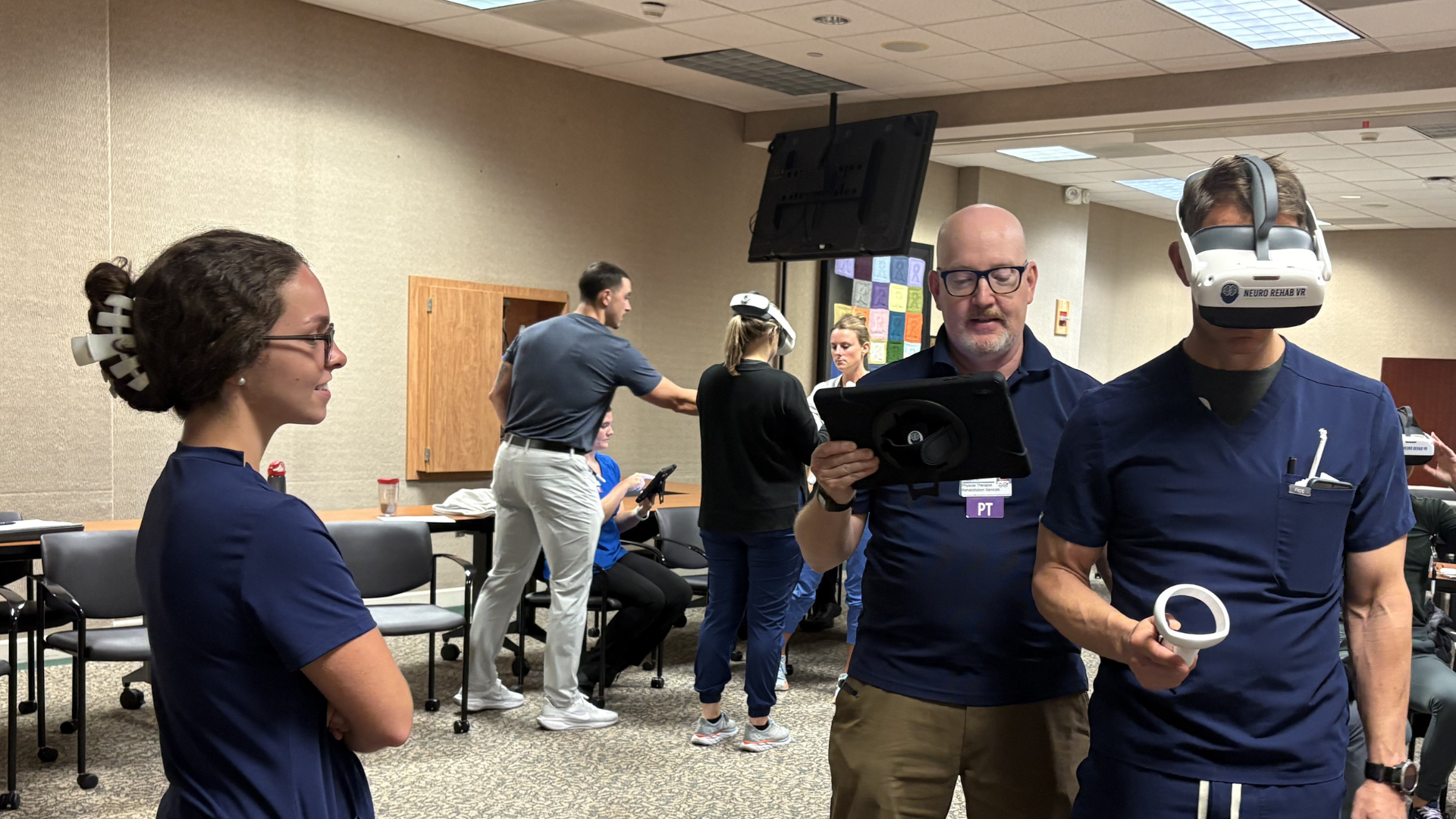
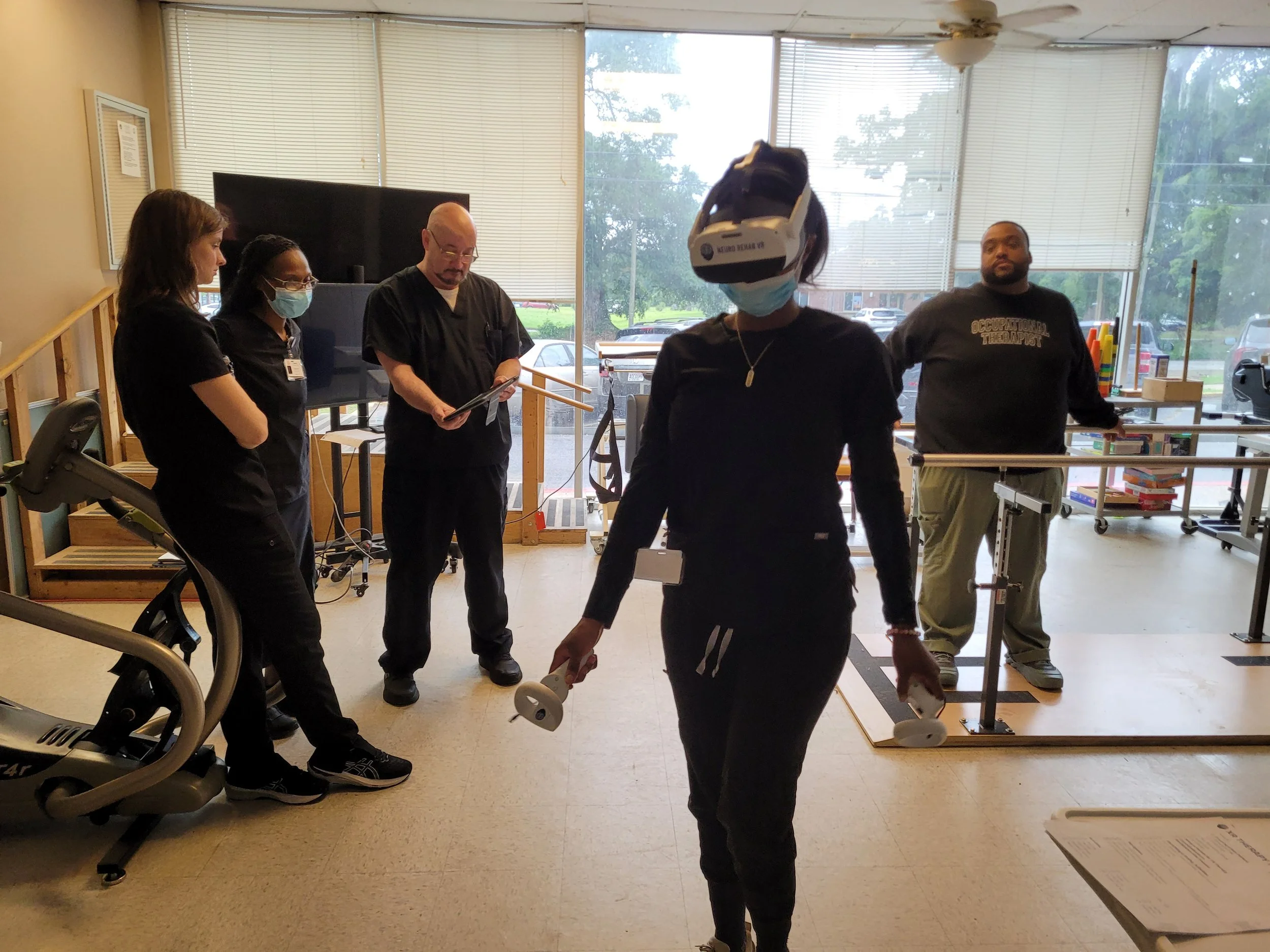
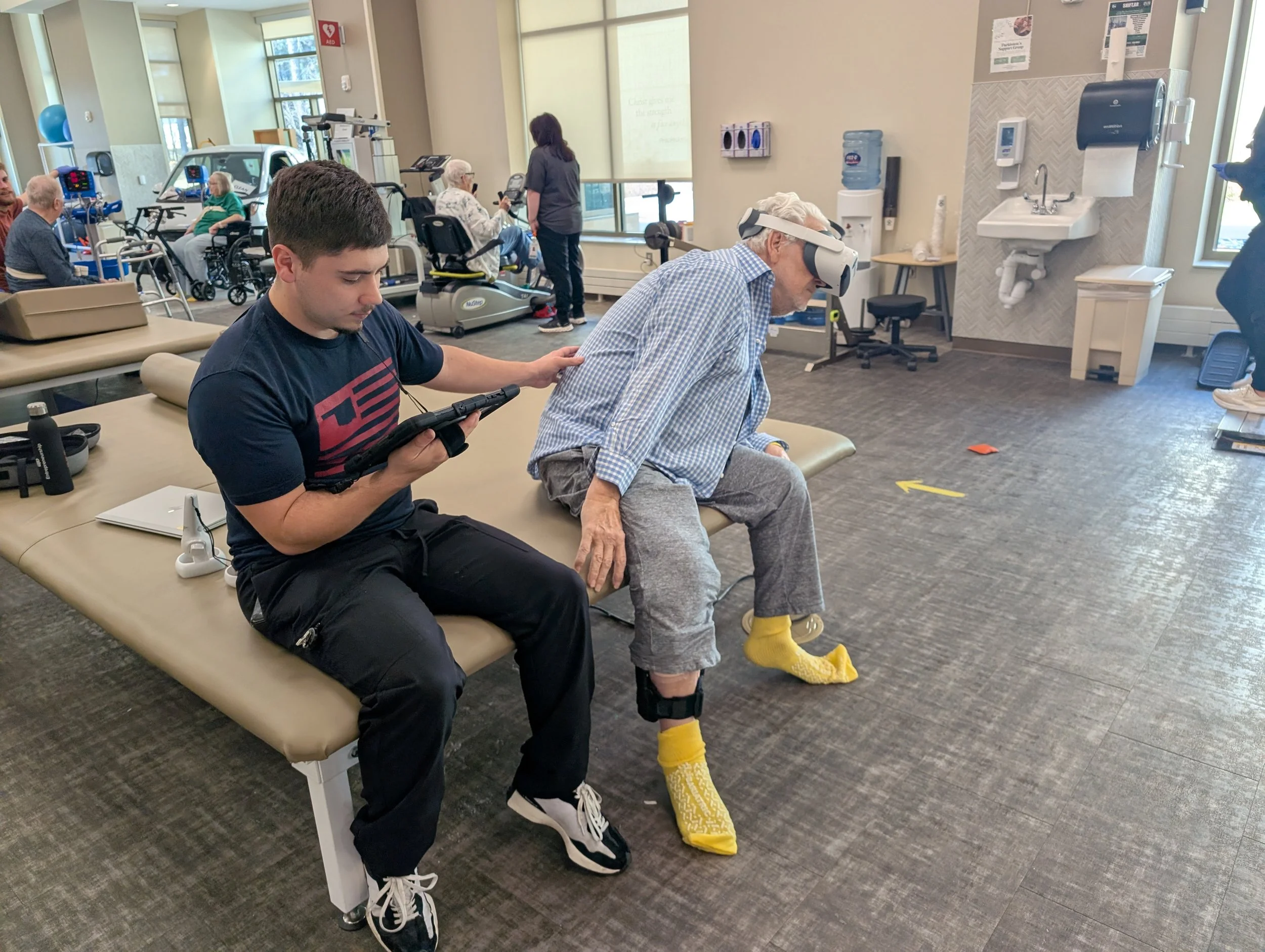
During each session, the patient wears a Pico Neo 3 Pro headset while the therapist controls the experience from a Samsung tablet. The therapist can see what the patient sees and adjust exercise settings in real time to find a level that is challenging but still achievable, which keeps each session in the just-right challenge range clinicians aim for. Because each tablet can control any headset assigned to the clinic, teams can run sessions across rooms and staff without being tied to one device pairing.
-
Every Smart Therapy session produces performance data that the clinician can review over time, which fills in the long stretch between admission and discharge assessments with a session-by-session record of progress. For patients using eye-tracking headsets, clinicians also gain information about visual and attentional factors that can affect how someone performs self-care and mobility tasks. This ongoing record gives the team earlier signals about whether a patient is trending toward the discharge goal set at admission, while there is still time to adjust the plan.
-
Smart Therapy's AI documentation support helps clinicians turn session activity into clear notes, which reduces the time spent reconstructing a session after the patient leaves. When session documentation consistently describes treatment in terms of the functional activities it targets, the interdisciplinary team has a clearer picture of progress, and the path from daily care to the discharge score becomes easier to follow for anyone reviewing the record.
What Stays With the Clinician
Smart Therapy strengthens every step between admission and discharge, and the licensed clinician remains the person who observes and codes Section GG. That division of work is exactly right, because Section GG asks for direct observation of a patient's usual performance in real daily activities, and that judgment belongs to trained therapists and nurses who know the patient. The platform's role is to give those clinicians better information, more engaging treatment, and less documentation burden, so their expertise goes further for every patient on their caseload.
Connecting the Work to the Outcome
Section GG has given post-acute rehabilitation a shared language for function, and that shared language now shapes payment, public quality reporting, and the likelihood that a patient returns home. The scores are recorded at two points, yet they are earned in every session in between, which is why the organizations that perform best will be the ones that can see and document how daily treatment builds toward functional change. Smart Therapy brings VR treatment, eye tracking, session measurement, and AI documentation into one connected clinical workflow, so the work clinicians do every day stays visibly tied to the outcomes their organizations are measured on.
To see how Smart Therapy connects treatment to functional goals in your clinic request a demo!
-
Acumen. Discharge Function Score for Skilled Nursing Facilities (SNFs) Technical Report. 2023.
American Hospital Association. Comment Letter: Medicare Program – Hospital Inpatient Prospective Payment Systems for FY 2020. American Hospital Association, 24 June 2019.
---. INPATIENT REHABILITATION FACILITY PPS: FINAL RULE for FY 2019. American Hospital Association, 31 Aug. 2018.
AOTA. “Inpatient Rehabilitation Facility (IRF) Prospective Payment System (PPS) Final Rule For 2020.” Aota.Org, 2024, https://www.aota.org/advocacy/advocacy-news/2019/inpatient-rehabilitation-facility-prospective-payment-system-final-rule. Accessed 30 Sept. 2026.
CMS. “Functional Measures | CMS.” Www.Cms.Gov, 2018, https://www.cms.gov/medicare/quality/initiatives/pac-quality-initiatives/functional-measures. Accessed 30 Sept. 2026.
---. PDPM Calculation Worksheet for SNFs.
---. “Skilled Nursing Facility (SNF) Quality Reporting Program (QRP) Frequently Asked Questions (FAQs) | CMS.” Cms.Gov, 2025, https://www.cms.gov/medicare/quality/snf-quality-reporting-program/faqs. Accessed 30 Sept. 2026.
---. “SNF PPS Payment Model Research | CMS.” Cms.Gov, 2017, https://www.cms.gov/medicare/payment/prospective-payment-systems/skilled-nursing-facility-snf/pps-model-research. Accessed 30 Sept. 2026.
Health & services. “Updated RAI Manual | Missouri Department of Health and Senior Services.” Mo.Gov, 18 Sept. 2026, https://health.mo.gov/care-providing/long-term-care/updated-rai-manual. Accessed 30 Sept. 2026.
Jennifer. “Back to PDPM Basics – Part 1: The PT and OT Components - AAPACN.” Aapacn, 23 July 2025, https://www.aapacn.org/type/article/back-to-pdpm-basics-part-1-the-pt-and-ot-components/. Accessed 30 Sept. 2026.
Medbridge. “Section GG Changes: What Do They Mean for Your Organization? | Medbridge.” Medbridge, 2019, https://www.medbridge.com/blog/section-gg-changes-what-do-they-mean-for-your-organization. Accessed 30 Sept. 2026.
Olana, Diriba Dereje, et al. “Effect of Virtual Reality-Based Upper Limb Training on Activity of Daily Living and Quality of Life Among Stroke Survivors: A Systematic Review and Meta-Analysis.” Journal of NeuroEngineering and Rehabilitation, vol. 22, no. 1, 24 Apr. 2025, 10.1186/s12984-025-01603-1.
PQM. “Cross-Setting Discharge Function Score for Skilled Nursing Facilities | Partnership for Quality Measurement.” Partnership for Quality Measurement, 14 Mar. 2025, https://p4qm.org/measures/4640. Accessed 30 Sept. 2026.
Prusynski, Rachel A, et al., 37541357. “Is More Always Better? Financially Motivated Therapy and Patient Outcomes in Skilled Nursing Facilities.” Archives of Physical Medicine and Rehabilitation, vol. 105, no. 2, Feb. 2024, pp. 287–294. PubMed, https://pubmed.ncbi.nlm.nih.gov/37541357/, 10.1016/j.apmr.2023.07.014. Accessed 30 Sept. 2026.
---. “Rehabilitation Intensity and Patient Outcomes in Skilled Nursing Facilities in the United States: A Systematic Review.” Physical Therapy, vol. 101, no. 3, 4 Jan. 2021, 10.1093/ptj/pzaa230.
---. “The Role of Declining Therapy Volumes in Skilled Nursing Facility Outcomes: A Mediation Analysis.” Health Affairs Scholar, vol. 4, no. 2, Feb. 2026, https://pmc.ncbi.nlm.nih.gov/articles/PMC12927502/, 10.1093/haschl/qxag029. Accessed 30 Sept. 2026.
RN, Jessica Stucin. “What to Expect in Section GG.” MDS Consultants, 2 Dec. 2022, https://www.mds-consultants.com/what-to-expect-in-section-gg/. Accessed 30 Sept. 2026.
Shirley Ryan AbilityLab. “Shirley Ryan AbilityLab.” Shirley Ryan AbilityLab, 10 Feb. 2026, https://www.sralab.org/rehabilitation-measures/section-gg-functional-abilities-self-care-mobility. Accessed 30 Sept. 2026.