
The Proven Case for Smarter Rehab Technology
Written by: Brianna Hodge
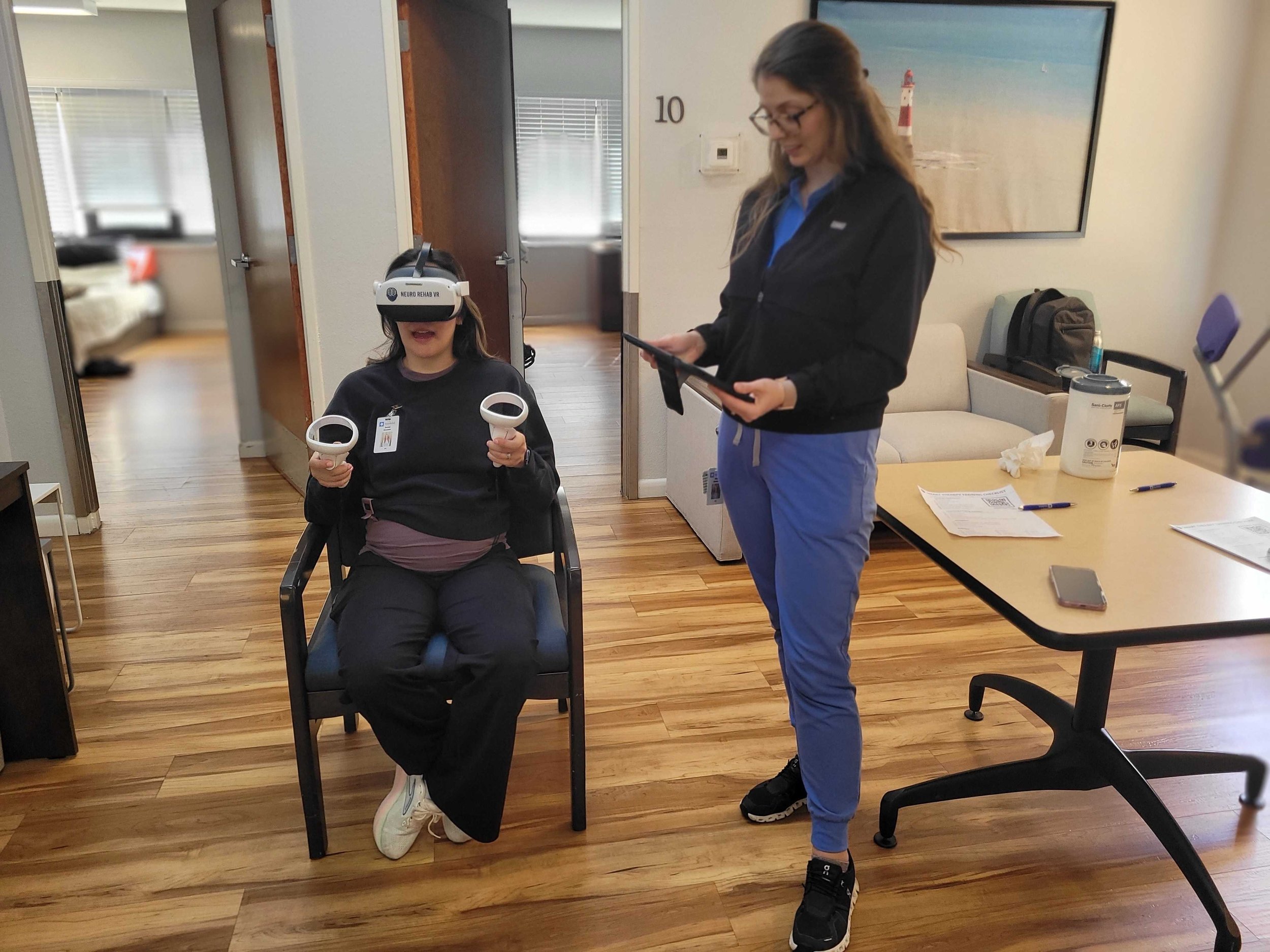
A headset in a therapy gym still gets treated like a novelty in a lot of clinics. A patient puts it on, a few colleagues gather to watch, and everyone reacts to the immersion itself rather than to what the session actually accomplished. That reaction made sense five or six years ago, when virtual reality in rehabilitation was still mostly a research curiosity. It does not make sense anymore. The evidence base has matured; the technology has spread well beyond VR into eye tracking, artificial intelligence, and augmented reality. The clinics getting the most out of these tools are not the ones running the flashiest demo.
They are the ones that have connected; planning, delivery, measurement, and documentation into a single clinical workflow. That connection is the real shift underway in rehabilitation technology, and it deserves its own name: Rehabilitation Intelligence.
The VR Demo Era Already Proved Its Point
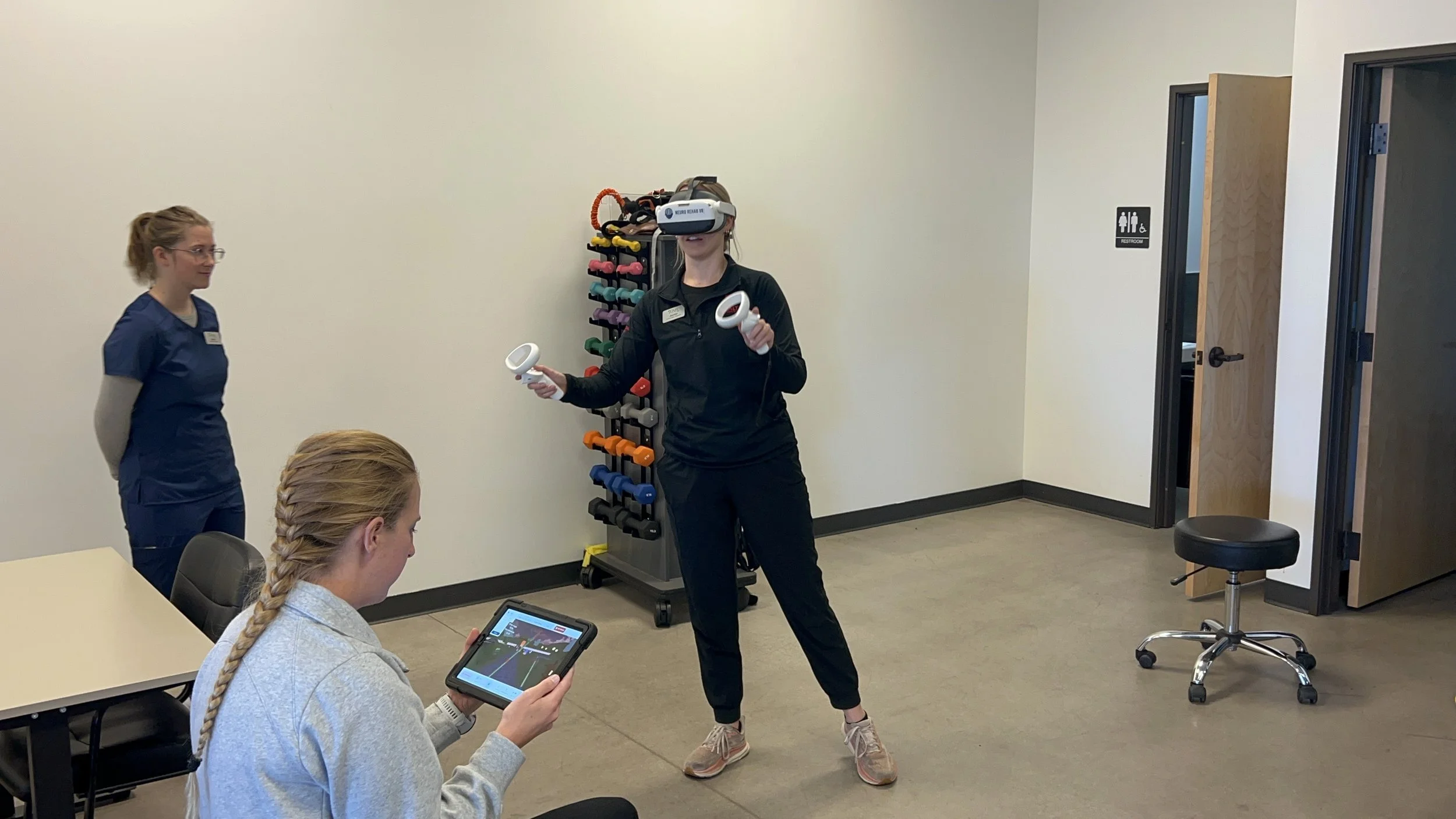
It is worth being direct about this, because the skepticism many clinicians still carry toward VR is a few years out of date. A 2025 Cochrane review of virtual reality for stroke rehabilitation, drawing on evidence current through September 2023, found that virtual reality therapy may be more beneficial than alternative therapy across a range of outcomes after stroke, including upper limb function, balance, and activity limitation (Laver et al.). That is Cochrane, the standard most clinicians already trust to separate real effects from wishful thinking, saying that VR-based intervention holds up.
The upper limb literature tells a similar story with more precision. A 2024 systematic review and meta-analysis in BMC Medical Informatics and Decision Making pooled 55 studies and more than 2,100 stroke patients and found that virtual reality conferred benefits over conventional therapy across motor function, functional independence, quality of life, spasticity, and dexterity, with fully immersive VR showing the strongest effects among the immersion levels tested (Soleimani et al.). This is not a single small trial. It is a synthesis of a large body of randomized evidence, and it points in the same direction as the Cochrane findings: VR-based rehabilitation is not a gimmick sitting on top of conventional therapy. It is a legitimate intervention with a real effect size behind it.
So the question a clinician should be asking in 2026 is no longer whether VR belongs in a rehabilitation plan. The research base above already settled that question, and treating it as still open mostly serves vendors who have not caught up to newer evidence. The more useful question is what a VR headset actually does once the demo ends and the patient becomes a regular case on your schedule, one of dozens you are tracking through an episode of care that also includes documentation deadlines, outcome measure requirements, and a caseload that keeps growing regardless of how good any single tool is in isolation.
What "VR Therapy" Leaves Out
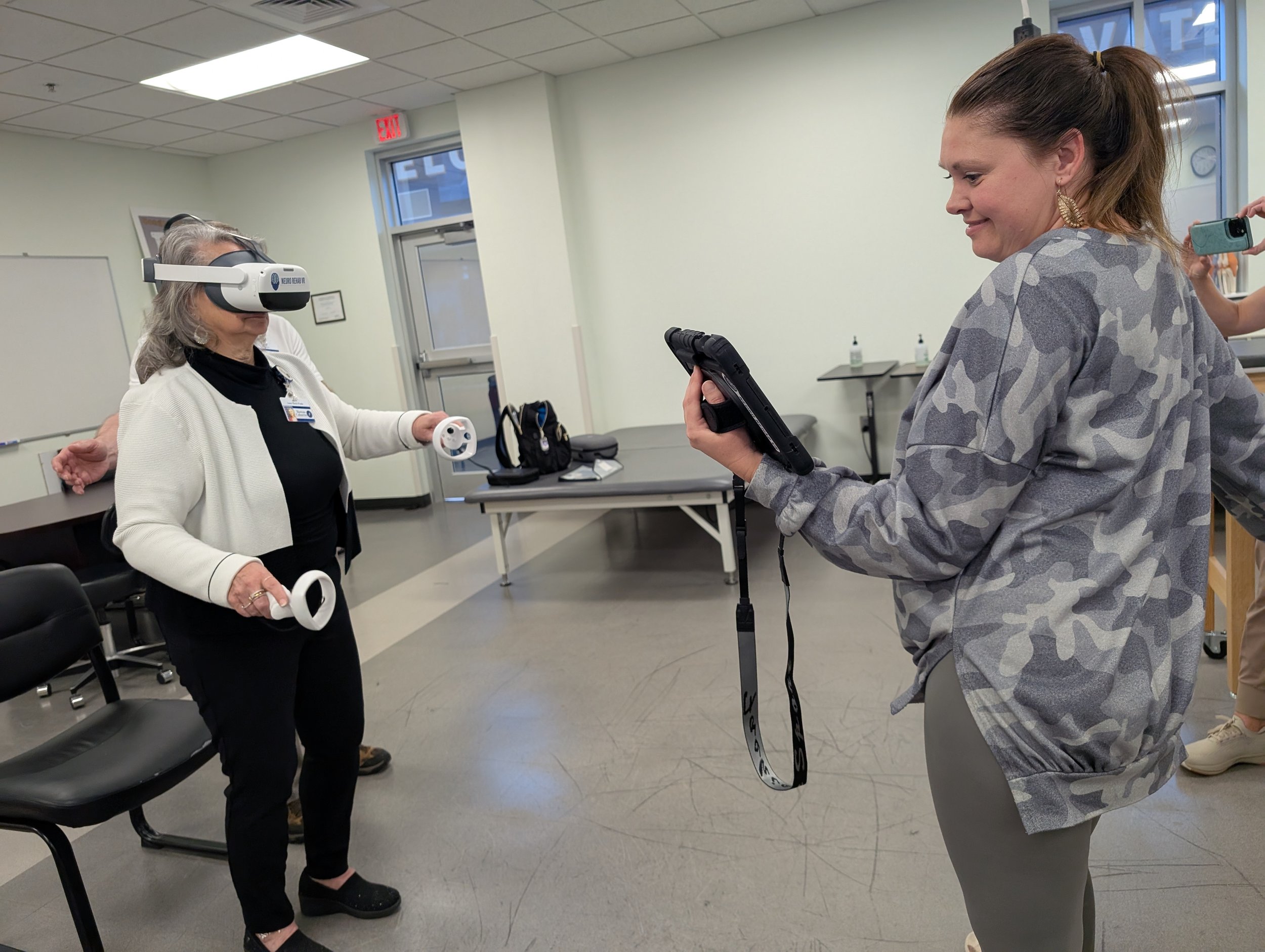
That question exposes the real limitation of thinking about VR, or eye tracking, or AI, as separate point tools rather than as parts of a connected system. Each one, evaluated on its own, tends to solve a narrow problem well, while leaving the rest of the clinical workflow untouched.
Take documentation as the clearest example of this pattern, because it is the function every clinician already recognizes as a daily source of strain. A 2025 scoping review in the Journal of Evaluation in Clinical Practice found that poorly designed electronic health record interfaces disrupt clinical workflow through task switching, prolonged screen navigation, and information fragmented across the record, and that clinicians frequently resort to workarounds such as duplicating documentation just to get through a visit (Olakotan et al.). That review also cites a striking data point: each one-point drop in a system's usability score has been associated with a three percent increase in burnout risk (Olakotan et al.). Rehabilitation therapists are not exempt from this. A 2024 qualitative study published in the Journal of the American Medical Informatics Association found that outpatient physical, occupational, and speech therapists experience documentation burden similar to what has already been documented among physicians and nurses, with manual data entry taking time away from the patient, extending work into after-hours, and contributing to burnout (Schwartz-Dillard et al.). None of that changes because a clinic also owns a VR headset. If the exercise data a patient generates in a session still has to be typed into a separate note by hand, the technology has added a new source of engagement without removing the administrative load that was already wearing clinicians down.
The same fragmentation shows up on the assessment side. Eye tracking has produced genuinely useful clinical findings. A 2024 study in Cerebrovascular Diseases found significant correlations between eye tracking metrics and cognitive test performance in post-stroke patients, with clear differences in saccade velocity and gaze path velocity between those with and without cognitive impairment (Chan et al.). A 2026 systematic review in JMIR Rehabilitation and Assistive Technologies concluded that eye tracking shows real potential as an objective, low-burden approach for quantifying cognition-relevant behavior after acquired brain injury, particularly for inhibitory control and predictive attention. That review was also careful to note that current evidence does not yet support using eye tracking to replace conventional neuropsychological assessment on its own ("Eye-Tracking Technologies"). In other words, eye tracking is a genuinely promising measurement tool, but it has mostly lived inside research protocols and specialized labs rather than inside the ordinary rhythm of a therapy session, where a therapist needs that data connected to the exercise the patient just performed and the note that has to get written afterward.
Artificial intelligence has followed a parallel path. A 2025 mini narrative review and SWOT analysis in Frontiers in Digital Health documented that AI is already being used to build personalized treatment plans, support ongoing patient management, and adapt therapy sessions in real time, and that automating certain tasks can reduce human error and free up clinician time for direct patient care (Attoh-Mensah et al.). The same review was candid about a real limitation: the accuracy of AI-generated treatment plans and real-time adaptations still tops out around 70 percent in the studies reviewed, which means AI functions best as decision support that a clinician reviews, not as an autonomous replacement for clinical judgment (Attoh-Mensah et al.). That caveat matters, and it also reinforces the point: AI adds the most value when a therapist can see its output next to the patient's actual performance data and outcome history, in one place, rather than as an isolated report from a separate system.
Zoom out from any single technology and a broader pattern appears across digital health generally. A 2025 study in PLOS Digital Health described how the rapid proliferation of narrowly focused apps and tools has created what researchers call app fatigue, the cumulative burden and disengagement that comes from managing too many disconnected systems and data streams, and argued that the field needs to shift from proliferation toward integration (Ali and Thu). Rehabilitation technology is not immune to that dynamic. A clinic that adds a VR system, a separate eye tracking tool, a separate AI-assisted documentation add-on, and a separate outcomes platform has not solved the fragmentation problem. It has just moved it from the software vendor's marketing deck into the therapist's actual workday.
Naming the Shift: Rehabilitation Intelligence
This is the gap that Rehabilitation Intelligence is meant to close. It is not a claim that any single technology, VR included, has become obsolete. Every one of the studies above confirms that VR, eye tracking, and AI each bring real clinical value on their own terms. The shift is in how those technologies get organized around the clinician's actual job. Rehabilitation Intelligence treats planning, delivery, measurement, and documentation as four connected functions inside one workflow, rather than as four separate purchasing decisions that a clinic has to stitch together after the fact.
Framed that way, the category is less about what technology exists and more about what a therapist should be able to do without leaving one system. A therapist should be able to plan a session using data from the patient's history and prior performance, deliver the intervention itself through VR or AR, measure how the patient actually performed using objective data the system already captured, and generate documentation from that same session data instead of retyping it from memory an hour later. Each of those four steps has research behind it individually. Connecting them is the part that has been missing.
The Four Functions of Rehabilitation Intelligence
-
Treatment planning has traditionally depended on a therapist's experience and a general sense of what has worked for similar patients in the past. AI-supported planning does not replace that judgment, but it does give a therapist a faster, more data-informed starting point. The Frontiers in Digital Health SWOT analysis found that AI's core strength in personalized rehabilitation is its capacity to process large amounts of patient data, including history and prior performance, and use it to shape an individualized plan before the first session even starts (Attoh-Mensah et al.). A related 2026 review in Bioengineering examined AI architectures specifically for managing rehabilitation programs and found consistent evidence for AI's role in program-level planning and decision support across neurological, orthopedic, and developmental conditions. Used this way, AI planning functions as a draft a clinician reviews and adjusts, not a decision that gets made without them, which lines up with how the research describes the current state of the technology.
-
This is where VR and AR do their work, and the evidence here is the strongest of any part of the category. Beyond the Cochrane and BMC findings on stroke rehabilitation already discussed, the underlying appeal of immersive delivery is straightforward: it lets a therapist adjust difficulty, environment, and task demands in real time while a patient stays engaged in something closer to a game than a repetition count. Eye tracking adds a layer to delivery as well, functioning in some studies as an assistive interface for patients with limited motor control, not only as a measurement tool. A therapist-controlled tablet that adjusts VR difficulty mid-session, informed by what the AI planning stage already knows about the patient, turns delivery into an active, responsive part of the session rather than a fixed program that runs the same way regardless of how the patient is actually doing that day.
-
Standardized outcome measures are already considered essential to evidence-based rehabilitation practice, but the research shows real gaps in how consistently they get used. A 2025 cross-sectional survey of physical therapists across the United States, published in PLOS ONE, found that while 97 percent of respondents used performance-based outcome measures with patients, only 30 percent agreed that those measures are administered in a standardized way across the profession (Kristal et al.). That inconsistency is a workflow problem as much as a training problem. If capturing an outcome measure means stopping the session to run a separate test, therapists will understandably deprioritize it under time pressure. Eye tracking offers one path toward continuous, objective measurement that does not require a separate stop-and-test step. The 2024 Cerebrovascular Diseases study on post-stroke cognitive impairment demonstrated that gaze metrics collected during a task can distinguish between patients with and without cognitive impairment (Chan et al.), which is the kind of data a connected platform can capture passively during an exercise a patient is already doing, rather than as an added task bolted onto the end of a session.
-
Documentation is the function most directly tied to clinician burnout, and it is also the function most improved by connecting the other three. The JAMIA study on outpatient rehab therapists identified dictation and structured, discrete data capture as strategies therapists themselves believe would reduce documentation burden, as opposed to typing free-text notes from memory after a session ends (Schwartz-Dillard et al.). A system where the exercise data, the performance metrics, and the outcome measure results are already captured during delivery has a natural head start on documentation, because the note can be built from data the system already has rather than reconstructed from a therapist's memory of what happened forty-five minutes earlier. That does not eliminate clinical judgment from documentation, and it should not. It does remove the redundant manual entry that the research consistently identifies as the most burdensome part of the process.
Why the Connection Matters More Than Any Single Feature
It helps to be specific about what changes when planning, delivery, measurement, and documentation share one system instead of four. None of the individual research findings above change. VR still produces the same motor function gains the Cochrane review documented. Eye tracking still detects the same gaze abnormalities the Cerebrovascular Diseases study measured. What changes is how much of a therapist's day gets absorbed by the gaps between those functions rather than by the clinical work itself.
Consider a therapist choosing exercise difficulty for a patient in week three of an episode of care. In a disconnected setup, that decision draws on whatever the therapist remembers from the last session and whatever is written in a note that may or may not capture the details that mattered. In a connected setup, the same decision draws on objective performance data the system captured automatically during the last session, the outcome measure results from the most recent reassessment, and an AI-generated suggestion the therapist can accept, adjust, or override. The Frontiers in Digital Health SWOT analysis is explicit that AI in rehabilitation works best as an aid to this kind of decision rather than as a replacement for it (Attoh-Mensah et al.), and a connected platform is what makes that aid available at the moment the decision actually gets made, not buried in a separate report the therapist has to remember to check.
The same logic applies to the administrative side of the job. The JAMIA study on rehab therapist documentation burden found that therapists themselves point to structured, discrete data capture as one of the clearest ways to reduce the burden they are already carrying, precisely because it replaces free-text reconstruction with data the system already has (Schwartz-Dillard et al.). A platform that captures exercise performance, difficulty settings, and outcome scores as structured data during the session is not adding a new administrative task on top of delivery. It is removing the gap between what happened in the room and what ends up in the chart, which is exactly the gap the research identifies as the source of burnout risk, not the volume of documentation on its own (Olakotan et al.).
Smart Therapy Is the Rehabilitation Intelligence Platform
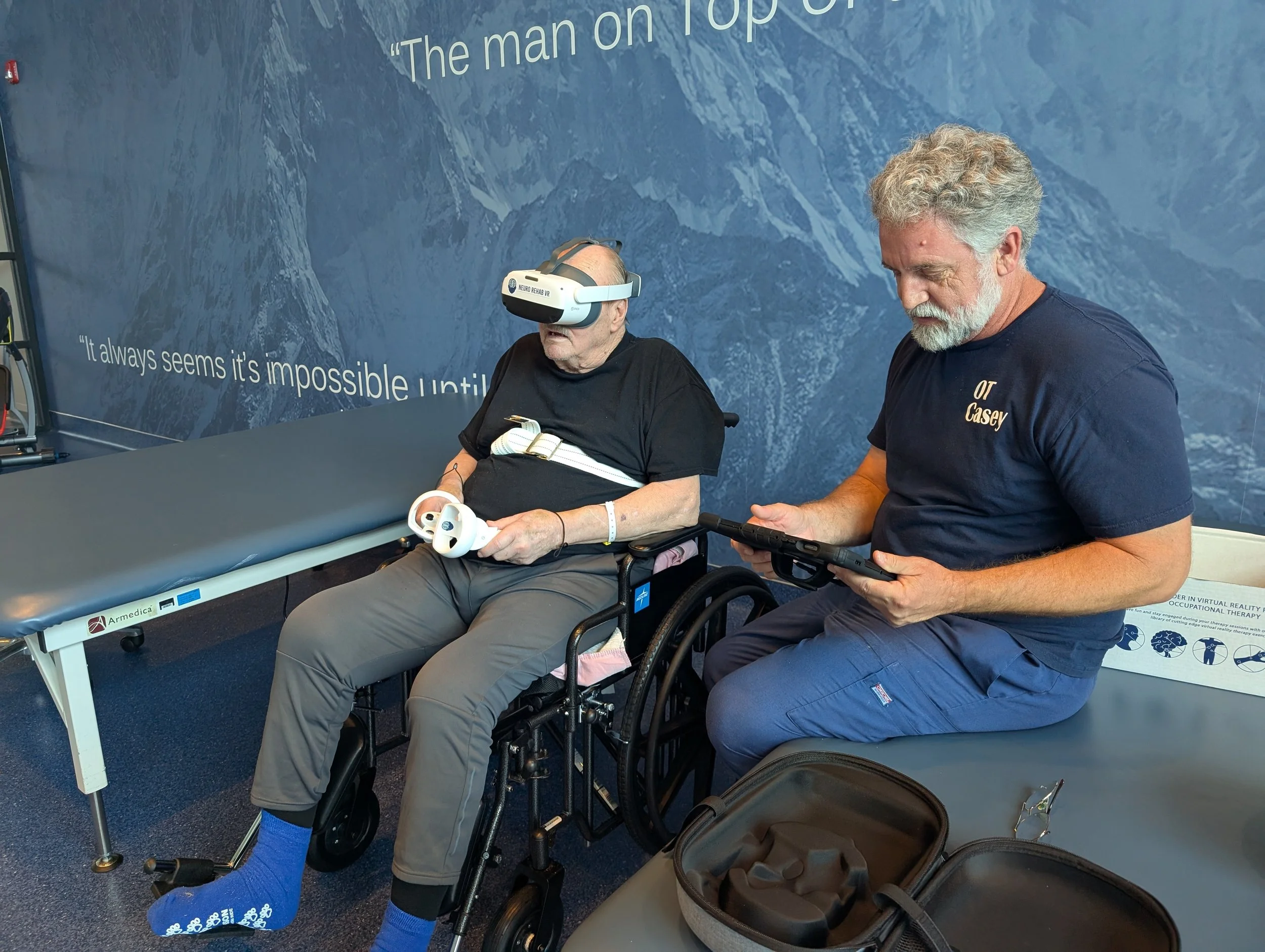
Smart Therapy was not built by starting with a technology and looking for a clinical problem to attach it to. It started inside a neuro outpatient clinic nearly a decade ago, where an early version of the system was tested directly with patients and refined based on what a therapist actually needed in the room during a real session, not on what looked impressive in a product pitch. That origin shapes what the platform is today: a Pico headset paired with a therapist-controlled tablet, built so that the person running the session, not the patient wearing the headset, sets the pace and adjusts the difficulty in real time.
That structure is also why Smart Therapy fits the Rehabilitation Intelligence category rather than the narrower VR therapy label it started under. The therapist plans the session using what the platform already knows about the patient. VR and AR deliver the intervention itself, with the therapist adjusting settings from the tablet as the patient works through it. The session generates performance data that supports objective measurement, connecting back to the outcome tracking a clinic already needs for evidence-based practice and reimbursement. And because the platform, not a separate system, captured that data in the first place, documentation starts from real session information instead of a blank note and a therapist's memory.
None of this replaces clinical judgment, and none of the research reviewed here suggests it should. What it replaces is the fragmentation that has defined rehabilitation technology up to this point, where a clinic ends up managing a VR system, a separate outcomes tracker, and a separate documentation workflow as three unconnected purchases instead of one coherent process. Smart Therapy's clinic-tested history is precisely why it was built to close that gap rather than widen it. The platform exists because a real clinic, almost ten years ago, needed exactly this kind of connected workflow and could not find it anywhere else.
Where This Leaves Clinicians
The VR demo era was never really about VR. It was about clinicians and researchers proving that immersive technology could produce real clinical outcomes, and the evidence reviewed here shows that case has been made. The work ahead now looks different from that earlier chapter, because it is about whether that proven technology, along with eye tracking, AI, and objective assessment, gets delivered to clinicians as four more disconnected tools competing for attention on a crowded desktop, or as one Rehabilitation Intelligence platform that helps a therapist plan the right session, deliver it well, measure what actually happened, and document it without retyping the whole thing from scratch. Rehabilitation has already outgrown the demo. The technology, and the clinics using it well, are ready to move on to the workflow.
-
Ali, Shahmir H, and Hein Thu. “App Fatigue in mHealth: Beyond Improving Apps, Advance Equity by Meeting People Where They Are.” PLOS Digital Health, vol. 4, no. 11, 21 Nov. 2025, pp. e0001107-e0001107, https://pmc.ncbi.nlm.nih.gov/articles/PMC12637926/, 10.1371/journal.pdig.0001107. Accessed 3 Sept. 2026.
Attoh-Mensah, Elpidio, et al., 40778384. “Artificial Intelligence in Personalized Rehabilitation: Current Applications and a SWOT Analysis.” Frontiers in Digital Health, vol. 7, 24 July 2025, p. 1606088. PubMed, https://pubmed.ncbi.nlm.nih.gov/40778384/, 10.3389/fdgth.2025.1606088. Accessed 3 Sept. 2026.
Calderone, Andrea, et al., 42228930. “Eye-Tracking Technologies for Cognitive Assessment After Acquired Brain Injury: Systematic Review.” JMIR Rehabilitation and Assistive Technologies, vol. 13, 2 June 2026, p. e81276. PubMed, https://pubmed.ncbi.nlm.nih.gov/42228930/, 10.2196/81276. Accessed 3 Sept. 2026.
Kristal, Anat, et al. “Use of Standardized Outcome Measures Among Physical Therapists in the United States: A Cross-Sectional Survey Study.” PLoS ONE, vol. 20, no. 8, 20 Aug. 2025, pp. e0330528-e0330528, https://pmc.ncbi.nlm.nih.gov/articles/PMC12367168/, 10.1371/journal.pone.0330528. Accessed 3 Sept. 2026.
Laver, Kate E, et al. “Virtual Reality for Stroke Rehabilitation.” Cochrane Database of Systematic Reviews, vol. 2025, no. 6, 20 June 2025, 10.1002/14651858.cd008349.pub5.
Marko Ka-leung Chan, et al. “Examining Eye Tracking Metrics and Cognitive Function in Post-Stroke Individuals: A Comparison of Visual Searching Tasks Between Those With and Without Cognitive Impairment.” Cerebrovascular Diseases, 20 Dec. 2023, 10.1159/000535756.
Olakotan, Olufisayo, et al. “Usability Challenges in Electronic Health Records: Impact on Documentation Burden and Clinical Workflow: A Scoping Review.” Journal of Evaluation in Clinical Practice, vol. 31, no. 4, June 2025, 10.1111/jep.70189.
Schwartz-Dillard, Jessica, et al. “Electronic Documentation Burden Among Outpatient Rehabilitation Therapists: A Qualitative Descriptive Study and Quality Improvement Initiative.” Journal of the American Medical Informatics Association, 22 July 2024, 10.1093/jamia/ocae192.
Soleimani, Mohsen, et al. “The Efficacy of Virtual Reality for Upper Limb Rehabilitation in Stroke Patients: A Systematic Review and Meta-Analysis.” BMC Medical Informatics and Decision Making, vol. 24, no. 1, 24 May 2024, 10.1186/s12911-024-02534-y.