
Written by: Brianna Hodge
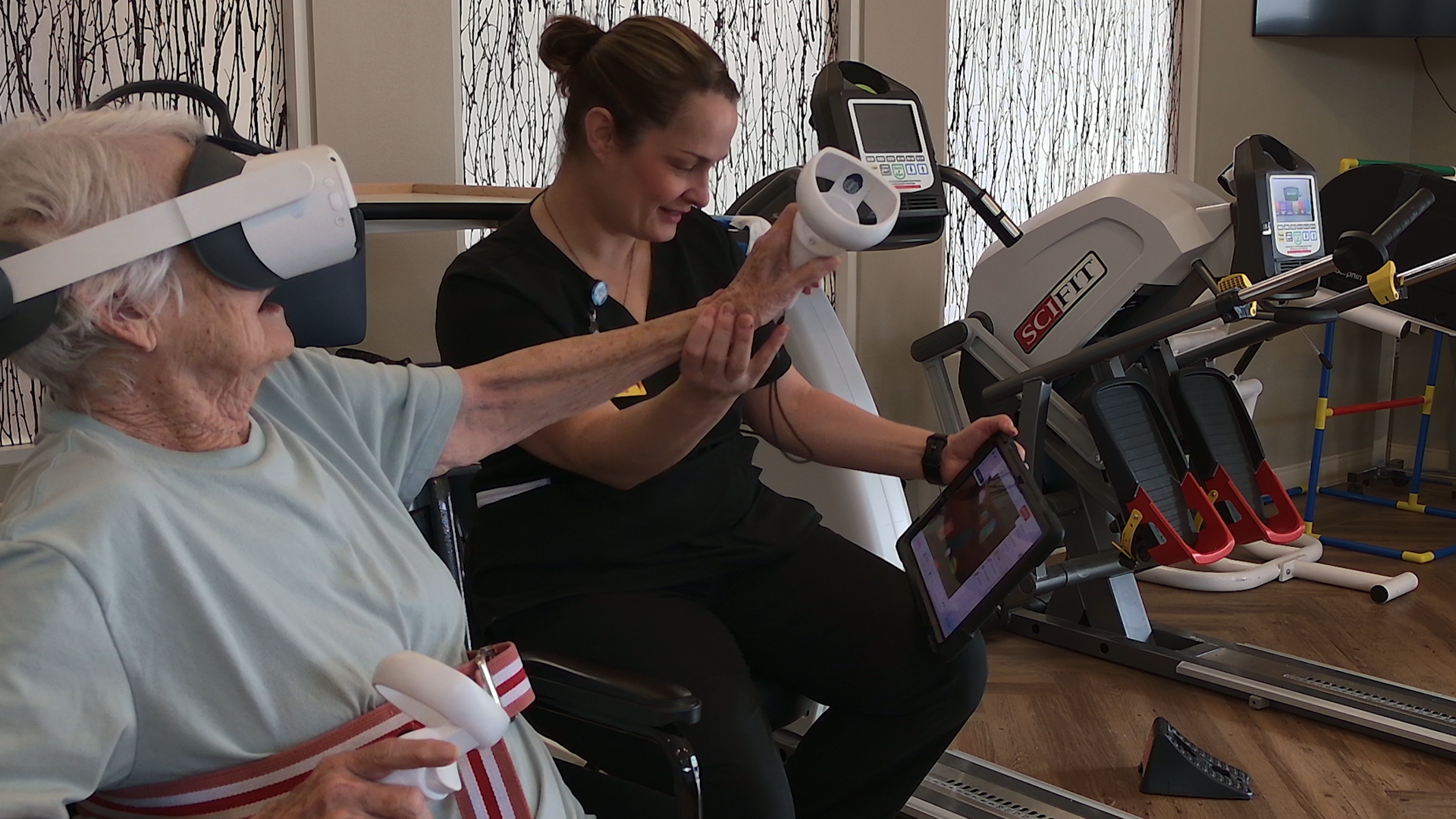
Virtual reality has become one of healthcare's most talked-about technologies, yet it is also one of the most misunderstood. For many clinicians, the first image that comes to mind is still someone wearing a headset while interacting with a digital world. While the headset is certainly the most visible piece of the technology, it is perhaps the least important part of what makes virtual reality effective in rehabilitation. The true value lies not in the hardware itself, but in how clinicians use immersive environments to create meaningful, repetitive, patient-specific experiences that promote recovery. In rehabilitation, virtual reality is simply another therapeutic medium, one that allows therapists to apply evidence-based interventions in ways that are often difficult or impossible to recreate consistently in traditional clinical settings (Laver et al.; Cardile et al. ).
As research surrounding immersive rehabilitation has expanded over the past decade, one theme has emerged repeatedly: virtual reality does not replace clinical expertise. Instead, it amplifies it. A well-designed virtual environment still depends entirely on sound clinical reasoning, appropriate task selection, individualized progression, and therapist-guided decision-making. Just as resistance bands or balance equipment are only as effective as the interventions built around them, virtual reality succeeds when it is integrated into skilled rehabilitation rather than treated as entertainment or a standalone solution. The question is no longer whether VR belongs in rehabilitation, but rather how clinicians can use it to better support motor recovery, cognitive engagement, and functional independence (Laver et al.; Kenea et al. ).
Why the Brain Responds Differently to Immersive Therapy
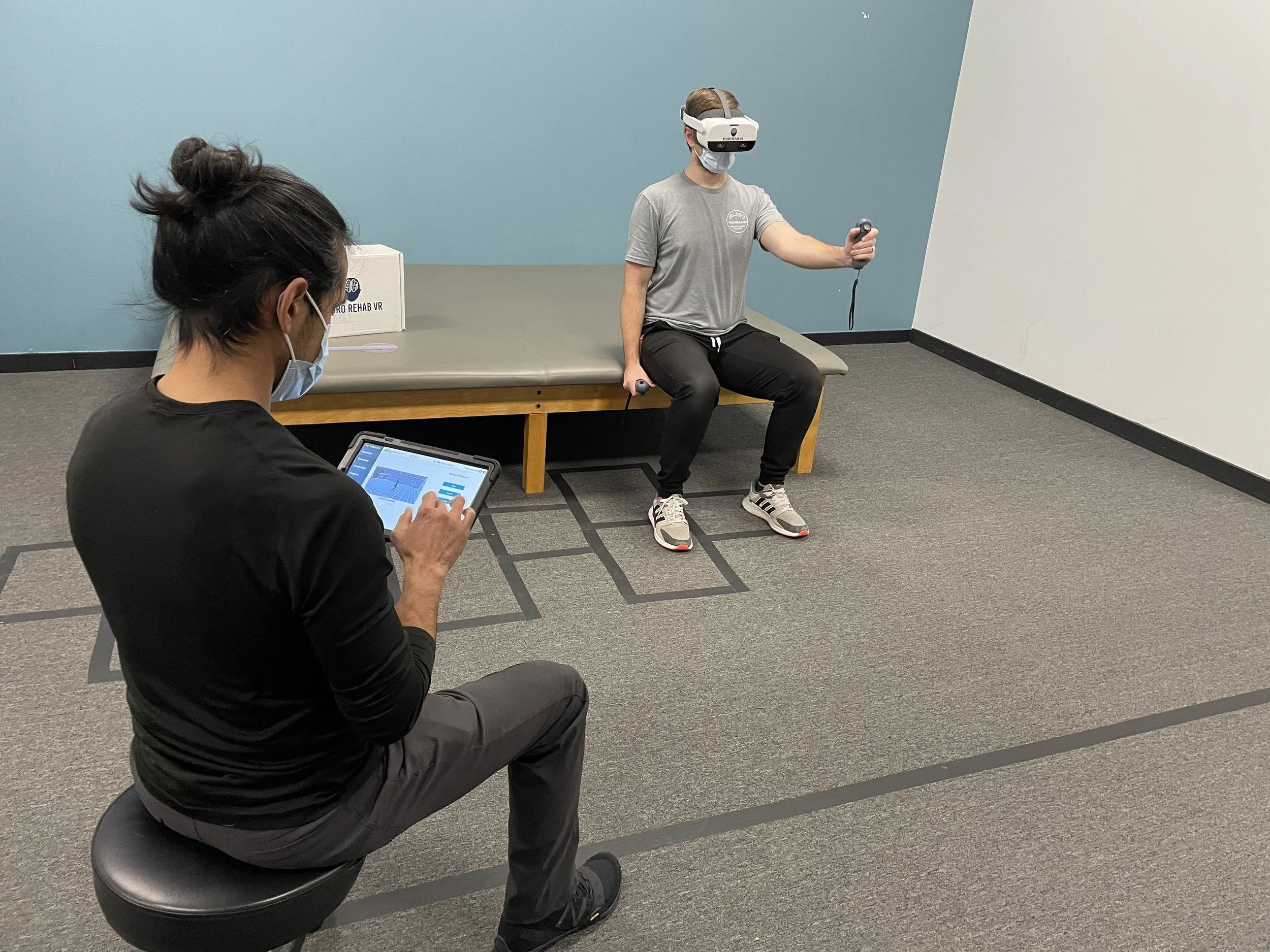
One of the defining characteristics of virtual reality is immersion. Unlike watching a screen or performing isolated exercises, immersive environments surround the patient with meaningful visual, auditory, and interactive information. This increased sensory engagement changes how many patients participate in therapy. Rather than completing repetitions because they have been instructed to do so, patients often become invested in accomplishing functional goals within the environment itself. That shift in attention may seem subtle, but it has important neurological implications.
Motor learning research consistently demonstrates that repetition alone is insufficient for optimal recovery. Practice must also be purposeful, challenging, and accompanied by meaningful feedback. The brain strengthens neural pathways when movement is paired with attention, motivation, and task relevance. Virtual reality naturally incorporates many of these principles by providing immediate visual feedback, adaptable levels of difficulty, multisensory input, and functional goals that encourage active problem solving rather than passive movement. These characteristics help create the conditions necessary for experience-dependent neuroplasticity, the process through which the nervous system reorganizes itself following injury or disease (Kleim and Jones; Winstein et al.).
Neuroplasticity is often described as the brain's ability to change, but that change is driven by specific experiences. Repeated activation of neural circuits strengthens existing connections while encouraging new pathways to develop around damaged tissue. This is particularly relevant following neurological injury, where the ultimate goal is not simply improving isolated impairments but restoring participation in meaningful activities. Virtual reality allows therapists to repeatedly expose patients to functional tasks that closely resemble real-world situations while maintaining a safe and controlled clinical environment. Whether practicing reaching into cabinets, navigating crowded environments, or performing cognitive challenges while walking, the interventions remain grounded in functional performance rather than abstract exercise (Kleim and Jones).
Moving Beyond Exercise Toward Functional Motor Learning
Historically, rehabilitation has often separated impairment-based treatment from functional practice. Patients might complete strengthening exercises at one station, balance activities at another, and finally practice activities of daily living at the end of the session if time allowed. Modern rehabilitation increasingly recognizes that recovery occurs most effectively when therapeutic activities directly reflect the functional tasks patients hope to regain.
Motor learning literature emphasizes specificity of practice, variable environments, high repetition, appropriate challenge, and continuous progression. In other words, people become better at performing the activities they actually practice. Walking improves through walking. Cooking improves through cooking. Dressing improves through dressing. The more closely therapy resembles real-world performance, the greater the likelihood that improvements will transfer outside the clinic (Winstein et al.).
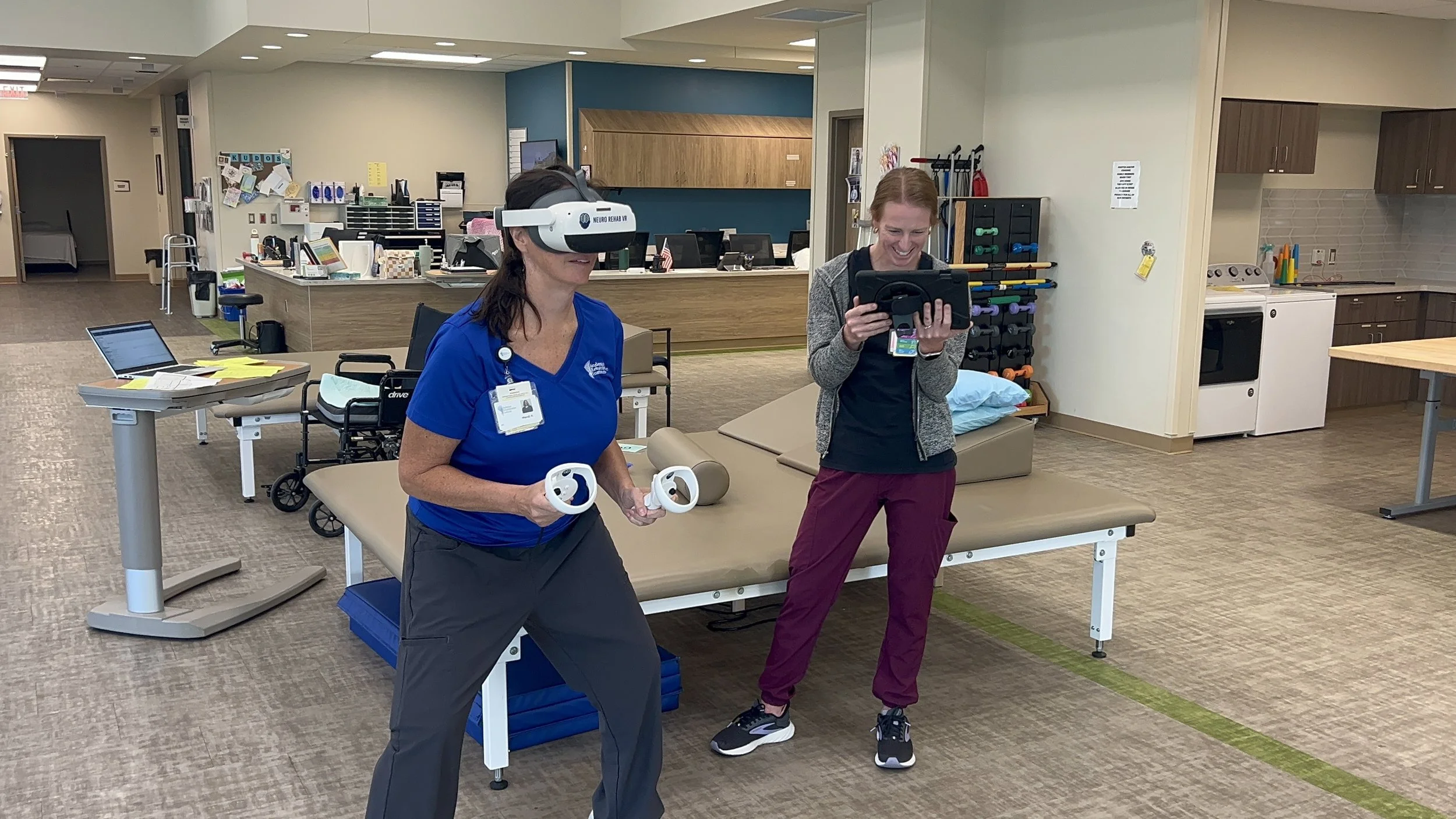
Virtual reality offers clinicians an opportunity to bridge this gap by embedding therapeutic principles into simulated everyday activities. Instead of repeatedly reaching toward cones placed on a table, patients may reach for groceries, organize household objects, prepare meals, or navigate community environments that require scanning, turning, weight shifting, decision-making, and balance simultaneously. These environments maintain therapeutic goals while increasing ecological validity, meaning they better reflect the complexity of everyday life.
Perhaps equally important is the ability to adjust task difficulty in real time. Motor learning depends on presenting patients with challenges that are neither too easy nor overwhelmingly difficult. As performance improves, tasks must continue to evolve to maintain learning. Virtual environments can rapidly modify speed, complexity, cognitive demands, visual distractions, or environmental conditions while allowing therapists to maintain control over patient safety. This adaptability helps clinicians continually match intervention intensity to patient ability throughout recovery (Winstein et al.).
Stroke Rehabilitation: The Largest Body of Evidence
Few neurological populations have been studied more extensively in virtual reality research than individuals recovering from stroke. Stroke rehabilitation often requires thousands of repetitions to promote upper extremity recovery, balance improvements, gait retraining, visual scanning, and cognitive reintegration. Maintaining patient engagement throughout these repetitive interventions remains one of rehabilitation's greatest challenges.
Systematic reviews continue to demonstrate encouraging findings. A Cochrane review led by Kate Laver and colleagues found that virtual reality, when used alongside conventional therapy, improves upper extremity function and activities of daily living compared with conventional therapy alone. Rather than replacing therapist-guided rehabilitation, immersive interventions appear to enhance opportunities for additional task-specific practice that contributes to improved functional outcomes (Laver et al.).
More recent meta-analyses have strengthened this evidence. Kenea and colleagues analyzed immersive virtual reality interventions targeting upper extremity recovery after stroke and reported significant improvements in motor function, movement quality, and functional performance across multiple randomized controlled trials. Similarly, Navas-Otero and colleagues concluded that rehabilitation incorporating virtual reality significantly improved functional capacity among post-stroke patients compared with conventional approaches alone. Importantly, many of these studies emphasized that greater treatment intensity and repeated functional practice were key contributors to improved outcomes rather than immersion by itself (Kenea et al. ; Navas-Otero et al.).
Researchers have also begun exploring how different forms of virtual reality influence executive function alongside motor recovery. A recent systematic review by Cardile and colleagues suggests that immersive interventions may support not only physical improvements but also cognitive processes such as attention, planning, and executive control that are essential for successful community reintegration after stroke. Although additional research continues to refine best practices, the direction of evidence increasingly supports integrating virtual reality into comprehensive stroke rehabilitation programs rather than viewing it as a novel adjunct (Cardile et al. ).
Dual-Task Training Reflects Real Life
Outside the clinic, very few daily activities involve focusing on only one task at a time. People walk while carrying groceries, converse while navigating crowded hallways, search for street signs while maintaining balance, or prepare meals while remembering multiple steps in a sequence. These simultaneous physical and cognitive demands are often precisely where patients experience difficulty following neurological injury.
Traditional rehabilitation has historically separated motor and cognitive interventions into different portions of treatment. However, growing evidence suggests that combining these demands may better reflect real-world performance and improve carryover into everyday activities. Dual-task training intentionally challenges patients to manage movement while simultaneously completing cognitive tasks such as memory, attention, problem-solving, or decision-making.
Virtual reality provides an ideal platform for this type of intervention because clinicians can naturally integrate cognitive demands into functional movement without creating artificial scenarios. Patients may navigate environments while identifying objects, remembering shopping lists, avoiding obstacles, responding to changing instructions, or completing executive-function tasks during gait and balance activities. Recent studies continue to demonstrate that combined motor-cognitive interventions can improve gait performance, cognitive function, and dual-task capacity across neurological populations, supporting the growing emphasis on functionally integrated rehabilitation rather than isolated training approaches (Fritz et al. ).
Parkinson's Disease: Addressing Movement, Cognition, and Confidence
Parkinson's disease presents clinicians with a unique challenge because many of its most disabling symptoms occur during complex, real-world movement rather than simple exercise. Difficulties with gait initiation, freezing of gait, turning, balance, dual-task performance, and navigating busy environments often limit independence long before strength becomes the primary concern. These impairments are influenced by both motor and cognitive changes, requiring interventions that address movement quality while simultaneously engaging attention, executive function, and environmental awareness.
Virtual reality has emerged as a valuable tool in Parkinson's rehabilitation because it allows therapists to recreate situations that commonly trigger mobility impairments while maintaining a controlled therapeutic environment. Visual cues, environmental obstacles, variable walking paths, and functional tasks can all be adjusted to challenge patients without compromising safety. A growing body of evidence suggests these immersive environments may improve gait speed, stride length, balance, and freezing of gait while increasing patient engagement throughout treatment. Recent systematic reviews have also found improvements in mobility and motor performance when VR is incorporated alongside conventional physical therapy rather than replacing it, highlighting the importance of combining immersive technology with therapist-guided clinical decision-making (Gulcan et al. .; Kwon et al. ).
Researchers have also begun exploring the relationship between cognitive engagement and motor performance in Parkinson's disease. Since everyday mobility rarely occurs in isolation, interventions that combine walking with attention, problem-solving, or environmental navigation may better prepare individuals for community mobility than repetitive gait training alone. While additional high-quality research is still expanding this area, current findings continue to support integrated motor-cognitive rehabilitation that reflects the realities patients face outside the clinic (Fritz et al. ).
Vestibular Rehabilitation: Recreating the Environments Patients Avoid
For individuals living with vestibular dysfunction, recovery often depends on repeated exposure to movements and environments that initially provoke symptoms. Grocery stores, crowded hallways, moving visual scenes, uneven terrain, elevators, and busy intersections can all trigger dizziness or imbalance. Unfortunately, recreating these environments consistently inside a rehabilitation clinic is difficult, limiting opportunities for graded exposure.
Virtual reality offers clinicians the ability to safely simulate many of these visually complex environments while carefully controlling symptom intensity. Rather than waiting until patients encounter challenging situations in the community, therapists can gradually introduce visual motion, head movements, environmental distractions, and balance challenges in a structured manner that supports vestibular adaptation and habituation.
Clinical research supports this approach. Systematic reviews comparing virtual reality with conventional vestibular rehabilitation have reported meaningful improvements in balance, dizziness severity, gait, and functional mobility, particularly among older adults with chronic vestibular disorders. Importantly, the immersive environments also allow clinicians to progressively modify task demands as symptoms improve, helping patients rebuild confidence while reducing avoidance behaviors that frequently develop following prolonged dizziness BAŞOĞLU et al. ).
The psychological component should not be overlooked either. Fear of falling and anxiety surrounding symptom provocation often become significant barriers to recovery. Practicing challenging situations in a supervised, controlled environment allows many patients to gradually regain trust in their ability to move safely, an important factor in returning to community participation.
Older Adults Are More Ready Than Many People Think
One of the most persistent myths surrounding virtual reality is that older adults are either unwilling or unable to use the technology. In reality, research tells a far different story.
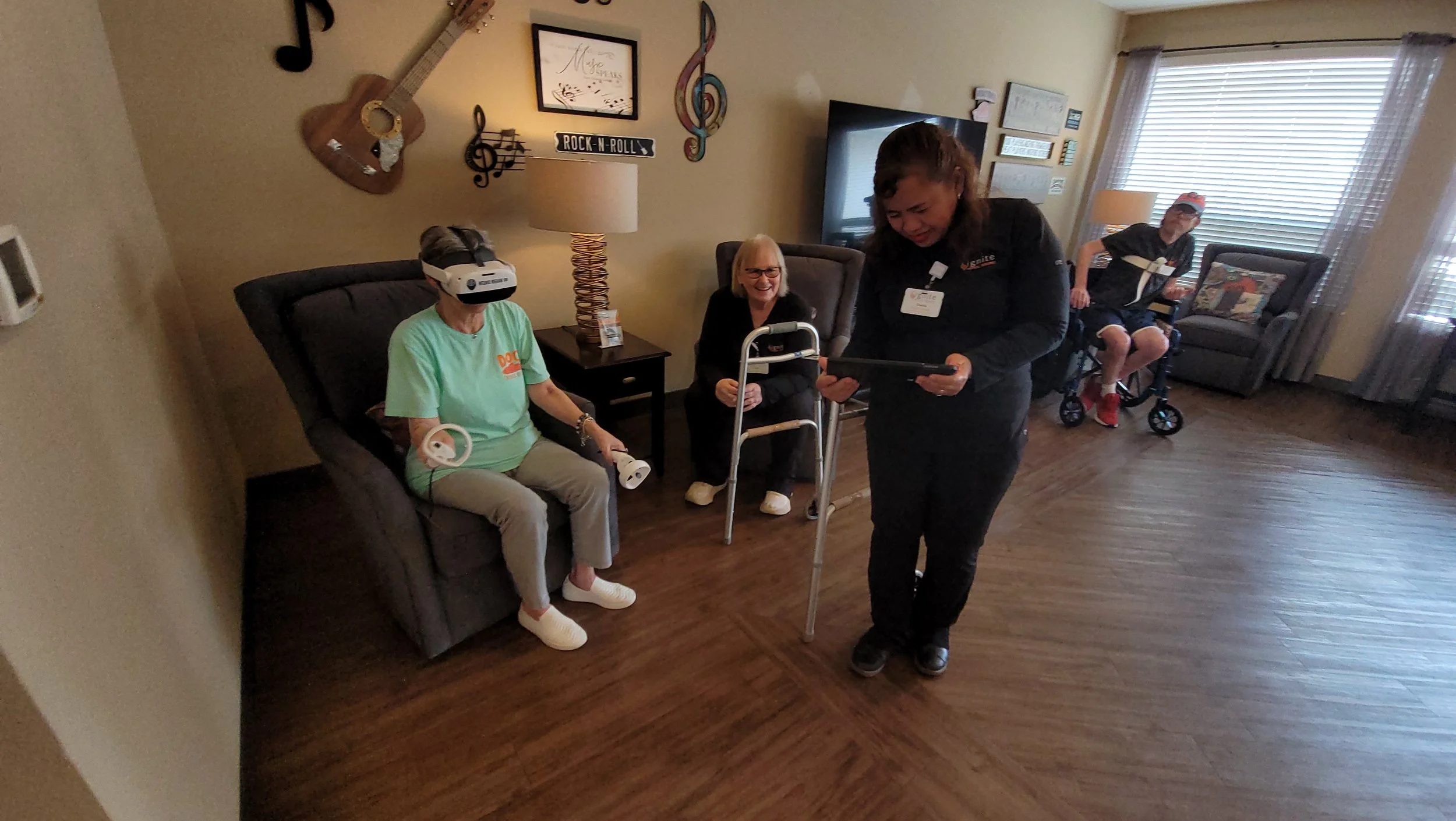
When virtual reality experiences are designed with clinical usability in mind and introduced with appropriate therapist guidance, older adults consistently demonstrate high acceptance, satisfaction, and adherence. While some clinicians worry about technology anxiety or motion sickness, studies show these concerns are often outweighed by patients' enjoyment, motivation, and willingness to participate. Many older adults report that immersive therapy feels less repetitive than traditional exercise and helps them remain engaged throughout treatment sessions.
Several implementation studies have found that therapist support, intuitive interfaces, gradual introduction, and individualized task selection play a much larger role in successful adoption than chronological age alone. In other words, patient acceptance is influenced less by the technology itself and more by how thoughtfully it is incorporated into clinical care. As today's older adult population becomes increasingly familiar with digital technology in everyday life, assumptions about their reluctance to use immersive rehabilitation continue to become less accurate (Corbel et al.; Tuena et al. ).
This growing acceptance has important implications for rehabilitation settings such as skilled nursing facilities, outpatient clinics, inpatient rehabilitation hospitals, and home health. If technology can increase participation while maintaining evidence-based therapeutic principles, clinicians gain another option for delivering meaningful, patient-centered care without sacrificing clinical quality.
Looking Beyond the Technology
As virtual reality becomes more common in rehabilitation, conversations are gradually shifting away from the novelty of the headset and toward the quality of the intervention itself. This is an important evolution. The technology alone does not improve outcomes. Instead, outcomes are driven by the same principles that have always guided effective rehabilitation: individualized treatment planning, task-specific practice, appropriate progression, meaningful repetition, patient engagement, and skilled clinical reasoning.
The headset simply provides another environment in which those principles can be applied. For some patients, that environment creates opportunities that are difficult to replicate elsewhere. It allows therapists to simulate community mobility without leaving the clinic, practice activities of daily living in a controlled setting, incorporate cognitive challenges into movement, and increase repetition without increasing monotony. These advantages do not replace traditional rehabilitation, they extend what clinicians are able to accomplish within each treatment session.
Bringing Evidence Into Everyday Clinical Practice
At Neuro Rehab VR, our philosophy has always been that virtual reality should support the therapist, not replace them. The Smart Therapy™ Complete Solution was designed around the clinical principles that rehabilitation professionals already use every day. Rather than focusing solely on immersive experiences, the platform emphasizes task-specific practice, adaptable difficulty, measurable progression, and functional activities that mirror real-world participation. Clinicians maintain complete control over treatment selection, progression, and patient safety while using immersive environments to increase engagement and opportunities for meaningful practice.
Whether working with an individual recovering from stroke, treating Parkinson's disease, progressing vestibular rehabilitation, challenging dual-task performance, or helping an older adult regain confidence with everyday activities, the goal remains the same: creating experiences that encourage active participation while supporting evidence-based rehabilitation. Technology should never dictate treatment. Instead, it should expand the clinician's ability to deliver personalized, functional care that keeps patients engaged in the work of recovery.
As research continues to grow, one message remains remarkably consistent. The future of virtual reality in rehabilitation is not about replacing therapists or redefining rehabilitation. It is about giving clinicians another evidence-supported tool to promote neuroplasticity, improve motor learning, increase functional practice, and ultimately help patients return to the activities that matter most.
-
BAŞOĞLU, YUŞA, et al. “Effectiveness of Virtual Reality-Based Vestibular Rehabilitation in Patients with Peripheral Vestibular Hypofunction.” Turkish Journal of Medical Sciences, vol. 52, no. 6, 1 Jan. 2022, pp. 1970–1983, 10.55730/1300-0144.5545.
Cardile, Davide, et al. “A Systematic Review on the Use of Virtual Reality in Post-Stroke Patients: Exploring When Modalities Make the Difference in Executive and Motor Recovery.” Frontiers in Virtual Reality, vol. 6, 1 Oct. 2025, 10.3389/frvir.2025.1653968.
Corbel, Camille, et al. “Effects of Virtual Reality on Pain and Anxiety in Older Adults: A Scoping Review.” Geriatric Nursing, vol. 63, 10 May 2025, pp. 619–629, https://www.sciencedirect.com/science/article/pii/S0197457225001697, 10.1016/j.gerinurse.2025.04.031. Accessed 10 July 2026.
Fritz, Nora E., et al. “Motor-Cognitive Dual-Task Training in Persons with Neurologic Disorders: A Systematic Review.” Journal of Neurologic Physical Therapy: JNPT, vol. 39, no. 3, 1 July 2015, pp. 142–153, https://www.ncbi.nlm.nih.gov/pubmed/26079569, 10.1097/NPT.0000000000000090. Accessed 10 July 2026.
Gulcan, Kubilay, et al. “The Effects of Augmented and Virtual Reality Gait Training on Balance and Gait in Patients with Parkinson’s Disease.” Acta Neurologica Belgica, vol. 123, no. 5, 28 Nov. 2022, 10.1007/s13760-022-02147-0.
Kenea, Chala Diriba, et al. “Immersive Virtual Reality in Stroke Rehabilitation: A Systematic Review and Meta-Analysis of Its Efficacy in Upper Limb Recovery.” Journal of Clinical Medicine, vol. 14, no. 6, 7 Mar. 2025, p. 1783, 10.3390/jcm14061783.
Kleim, Jeffrey A., and Theresa A. Jones. “Principles of Experience-Dependent Neural Plasticity: Implications for Rehabilitation After Brain Damage.” Journal of Speech, Language, and Hearing Research, vol. 51, no. 1, 2008, https://doi.org/10.1044/1092-4388(2008/018).
Kwon, Sun-Ho, et al. “A Systematic Review and Meta-Analysis on the Effect of Virtual Reality-Based Rehabilitation for People with Parkinson’s Disease.” Journal of Neuroengineering and Rehabilitation, vol. 20, no. 1, 20 July 2023, 10.1186/s12984-023-01219-3.
Laver, Kate E, et al. “Virtual Reality for Stroke Rehabilitation.” Cochrane Database of Systematic Reviews, vol. 2025, no. 6, 20 June 2025, 10.1002/14651858.cd008349.pub5.
Navas-Otero, A., et al. “Rehabilitation Applied with Virtual Reality Improves Functional Capacity in Post-Stroke Patients. A Systematic Review and Meta-Analysis.” Rehabilitación, vol. 59, no. 2, 19 Apr. 2025, p. 100907, https://www.sciencedirect.com/science/article/pii/S0048712025000271, 10.1016/j.rh.2025.100907. Accessed 10 July 2026.
Tuena, Cosimo, et al. “Usability Issues of Clinical and Research Applications of Virtual Reality in Older People: A Systematic Review.” Frontiers in Human Neuroscience, vol. 14, 8 Apr. 2020,10.3389/fnhum.2020.00093.
Winstein, Carolee J, et al. “Guidelines for Adult Stroke Rehabilitation and Recovery: A Guideline for Healthcare Professionals from the American Heart Association/American Stroke Association.” Stroke, vol. 47, no. 6, 4 May 2016, pp. e98-e169, https://www.ncbi.nlm.nih.gov/pubmed/27145936, 10.1161/STR.0000000000000098. Accessed 10 July 2026.