
The Hidden Key to More Active Therapy Time in Rehabilitation
Written by: Brianna Hodge
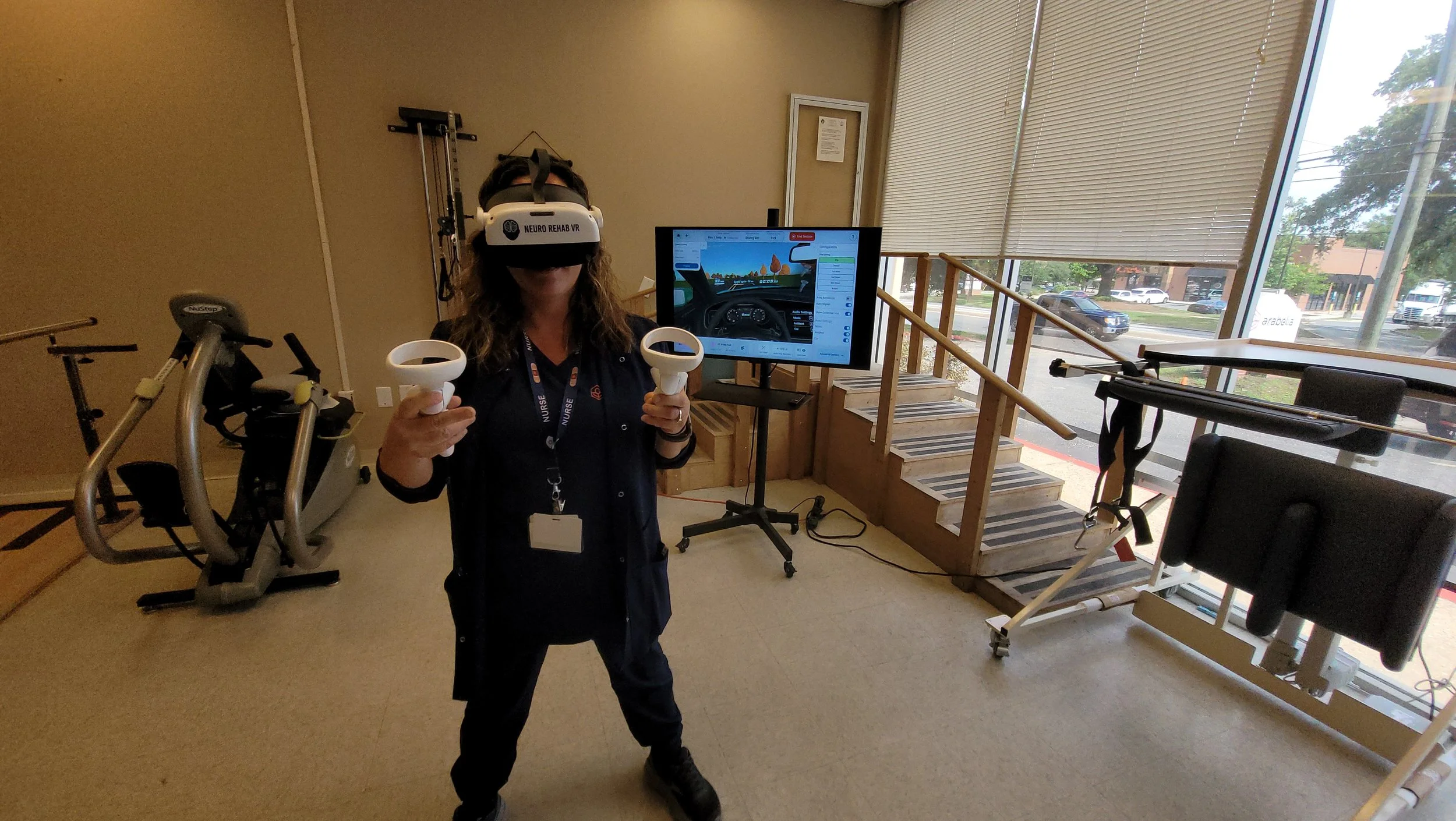
Most therapists have had the same thought at some point during a busy week: "If I only had a little more time with this patient."
You finally get a patient engaged. They are moving well, participating, and responding to your cues. The session is gaining momentum, and then it is already time to wrap up and move on to the next patient. Meanwhile, documentation still needs to be completed, evaluations are waiting, and productivity expectations have not changed. It can feel like there are never enough hours in the day to accomplish everything you would like to do for the people you serve.
The reality is that most clinicians are not struggling because they lack knowledge or clinical skill. They are working within systems that place significant demands on their time. Whether you work in skilled nursing, inpatient rehabilitation, outpatient care, or home health, there is constant pressure to balance patient care with efficiency. Because of that, the conversation is gradually shifting away from finding more treatment time and toward making better use of the time that already exists.
When clinicians talk about improving efficiency, they are not talking about rushing through treatments or cutting corners. They are talking about increasing active participation. They are looking for ways to keep patients engaged, moving, and practicing meaningful tasks throughout the session. The goal is simple: create more opportunities for therapeutic activity without extending appointment lengths.
Research continues to show that this approach matters. Recovery is driven by participation, repetition, and meaningful practice. The more actively involved a patient is during treatment, the greater the opportunity for motor learning, neuroplasticity, and functional improvement.

Why Active Therapy Time Matters
Not every minute of a therapy session is spent actively performing therapeutic tasks. Some time is naturally spent providing education, adjusting equipment, documenting observations, discussing goals, or transitioning between activities. Those moments are important and often necessary. However, they also reduce the amount of time available for active movement and practice.
This distinction has become increasingly important as researchers continue to explore what drives successful rehabilitation outcomes. Across neurological, orthopedic, and geriatric populations, one theme appears repeatedly: patients need opportunities to practice. Whether the goal is improving balance, increasing gait speed, restoring upper extremity function, or relearning activities of daily living, progress is built through repetition and engagement.
A recent review of rehabilitation technologies highlighted the importance of creating opportunities for consistent, meaningful participation during treatment sessions (Naqvi et al.). Simply attending therapy is not enough. Patients must be actively involved in the therapeutic process if they are going to achieve meaningful gains.
For clinicians, this creates an interesting challenge. How do you increase the amount of active practice occurring during a session without adding additional treatment time? The answer often comes down to one factor: engagement.
Engagement Drives Participation
One of the biggest barriers to active therapy time is not necessarily physical ability. It is maintaining attention and participation throughout treatment.
Many patients enter rehabilitation after experiencing significant life events. They may be recovering from a stroke, brain injury, orthopedic surgery, neurological condition, or prolonged hospitalization. Physical fatigue is common. Cognitive fatigue is common. Anxiety, frustration, and decreased confidence are common as well.
Traditional therapeutic exercises remain valuable, but they can become repetitive over time. When patients lose interest in an activity, participation often decreases. Therapists may find themselves spending more time encouraging involvement and less time facilitating movement.
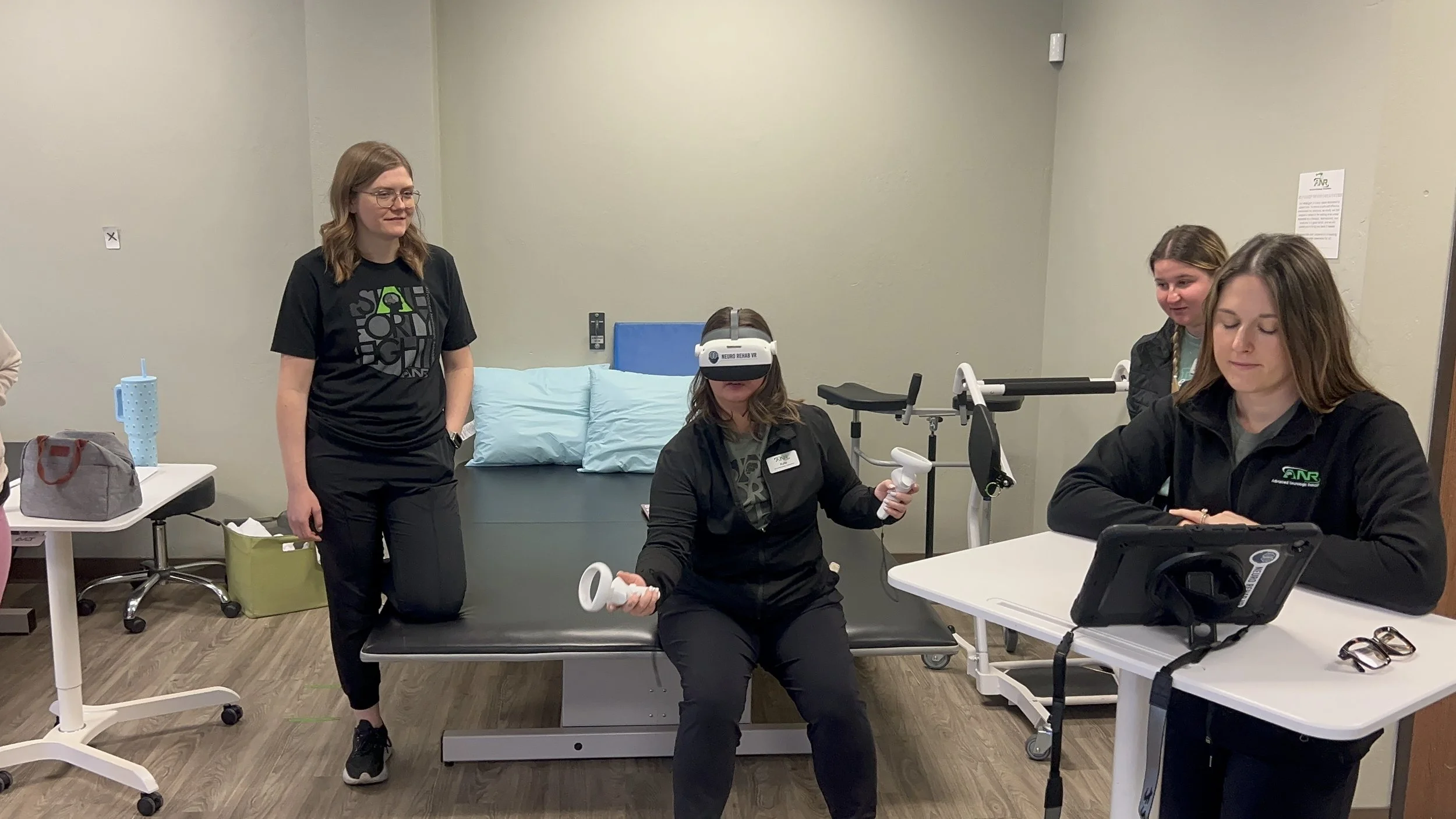
This is where engagement becomes critically important. Researchers examining immersive rehabilitation interventions have consistently found that patients often report higher levels of enjoyment, motivation, and participation when therapy activities feel meaningful and interactive (Clark et al.). When patients are focused on achieving a goal rather than simply completing an exercise, they are often willing to sustain effort for longer periods and perform more repetitions.
The movement itself may be similar. The patient's willingness to continue performing that movement can be dramatically different.
Repetition Is Still One of the Most Powerful Tools We Have
If there is one principle that has remained consistent throughout rehabilitation research, it is the importance of repetition. Patients improve when they repeatedly practice the movements and tasks they are trying to regain.
The challenge is that repetition can quickly become monotonous. Asking a patient to perform the same reaching task dozens of times may be clinically appropriate, but maintaining engagement throughout that process is not always easy. Therapists are constantly searching for ways to increase repetition without increasing boredom.
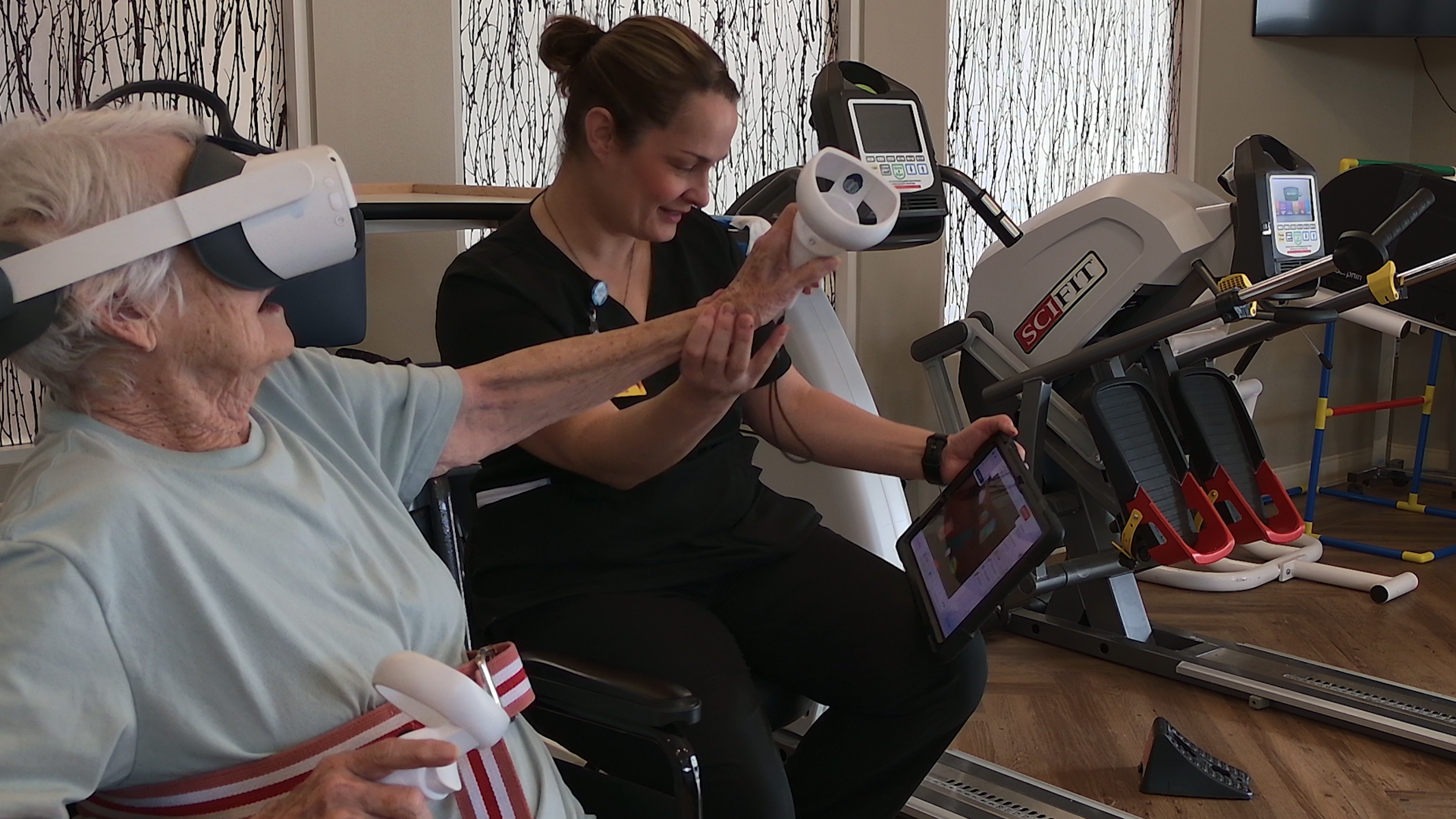
Research examining virtual reality in rehabilitation suggests that immersive environments may help solve this challenge by embedding therapeutic movements into purposeful activities (Host et al.). Instead of simply reaching toward a target, patients may be collecting objects, navigating environments, preparing meals, or completing functional tasks that require the same therapeutic movement patterns.
This shift in presentation can have a significant impact on participation. Patients often become focused on completing the activity rather than counting repetitions. From a clinical perspective, the goal remains the same. The difference is that patients may perform substantially more practice because they remain engaged in the experience.
When clinicians can increase repetition without increasing frustration or disengagement, they create more opportunities for meaningful recovery within the same treatment window.
Why Virtual Reality Is Becoming a Valuable Tool in Rehabilitation
Virtual reality is often discussed as a technology, but its real value lies in how it supports evidence-based rehabilitation principles.
Many of the factors associated with successful rehabilitation are naturally reinforced within immersive environments. Patients receive immediate feedback. Activities are goal-directed. Tasks can be repeated consistently. Progress can be tracked over time. Most importantly, participation often remains high because the experience feels interactive and purposeful.
A systematic review published in Heliyon found that virtual reality interventions can enhance motivation, increase patient involvement, and support high volumes of task-specific practice during rehabilitation (Asadzadeh et al.). Additional research has demonstrated that immersive technologies can improve adherence to rehabilitation programs by making therapeutic activities more engaging and enjoyable (Bateni et al.).
This is important because therapists are not simply trying to entertain patients. They are trying to create environments where patients remain actively involved in meaningful rehabilitation activities. The more engaged patients become, the more likely they are to participate fully throughout the session.
That participation translates into more movement, more practice, and ultimately more opportunities for recovery.
Technology Should Support Therapists, Not Replace Them
One misconception surrounding rehabilitation technology is that it somehow replaces clinical expertise. In reality, the opposite is true.
Technology is most effective when it allows therapists to spend more time doing what only therapists can do. Clinical decision-making, movement analysis, patient education, progression of treatment, and individualized care will always require skilled professionals. Technology simply provides additional tools that can help support those efforts.
Research examining digital rehabilitation solutions has found that technology can reduce barriers to participation while creating more efficient treatment experiences (Tiase et al.). Instead of spending valuable time trying to regain a patient's attention or repeatedly resetting activities, therapists can focus on observing movement quality, providing feedback, and making clinical adjustments.
The technology does not replace the therapist. It helps create an environment where therapists can maximize the value of every treatment minute.
How Neuro Rehab VR Helps Increase Active Therapy Time
At Neuro Rehab VR, we developed the Smart Therapy™ Complete Solution with this exact challenge in mind. Clinicians do not need more complexity added to their workflow. They need tools that help patients stay engaged and active throughout treatment.
The platform combines immersive virtual reality experiences with functional rehabilitation goals such as balance training, gait activities, upper extremity recovery, cognitive engagement, vestibular rehabilitation, and activities of daily living. Rather than focusing solely on exercise, patients are immersed in meaningful tasks that encourage participation while supporting therapeutic objectives.
Because the activities are interactive and goal-oriented, therapists often find that patients remain engaged for longer periods and willingly perform higher volumes of practice. At the same time, real-time performance metrics and AI-assisted documentation tools help reduce administrative burden, allowing clinicians to spend more time focused on patient care.
The result is not longer sessions. The result is often more productive sessions where patients remain actively involved from beginning to end.
The Future of Rehabilitation May Be About Better Minutes, Not More Minutes
Most rehabilitation professionals would gladly accept more time with their patients if it were available. The reality, however, is that healthcare continues to demand efficiency alongside exceptional care. Clinicians are being asked to accomplish more within the same treatment windows, making it increasingly important to maximize the value of every minute.
As research continues to highlight the importance of repetition, engagement, feedback, and task-specific practice, technologies such as virtual reality are helping clinicians rethink how therapy time is used. The goal is not to extend sessions or replace traditional rehabilitation approaches. The goal is to create more opportunities for meaningful participation within the time that already exists.
At the end of the day, patients do not necessarily need longer therapy sessions. They need sessions that keep them engaged, moving, and actively involved in their recovery. When therapists can increase active therapy time without extending appointments, they create more opportunities for progress while making every minute count.
-
Asadzadeh, Afsoon, et al. “Effectiveness of Virtual Reality-Based Exercise Therapy in Rehabilitation: A Scoping Review.” Informatics in Medicine Unlocked, vol. 24, 1 Jan. 2021, p. 100562, www.sciencedirect.com/science/article/pii/S2352914821000526#sec5, https://doi.org/10.1016/j.imu.2021.100562.
Bateni, Hamid , et al. “Use of Virtual Reality in Physical Therapy as an Intervention and Diagnostic Tool.” Rehabilitation Research and Practice, vol. 2024, 25 Jan. 2024, pp. 1–9, pmc.ncbi.nlm.nih.gov/articles/PMC10834096/, https://doi.org/10.1155/2024/1122286.
Clark, Beth, et al. “The Effect of Time Spent in Rehabilitation on Activity Limitation and Impairment after Stroke.” Cochrane Database of Systematic Reviews, vol. 2021, no. 10, 25 Oct. 2021, https://doi.org/10.1002/14651858.cd012612.pub2.
Host, Helen H., et al. “Patient Active Time during Therapy Sessions in Postacute Rehabilitation: Development and Validation of a New Measure.” Physical & Occupational Therapy in Geriatrics, vol. 32, no. 2, 23 May 2014, pp. 169–178, https://doi.org/10.3109/02703181.2014.915282.
Naqvi, Waqar M, et al. “The Dual Importance of Virtual Reality Usability in Rehabilitation: A Focus on Therapists and Patients.” Curēus, vol. 16, no. 3, 22 Mar. 2024, www.ncbi.nlm.nih.gov/pmc/articles/PMC11032731/, https://doi.org/10.7759/cureus.56724.
Tiase, Victoria Lynn, et al. “Advancing Digital Access to Physical Therapy via Virtual and Extended Reality Technology: Prototype Development and Usability Evaluation.” JMIR Formative Research, vol. 9, 5 Dec. 2025, pp. e73783–e73783, https://doi.org/10.2196/73783..