What Happens When Recovery Trains the Brain and Body
Written by: Brianna Hodge
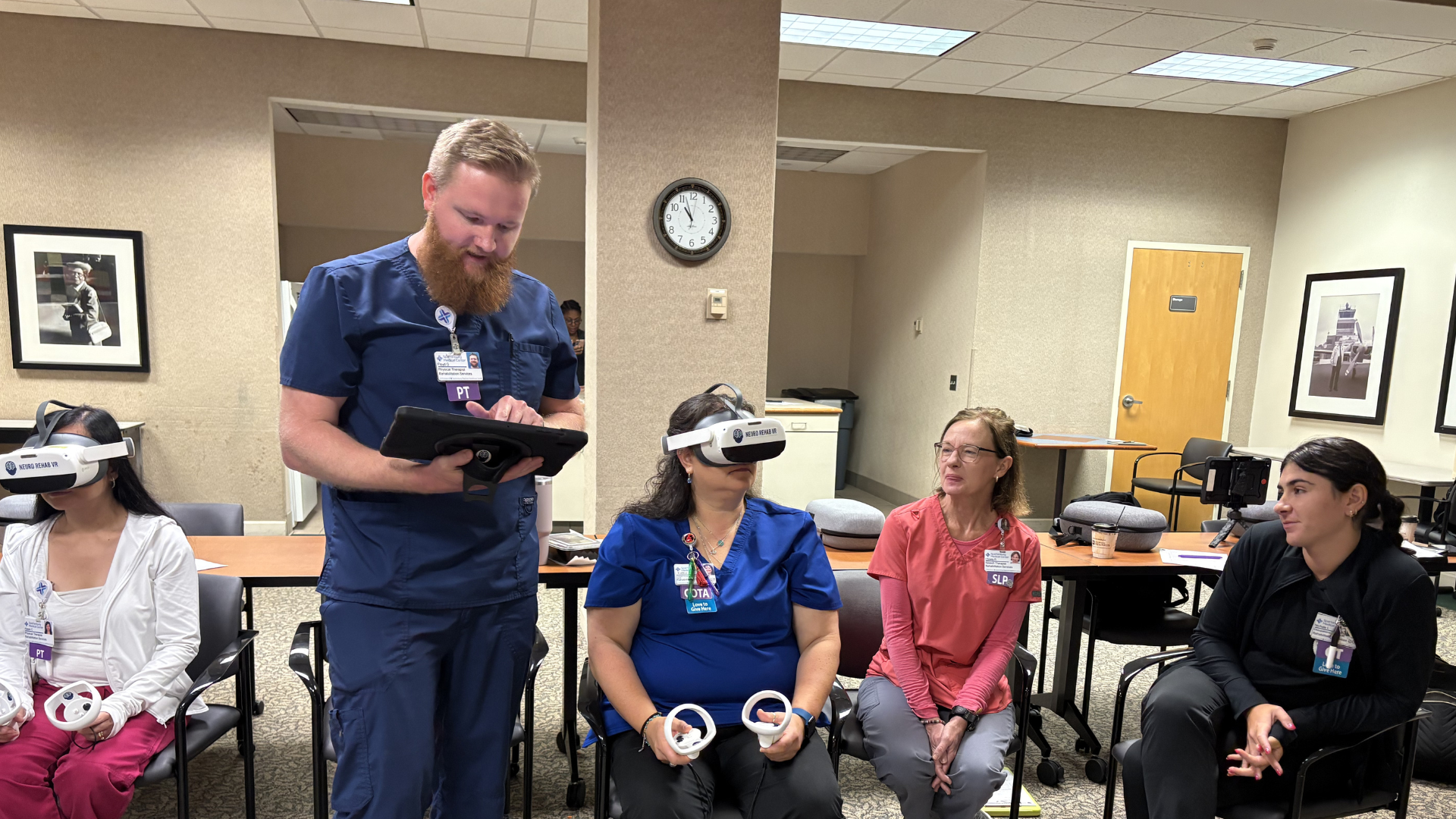
When most people think about rehabilitation, they picture exercises designed to improve strength, balance, coordination, or mobility. These physical components of recovery are certainly important, but they only represent part of what patients need to regain to successfully return to daily life. Outside of the therapy gym, movement rarely happens in isolation. Walking through a grocery store, carrying on a conversation while navigating a hallway, preparing a meal, or even crossing a parking lot all require the brain and body to work together at the same time.
Recovery is not simply about restoring movement; it is about restoring the ability to move, think, react, and adapt in environments that are constantly changing. (Wei et al.)
The reality is that everyday life places simultaneous demands on attention, memory, decision-making, visual processing, and physical movement. While healthy individuals often perform these tasks without consciously thinking about them, neurological injury, aging, and various medical conditions can make managing multiple demands significantly more difficult. A patient may demonstrate good strength and balance during a therapy session, yet struggle when those same physical skills must be combined with cognitive tasks in the real world. This growing understanding has led clinicians and researchers to place greater emphasis on dual-task training as an important component of modern rehabilitation. (Bruni et al.)
What Is Dual-Task Training?
Dual-task training refers to performing two activities simultaneously, typically combining a motor task with a cognitive challenge or another motor task. Walking while answering questions, maintaining balance while solving a problem, reaching for objects while remembering a sequence, or carrying an item while navigating obstacles are all examples of dual-task activities. These situations may seem simple, but they require multiple areas of the brain to communicate efficiently in order to successfully complete both tasks. (Schenk)
Researchers often classify dual-task training into motor-cognitive and motor-motor categories. Motor-cognitive dual-tasking combines movement with mental processing, while motor-motor dual-tasking requires performing two physical tasks at once. Both approaches are valuable because they more closely resemble the types of challenges people encounter during everyday activities. Rehabilitation professionals are increasingly recognizing that patients need opportunities to practice managing these combined demands if they are going to successfully transition back into community life. (Schenk)
Rather than viewing cognition and movement as separate systems, dual-task training acknowledges that they are deeply interconnected. Functional independence depends on the ability to divide attention, prioritize information, make decisions, and maintain physical performance simultaneously. As a result, dual-task interventions are becoming a growing focus in neurological rehabilitation, geriatric care, and fall
Why Walking and Thinking Are More Connected Than We Realize
Walking is often considered an automatic activity, but neuroscience research tells a much different story. Successful gait requires continuous communication between motor control systems, sensory processing networks, visual input, attention, and executive function. Every step requires the brain to interpret information about the environment, maintain balance, adjust movement patterns, and respond to changing conditions. While these processes often occur seamlessly in healthy individuals, they become much more apparent when neurological impairments affect the brain's ability to manage multiple demands simultaneously. (Bruni et al.)
One of the most common observations in rehabilitation is that a patient who walks well during a focused activity may suddenly become less stable when a cognitive challenge is introduced. Walking speed may decrease, stride length may shorten, balance may become less consistent, or the individual may stop walking altogether while trying to answer a question. This phenomenon, often referred to as cognitive-motor interference, highlights the limited attentional resources available to the brain. When two tasks compete for those resources, performance in one or both areas may decline. (Wei et al.)
Research published in Frontiers in Human Neuroscience found that dual-task interventions can positively influence both motor and cognitive performance. The authors noted that because daily life rarely involves movement without distraction, rehabilitation programs that integrate cognitive challenges may better prepare patients for real-world environments. Rather than simply improving walking mechanics, clinicians are increasingly focused on helping patients maintain safe and efficient mobility while managing the attentional demands that accompany everyday activities. (Bruni et al.)
The Hidden Relationship Between Balance and Cognition
Balance is often viewed as a physical skill, but maintaining stability depends heavily on cognitive function. The brain must continuously process information from the visual, vestibular, and somatosensory systems while determining how to respond appropriately. This process requires attention, executive function, problem-solving, and the ability to quickly adapt to changing environmental conditions. When cognitive demands increase, balance performance can be significantly affected. (Mileski)
Research examining dual-task training in older adults has demonstrated that combining cognitive and physical activities can improve both balance performance and cognitive function. These findings are particularly important because many falls occur when individuals are distracted, multitasking, or navigating complex environments. Training balance under these conditions may help patients develop the skills necessary to remain stable when attention is divided, rather than only when they are fully focused on maintaining posture. (The Note Ninjas)
For rehabilitation professionals, this relationship highlights the importance of creating therapy experiences that mirror real-world situations. Patients rarely encounter perfectly controlled environments outside the clinic. Instead, they must navigate busy spaces, carry conversations, process visual information, and make decisions while maintaining balance. By incorporating cognitive challenges into balance training, clinicians can create more meaningful opportunities for patients to prepare for these situations. (Mileski)
What Research Is Teaching Us About Neuro Recovery
One of the reasons dual-task training has gained so much attention in recent years is its connection to neuroplasticity. Neuroplasticity refers to the brain's ability to reorganize itself by creating new neural connections in response to learning and experience. Recovery following stroke, traumatic brain injury, Parkinson's disease, and other neurological conditions relies heavily on this process. The more meaningful and task-specific the experience, the greater the opportunity for adaptive neural change.
A systematic review examining motor-cognitive dual-task interventions found that combining cognitive and physical training can improve gait performance, balance, mobility, and cognitive outcomes across a variety of neurological populations. The researchers suggested that because daily activities inherently require simultaneous motor and cognitive engagement, rehabilitation approaches that reflect these demands may lead to more meaningful functional improvements. (Wei et al.)
Additional research published, reported similar findings showing that dual-task interventions may improve mobility and cognitive performance by encouraging patients to practice managing multiple demands at the same time. Rather than isolating movement from cognition, these interventions challenge the integrated systems responsible for real-world function.(Freitag et al.)
More recent evidence continues to strengthen this perspective. Another paper highlighted emerging advances in dual-task rehabilitation and emphasized the growing role of integrated motor-cognitive interventions in supporting functional recovery. The authors noted that these approaches may help improve not only physical performance but also participation in everyday activities that require attention, decision-making, and adaptability. (Luca Petrigna et al.)
An additional study published in the AIP Conference Proceedings found that dual-task training may improve both balance and cognitive function, providing further support for rehabilitation programs that incorporate simultaneous physical and mental challenges. These findings reinforce the growing consensus that recovery should focus on preparing patients for the complex demands of everyday life rather than isolated therapeutic tasks alone. (Kumar et al.)
Interest in dual-task rehabilitation continues to expand, as demonstrated by ongoing clinical research. A current clinical trial is investigating the effects of dual-task gait training on mobility and cognitive outcomes, further highlighting the importance researchers place on understanding how integrated training influences functional performance. ("Dual-Task Gait Training for Improving Mobility and Cognitive Function")
Why Traditional Therapy Sometimes Misses Real-World Challenges
Traditional rehabilitation approaches have been highly successful in helping patients improve strength, balance, range of motion, and mobility. However, many therapy activities are performed in controlled environments with limited distractions. While these settings are valuable for building foundational skills, they do not always replicate the complexity of daily life. Patients may perform well during isolated exercises but encounter difficulties when those same skills must be applied in environments filled with competing demands. (Bruni et al.)
This gap between clinical performance and real-world function is one reason dual-task training has become increasingly important. The goal is not to make therapy more difficult simply for the sake of difficulty. Instead, the objective is to create experiences that more accurately reflect the situations patients will encounter after discharge. By challenging both physical and cognitive systems simultaneously, clinicians can help bridge the gap between rehabilitation and everyday participation. (Wei et al.)
How Virtual Reality Naturally Supports Dual-Task Training
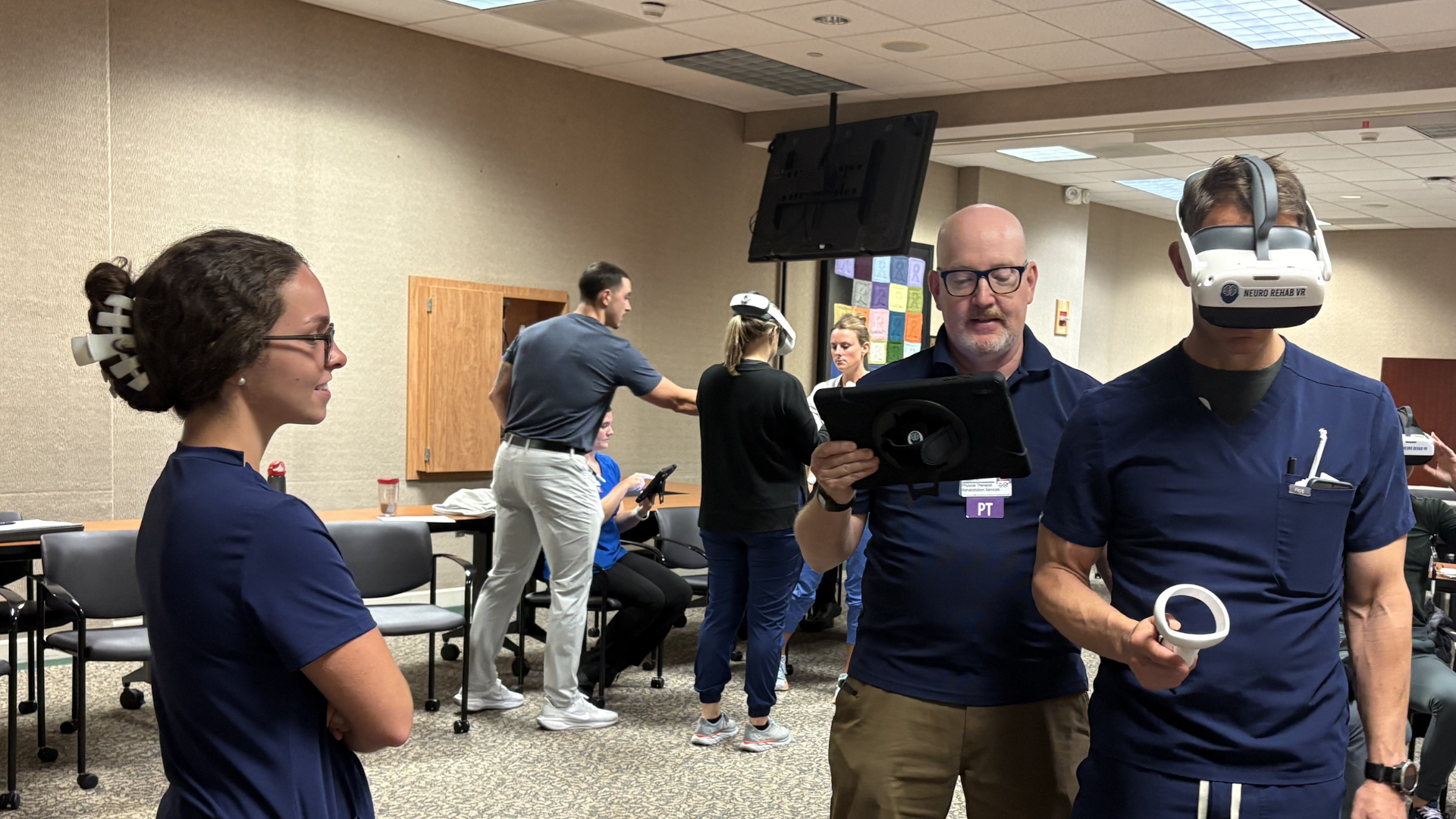
Virtual reality has emerged as a powerful tool for creating dual-task opportunities because it naturally combines movement and cognition within meaningful environments. Rather than asking a patient to perform a physical exercise while answering unrelated questions, virtual reality can place individuals in immersive situations where movement, attention, visual scanning, problem-solving, and decision-making occur together. This creates experiences that more closely resemble the demands of everyday life. (Bruni et al.)
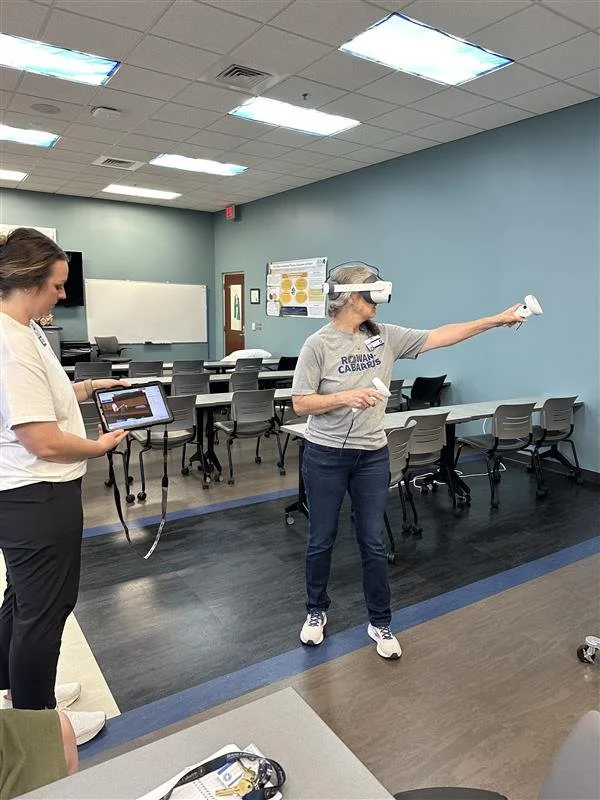
Research supporting dual-task rehabilitation aligns closely with the strengths of virtual reality. Interactive environments allow therapists to gradually increase complexity while maintaining patient engagement. Patients may be asked to navigate spaces, identify objects, make decisions, respond to changing visual stimuli, or complete functional tasks while simultaneously moving their bodies. This combination challenges multiple neural systems while remaining enjoyable and purposeful. (Luca Petrigna et al.)
Bringing Dual-Task Training Into Smart Therapy
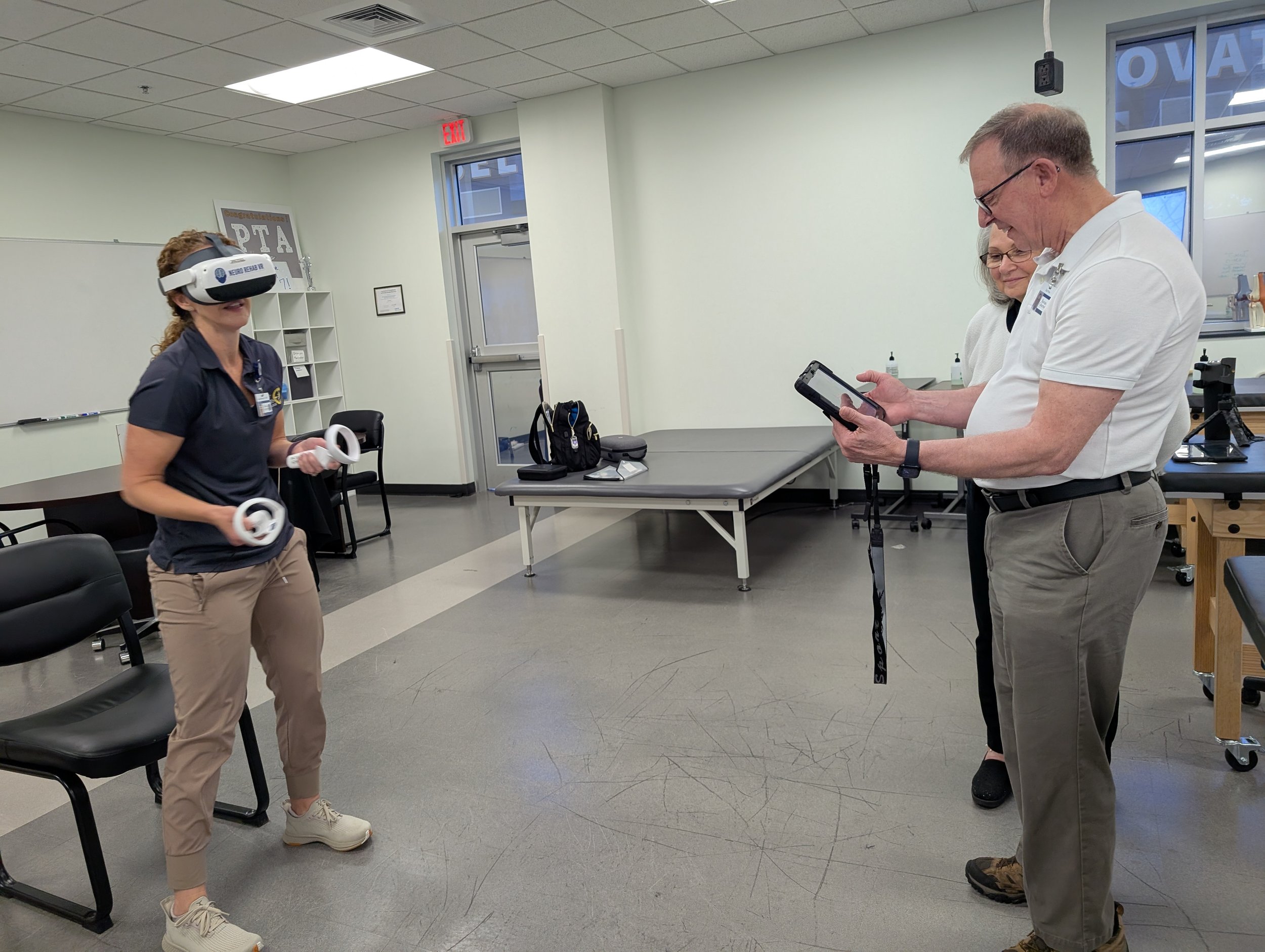
At Neuro Rehab VR, dual-task training aligns naturally with the philosophy behind Smart Therapy. Many of our activities require patients to move while simultaneously processing information, responding to visual cues, making decisions, or interacting with their environment. Whether a patient is performing visual scanning activities, reaching for virtual objects, navigating an immersive environment, or engaging in functional simulations, they are often participating in tasks that challenge both cognitive and physical systems at the same time.
This creates opportunities to address gait, balance, attention, executive function, visual processing, and functional mobility within a single therapeutic experience. Rather than separating these elements, Smart Therapy allows clinicians to integrate them in ways that mirror real-world activities. As research continues to demonstrate the importance of motor-cognitive rehabilitation, immersive technologies may play an increasingly important role in helping patients prepare for life beyond the therapy gym. (Wei et al.)
Real Life Is Never One Task at a Time
The growing body of research surrounding dual-task training continues to reinforce a simple but important reality: life does not happen one task at a time. Walking requires thinking. Balance requires attention. Everyday activities require people to process information, make decisions, and move safely within dynamic environments. For many patients recovering from neurological injury or managing age-related decline, these combined demands represent some of the greatest challenges they face. (The Note Ninjas)
By incorporating dual-task training into rehabilitation, clinicians can help patients practice the skills they will actually use outside the clinic. Whether through traditional interventions, functional activities, or immersive virtual reality experiences, the goal remains the same: helping individuals regain the confidence, adaptability, and independence needed to participate fully in daily life. Because real life is never one task at a time, rehabilitation should not be either.
-
Bruni, Francesca, et al. “What Are the Virtual Reality Solutions for Dual-Task Intervention to Promote Health in Aging? A Scoping Review.” Frontiers in Human Neuroscience, vol. 19, 28 Jan. 2026, https://doi.org/10.3389/fnhum.2025.1753364.
Freitag, Fernanda, et al. “Is Virtual Reality Beneficial for Dual-Task Gait Training in Patients with Parkinson’s Disease? A Systematic Review.” Dementia & Neuropsychologia, vol. 13, no. 3, Sept. 2019, pp. 259–267, https://doi.org/10.1590/1980-57642018dn13-030002.
Luca Petrigna, et al. “A Standard Operating Procedure for Dual-Task Training to Improve Physical and Cognitive Function in Older Adults: A Scoping Review.” Brain Sciences, vol. 15, no. 8, 23 July 2025, pp. 785–785, https://doi.org/10.3390/brainsci15080785.
Mileski, Kathy. “Dual Task Training: A Cognitive-Motor Approach to Fall Prevention.” Propel Physiotherapy, 11 Mar. 2026, propelphysiotherapy.com/exercise/balance-and-posture/dual-task-training-fall-prevention/. Accessed 16 June 2026.
Schenk, Carmen. “Dual-Task Exercises in Rehabilitation: Examples of Motor-Motor and Cognitive-Motor Tasks.” Rehametrics, 9 June 2026, rehametrics.com/en/dual-task-exercises-in-rehabilitation-examples-of-motor-motor-and-cognitive-motor-tasks/. Accessed 16 June 2026.
The Note Ninjas. “Dual Task Training for Older Adults.” The Note Ninjas, 2022, thenoteninjas.com/blog/f/dual-task-training-for-older-adults.
Wei, Xiaoyu, et al. “Effect of Virtual Reality Training on Dual-Task Performance in Older Adults: A Systematic Review and Meta-Analysis.” Journal of NeuroEngineering and Rehabilitation, vol. 22, no. 1, 24 June 2025, https://doi.org/10.1186/s12984-025-01675-z.