
Built in a Clinic:The Research Behind Smart Therapy's Design
Written by: Brianna Hodge
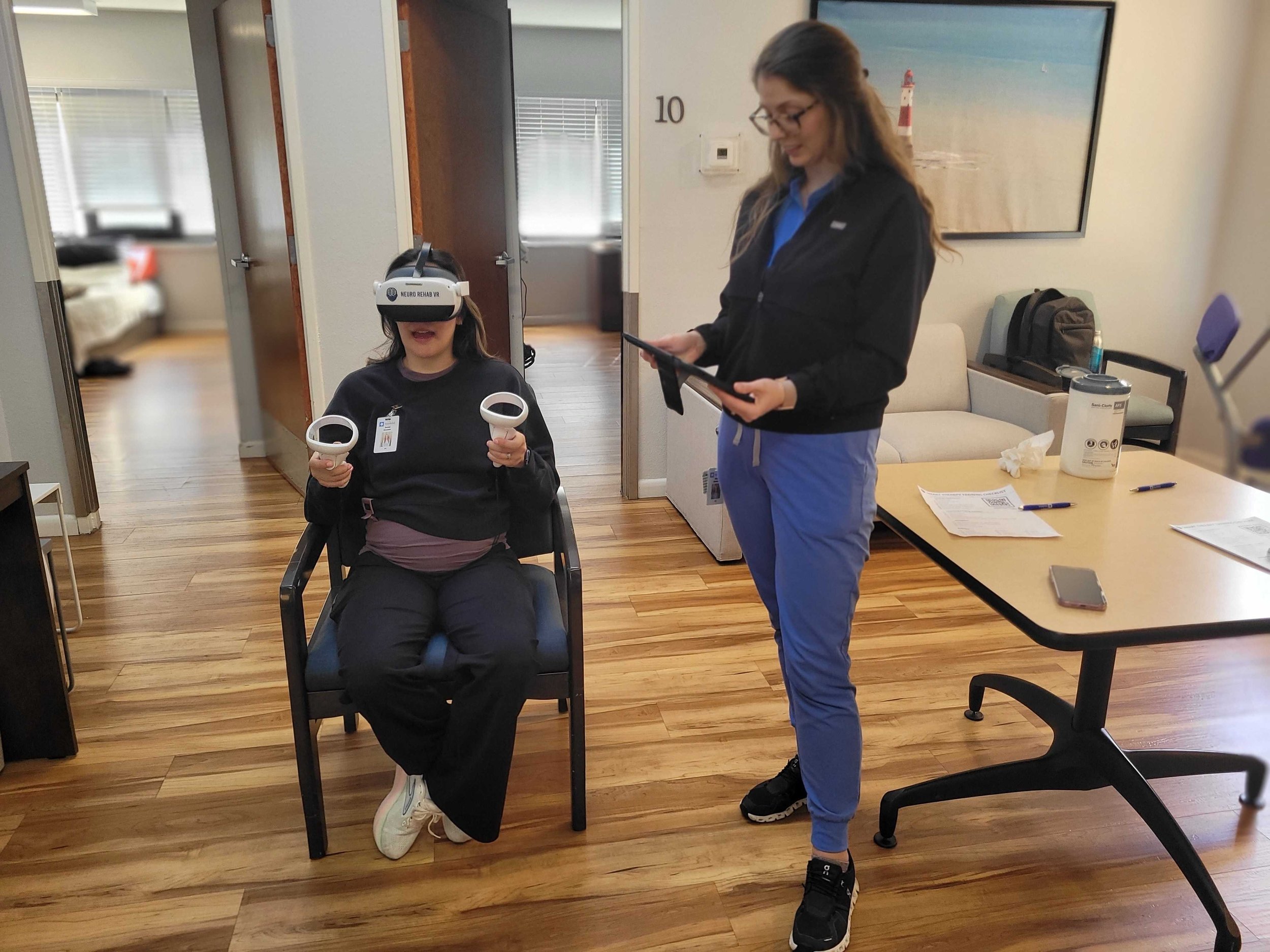
You have probably wondered, at some point during a session, why a certain exercise behaves the way it does, why the difficulty ramps the way it does, or why the movement data waiting for you afterward is something you can actually use rather than a spreadsheet nobody asked for.
None of that happened because an engineer had a good week, and none of it happened in a boardroom either. The Smart Therapy Complete Solution originated inside a neuro outpatient clinic almost a decade ago, where the earliest version could be tested directly with patients and refined based on what a clinician actually needed in the room, not on what looked promising on paper.
That kind of proximity to real sessions is also why a body of published research on how rehab technology gets designed lines up so closely with the choices baked into this system. Published research supports many of the individual design principles that came out of nearly a decade of clinic-based development, but it took years of real-world use to turn those principles into something a therapist could rely on session after session, rather than something that only worked cleanly in a study. This post connects that research directly to the system you use, along with one documented case from our own platform, because a claim like "built with clinical input" means very little until you can see the evidence behind it.
What the Tablet Is Actually Built to Do
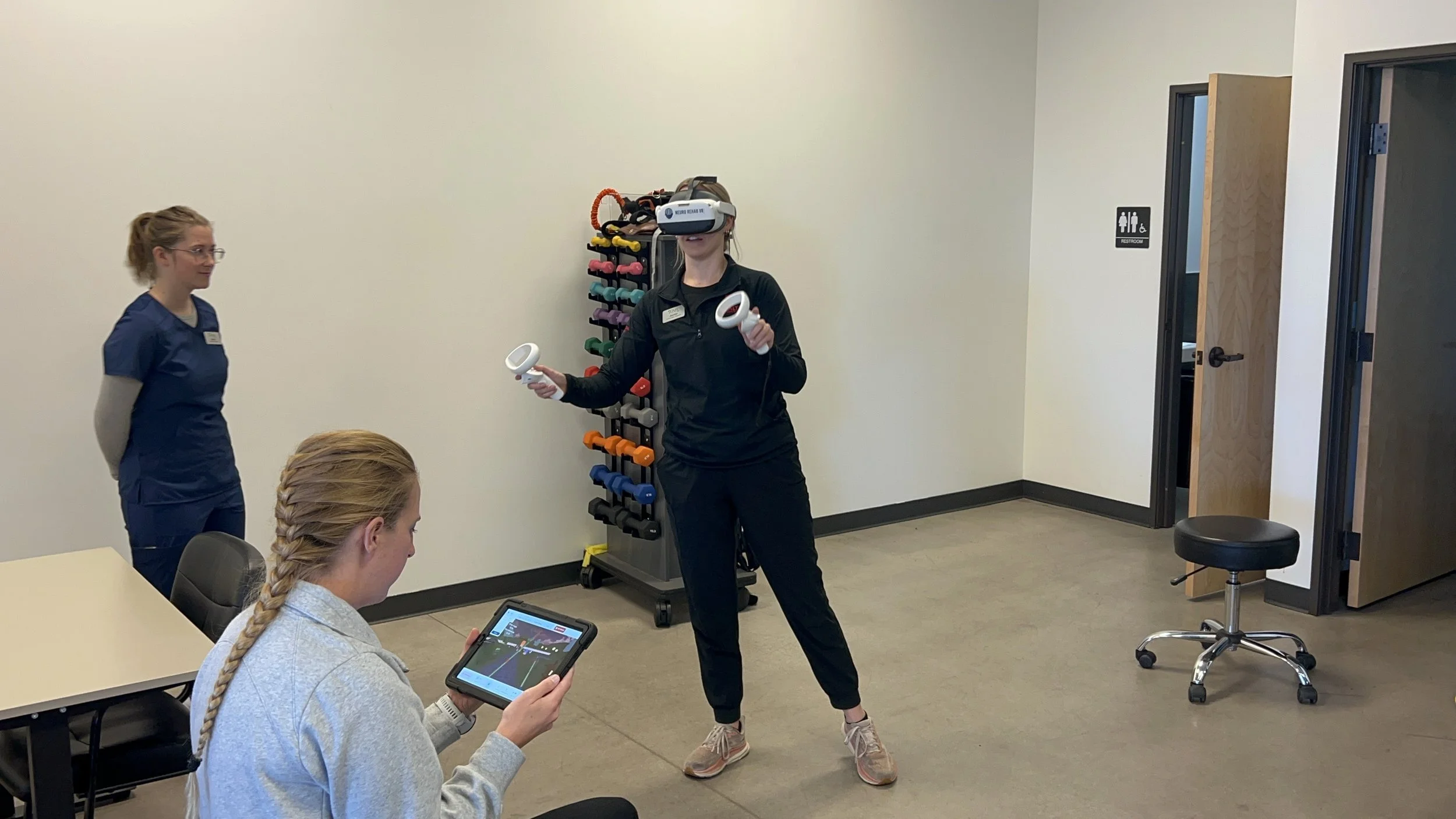
Start with the part of the system you touch every session. Utilizing the tablet, therapists can change exercise variables to match a patient's functional level, adapt exercises for other modalities, screen cast the patient's view from inside the headset, and review HIPAA-compliant objective movement data (Neuro Rehab VR, "Information About Our XR Therapy System"). That last capability is worth sitting with for a moment, because it changes what a follow-up conversation with a patient or a referring physician can look like. Instead of relying on a subjective read of how a session went, a therapist can point to objective numbers gathered during the exercise itself to justify a change in plan of care or a continued authorization.
None of those capabilities are arbitrary, and the research on rehab technology explains why each one earns its place on the interface. A large and recurring finding in that literature is that customized systems built specifically for therapeutic use outperform commercial, off-the-shelf systems, particularly for patients with moderate to severe impairments. A 2025 systematic review in the Journal of Medical Internet Research, covering eight randomized controlled trials of home-based virtual reality training for stroke, found exactly that pattern, concluding that customized VR systems were more effective than commercial VR systems for patients with moderate to severe disorders, largely because customized systems could adjust the intensity and complexity of exercises to individual needs in ways general-purpose gaming hardware was never built to do (Huang et al.). Every adjustable variable on the tablet exists to make that kind of individual calibration possible in real time, rather than leaving it to whatever difficulty curve a consumer game happened to ship with.
Why Purpose-Built works best, According to the Research
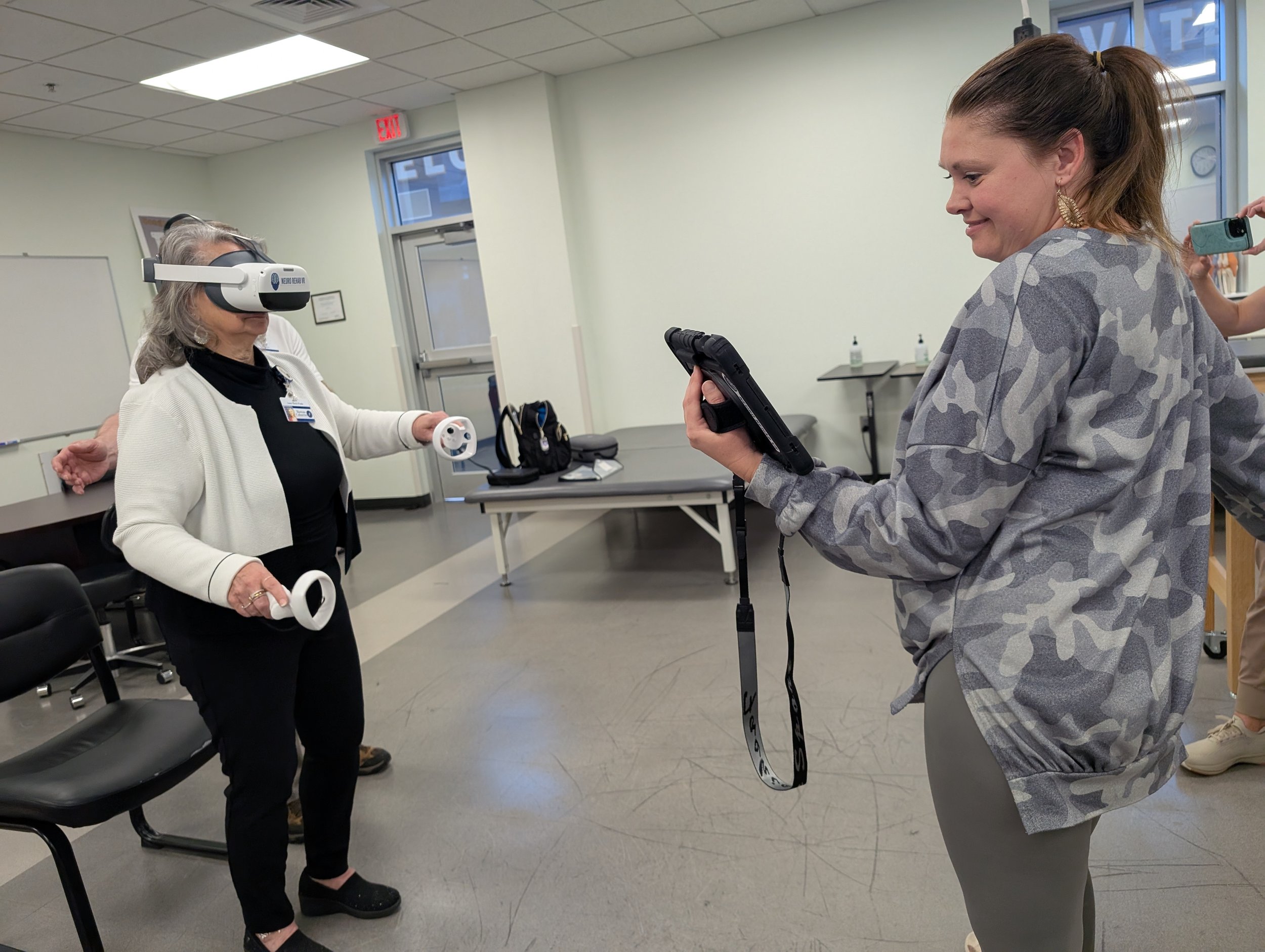
It would be easy to treat "purpose-built" as marketing language, so it is worth being specific about the gap it is meant to close. A 2023 commentary in the Hong Kong Journal of Occupational Therapy notes that systems like the Nintendo Wii and Microsoft Kinect were developed for the general public and can be difficult to adapt to the motor and cognitive difficulties of rehabilitation populations, which is why clinics using them often end up improvising splints, positioning aids, and workaround control schemes just to make a consumer product survive contact with a real patient (Zlotnik et al.). That is clinician expertise being spent to patch a gap that a purpose-built system should not create in the first place.
The American Occupational Therapy Association has made the same point from a different angle, stating plainly that devices developed without input from rehabilitation professionals early in the process often end up with components that do not meet client needs and are, as a result, never adopted into practice (American Occupational Therapy Association). Read together, these two sources describe the same failure mode from opposite ends: hardware built for entertainment gets pressed into clinical service and never quite fits, while devices built by engineers in isolation from clinicians end up sitting unused in an equipment closet. The tablet's adjustable exercise variables and the platform's clinical design process both exist specifically to sit in the middle of that gap instead of falling into either failure mode.
A Six-Week Trial, In the Therapist's Own Words
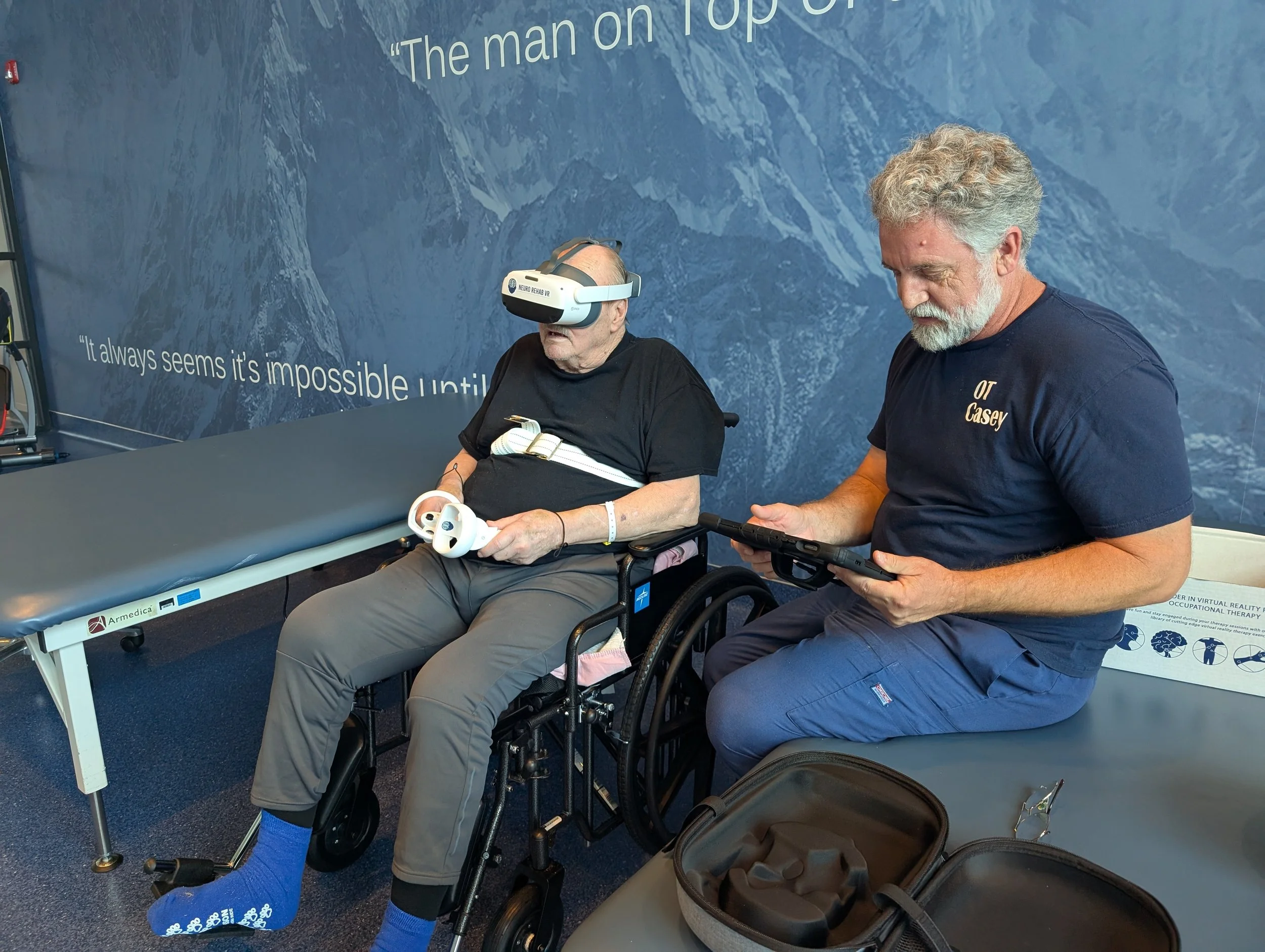
Research and design principles describe intent, and a documented case shows what actually happened. A physical therapist assistant who specializes in pediatric and adult neuro populations, and who primarily works with the XR Therapy system, extended it to an orthopedic patient on a self-guided, six-week trial, a population outside the one the tool is usually associated with (Neuro Rehab VR, "Can Virtual Reality Be Effective With Orthopedic Patients?"). The patient started using a rolling walker for household mobility and reported resting nerve pain in his foot that worsened with knee flexion, and the prescribed exercises were built around his specific weight-bearing tolerance, quad and hamstring strengthening, balance, and ankle strengthening (Neuro Rehab VR, "Can Virtual Reality Be Effective With Orthopedic Patients?").
By the end of the six weeks, his knee flexion and extension and his ankle dorsiflexion and plantarflexion had gone from a -4 out of 5 to a full 5 out of 5, his knee flexion range had increased from 75 degrees to 105 degrees, and his Timed Up and Go score had dropped from 12 seconds to 2.3 seconds (Neuro Rehab VR, "Can Virtual Reality Be Effective With Orthopedic Patients?"). He went from relying on a rolling walker to ambulating with a cane as needed in the community and moving independently at home. That outcome lines up with what the broader customization research would predict: a system flexible enough to be redirected toward a population it was not originally built for, in the hands of a therapist who could actually adjust the variables that mattered for that specific patient.
Sitting Clinicians at the Table Before the Product Exists
The case above shows what happens when a clinician adapts an existing tool to an unexpected patient. Published research on how these systems get designed in the first place shows the same principle working one step earlier, before a product even exists. A well-documented co-design workshop for an extended-reality rehab platform brought together twenty-four people, including ten clinicians, eight patients, three product designers, and three engineers, for a full day of structured usability testing, design-thinking exercises, and prioritization work (Elor et al.). What came out of that process was not a features list. It was a set of design principles built directly from what clinicians said they needed in order to trust the system enough to put a patient in it, including real-time embodied feedback and progressive complexity with minimal defaults so a new patient is not overwhelmed on day one (Elor et al.). That is the same logic behind letting a therapist screen cast a patient's headset view rather than guess at it, or adjust an exercise variable live instead of waiting for the next software update.
Avoiding a Failure Mode the Research Already Found
Some of the most useful research on rehab technology comes from documenting what went wrong in earlier systems, and those failures point directly at design decisions worth defending. In a Canadian study on VR physical rehabilitation for people living with dementia, researchers ran three rounds of rapid prototyping directly at the bedside, and found that some patients tried to interact with the system by pressing a controller trigger button, a reasonable instinct that the original design had not accounted for, which produced no response and led to visible confusion and frustration that pulled the patient's attention away from the exercise (Matsangidou et al.). The fix in that study was not a software patch but a design principle: avoid interaction methods that invite an expectation of feedback the system is not built to give.
A separate documented case involving a voice-rehabilitation tool for patients with dysphonia found a related lesson from the opposite direction. The development team built a polished 3D prototype that was technically impressive, and the therapist working with them rejected it outright, explaining that her patients "are disable to understand this unintuitive game rule although it is uncomplicated" (Lv et al.). A design that looks sophisticated to an engineer can still be unusable to the patient it is meant to serve, and the only way to catch that gap reliably is to put a clinician in a position to say no before the design ships.
Keeping the therapist, rather than the patient, in control of the tablet interface is a direct answer to both of those documented failure modes. A patient wearing the headset is not asked to navigate a menu or interpret an unfamiliar control scheme mid-exercise, because the therapist is adjusting variables and content from the tablet in real time based on what they observe. The research above is exactly why that division of control matters, and it is why the interface was not designed the way a general consumer VR product would be.
The Just-Right Challenge, Set on the Fly
Every therapist carries a working model of the "just-right challenge," the idea that a task pitched too easy loses a patient's engagement while a task pitched too hard risks failure or injury. It is a real concept with a documented history in occupational therapy scholarship, tracing back through decades of literature on grading activity demand to match a patient's current capacity, not a term invented for a product page (Kuhaneck and Spitzer). Building software that can actually hit that target moment to moment is harder than it sounds, which is part of why real-time difficulty adjustment on the tablet is treated as a core feature rather than a convenience.
Researchers are still working to get algorithms closer to what a good therapist does instinctively. A 2024 protocol out of the University of Montreal and CHU Sainte-Justine is trying to detect the just-right challenge using wearable sensors during immersive VR motor tasks, layering physiological signals for attention and engagement on top of performance data, because the researchers point out that difficulty algorithms based on performance alone miss the cognitive half of the equation (Houzangbe et al.). That is exactly the gap a therapist closes by watching a patient's face and adjusting a setting in real time rather than waiting for an algorithm to catch up. The tablet's live difficulty controls exist because that human judgment needed a direct path into the exercise, not a delayed one.
Where AI Fits Without Taking the Judgment Call Away
The platform's AI components are built around the same principle that runs through the rest of this piece: extend clinical capacity rather than replace clinical judgment. The AI documentation tool built into the ecosystem, analyzes therapy sessions in real time to generate patient notes, aiming to save therapists the hours they would otherwise spend on manual documentation. The research on AI-assisted clinical documentation gives a clear sense of why that particular problem is worth solving. A 2025 systematic review and meta-analysis in BMC Medical Informatics and Decision Making, covering health professionals including physical therapists, occupational therapists, and speech-language pathologists, found that AI documentation tools produced a moderate reduction in documentation workload and related burnout, along with a comparable reduction in the time clinicians spent writing notes, while producing notes at least comparable in quality to those written manually (Zhao et al.). That is the specific gap our ai system is built to close: the hours a documentation-heavy workflow takes away from time with a patient, rather than the clinical judgment involved in treating them.
There is a useful parallel in the published research on freeing up therapist time without removing the therapist from the process entirely. VIGoROUS, a five-site randomized controlled trial of in-home gaming therapy for chronic stroke, deliberately kept a therapist in the loop even while patients trained independently, using self-managed gaming specifically to redirect the therapist's freed-up time toward the behavioral coaching that actually drives carryover into daily arm use (Gauthier et al.). The goal in both cases is the same. Automating the parts of the job that do not require a clinician's judgment is meant to protect the time that does, not to shrink the clinician's role in the process.
Movement Targets, Not Just Difficulty Levels
Difficulty is only one variable a therapist needs to control. What the exercise is actually training matters just as much, and research on customization backs that up too. A 2024 usability study out of the Universidad Tecnológica de Pereira built VR exergames for upper-limb stroke rehabilitation around specific functional movements clinicians actually target, including one game built entirely around elbow flexion and extension and another around shoulder movement, with each scenario mapping directly onto a movement pattern a therapist would target in a normal session rather than being generic gameplay wrapped around a rehab label (Villada Castillo et al.). That is the same reasoning behind the tablet's ability to adapt exercises for other modalities rather than offering one fixed exercise per body region. A therapist deciding what movement a patient needs to practice, and having a direct way to steer the exercise toward that movement, is doing exactly what the research shows produces better outcomes than a game built for entertainment first and rehabilitation second.
What This Means the Next Time Something Feels Off
None of this happened in one version, and none of it happened because engineers guessed well. The tablet's real-time controls, the screen casting, the movement data, VEDA's documentation, and the difficulty curves that flex mid-session all trace back to the same body of research: purpose-built systems outperform off-the-shelf ones, clinicians catch failure modes engineers cannot anticipate, and a therapist's read on a specific patient in a specific moment keeps mattering more than any default an engineering team could set in advance. The six-week orthopedic case is a concrete reminder of what that adds up to for an actual patient: a walker traded for a cane, a Timed Up and Go score cut by nearly eighty percent, and six weeks that would likely have looked different with a rigid, one-size-fits-all program.
When something during a session does not sit right, whether it is a setting that will not go low enough for a specific patient, a movement target that does not match what you are actually trying to progress, or a workflow step that takes longer than it should, that observation is exactly the kind of input the system was built to respond to, so keep flagging it, because that is still how the next version gets built.
-
Elor, Aviv, et al. “Co-Designing Meaningful Extended Reality for Physical Rehabilitation: A Stakeholder-Driven Approach to Embodied Telehealth.” Frontiers in Virtual Reality, vol. 6, 28 Jan. 2026, 10.3389/frvir.2025.1675309.
Gauthier, Lynne V., et al. “Video Game Rehabilitation for Outpatient Stroke (VIGoROUS): Protocol for a Multi-Center Comparative Effectiveness Trial of In-Home Gamified Constraint-Induced Movement Therapy for Rehabilitation of Chronic Upper Extremity Hemiparesis.” BMC Neurology, vol. 17, no. 1, 8 June 2017, 10.1186/s12883-017-0888-0.
“Can Virtual Reality Be Effective With Orthopedic Patients?” Neuro Rehab VR, 16 Nov. 2021, https://neurorehabvr.com/blog/2021/7/21-vr-effective-with-orthopedic. Accessed 28 Aug. 2026.
Houzangbe, Samory, et al. “Toward Physiological Detection of a ‘Just-Right’ Challenge Level for Motor Learning in Immersive Virtual Reality: Protocol for a Cross-Sectional Study.” JMIR Research Protocols, vol. 13, 23 Sept. 2024, p. e55730, 10.2196/55730.
Huang, Jiaqi, et al. “Effect of Home-Based Virtual Reality Training on Upper Extremity Recovery in Patients With Stroke: Systematic Review.” Journal of Medical Internet Research, vol. 27, 4 Apr. 2025, p. e69003, https://pmc.ncbi.nlm.nih.gov/articles/PMC12008694/, 10.2196/69003. Accessed 28 Aug. 2026.
Information About Our XR Therapy System - Neuro Rehab VR. “Neuro Rehab VR.” Neuro Rehab VR, 2023, https://neurorehabvr.com/smart-therapy-complete-solution. Accessed 28 Aug. 2026.
Keptner, Karen. “Helping to Develop a Gaming Device .” Aota.Org, 2022, https://www.aota.org/publications/ot-practice/ot-practice-issues/2020/gaming-device. Accessed 28 Aug. 2026.
Kuhaneck, Heather, and Susan L Spitzer. “The Importance of Conceptual Origins: The Case of the Just-Right Challenge.” The American Journal of Occupational Therapy, vol. 78, no. 4, 18 June 2024, 10.5014/ajot.2024.050619.
Lv, Zhihan , et al. “A Game Based Assistive Tool for Rehabilitation of Dysphonic Patients.” Semantic Reader, 4 Apr. 2015, https://www.semanticscholar.org/reader/2da3cd9e91aa651b1b4d7becbf912570a23c18a2.
Matsangidou, Maria, et al. “Participatory Design and Evaluation of Virtual Reality Physical Rehabilitation for People Living With Dementia.” Virtual Reality, 7 Apr. 2022, 10.1007/s10055-022-00639-1.
Villada Castillo, Julian Felipe, et al. “Design of Virtual Reality Exergames for Upper Limb Stroke Rehabilitation Following Iterative Design Methods: Usability Study.” JMIR Serious Games, vol. 12, 11 Jan. 2024, p. e48900, https://pubmed.ncbi.nlm.nih.gov/38206670/, 10.2196/48900. Accessed 28 Aug. 2026.
Zhao, Jungang, et al. “Application of Artificial Intelligence Tools and Clinical Documentation Burden: A Systematic Review and Meta-Analysis.” BMC Medical Informatics and Decision Making, 24 Dec. 2025, 10.1186/s12911-025-03324-w.
Zlotnik, Sharon, et al. “Use of Gamification for Adult Physical Rehabilitation in Occupational Therapy; a Novel Concept?” Hong Kong Journal of Occupational Therapy, vol. 36, no. 2, 26 May 2023, pp. 156918612311790–156918612311790, 10.1177/15691861231179037.