What Happens After Rehabilitation: Real Community Mobility
Written by: Brianna Hodge
If you work in rehab, you probably know this feeling well, because it shows up more often than anyone likes to admit. Your patient nails their goals in the gym, gait speed improves, balance scores climb, and everyone feels good about the progress on paper, only to find out three months later that they still haven't left the house except for doctor's appointments. The bus stop feels too far away, the curb cut near their building disappeared sometime last winter and never got fixed, and the thought of crossing six lanes of traffic before the light changes is enough to make their chest tighten before they even try.
This is the part of rehab that rarely shows up on a discharge summary but shapes someone's actual daily life more than almost anything else, and it goes by the name community mobility. It refers to the ability to get from the front door to the pharmacy, a grandchild's soccer game, or a job interview without a chaperone.
This piece is not just written for someone who plans therapy sessions for a living, it's just as much for anyone who has watched a loved one gradually stop going places. We'll walk through what the research actually shows, and then talk about where technology, including the Smart Therapy Complete Solution, genuinely fits into this picture.
What "Community Mobility" Actually Means
Community mobility isn't just another word for walking, even though people sometimes use it that way in casual conversation. It's really a chain of skills stacked on top of one another, including;
Standing balance
Gait endurance
Curb and stair negotiation
Reading a crosswalk signal correctly
Judging vehicle speed and gap timing well enough to cross safely
Using a bus or train system that wasn't designed with any particular disability in mind
Managing a wheelchair over uneven or broken pavement
Tolerating crowds and unpredictable noise
And somehow holding onto all of that while attention gets split three or four ways at once. Occupational therapists have long treated this as its own distinct domain of practice, separate from basic activities of daily living, because it's entirely possible for someone to dress and bathe independently and still be functionally trapped inside their own house.
The stakes involved here are not small by any measure. In a study of five community rehabilitation teams working in Sydney, Australia, researchers Annie McCluskey and Sandy Middleton opened their paper with a set of numbers that ought to stop any clinician in their tracks for a moment, noting that fewer than 10 percent of stroke survivors can walk fast enough to cross a road safely by the time they leave the hospital, that up to half fall at home within six months of discharge, and that two-thirds never return to driving again at all (McCluskey and Middleton). It's worth sitting with that for a moment, because it means most people who survive a stroke leave the hospital without the speed to make it across an ordinary intersection before the light changes, which is not some minor gap tucked into the margins of rehab planning but arguably the central gap that determines whether someone gets their life back.
The Evidence-Practice Gap Nobody Talks About
Here's the uncomfortable part of this whole conversation, and it's worth saying plainly rather than dancing around it. We have known that community mobility training works for roughly two decades now, and the evidence has been sitting in the literature the entire time. In a randomized controlled trial published in the British Medical Journal, Pip Logan and colleagues gave one group of stroke survivors leaflets describing local transport options, while a second group received the same leaflets plus up to seven sessions in which an occupational therapist actually walked alongside them through the neighborhood, rode the bus with them, and helped them rebuild confidence one outing at a time (qtd. in McCluskey and Middleton). Twice as many people in that escorted group reported getting out of the house as often as they wanted four months later, and remarkably, that gap between the two groups was still measurable a full ten months after the therapy sessions had ended (McCluskey and Middleton).
So the natural question becomes why every eligible stroke survivor isn't already receiving this kind of training as a matter of course. McCluskey and Middleton went looking for the answer within their own region and found it close to home. When they audited medical records from five community rehab teams, they discovered that only 17 percent of eligible stroke patients were receiving the recommended six or more outdoor journey sessions before their improvement program even started (McCluskey and Middleton). After a structured implementation effort that included audits, feedback to the teams, and a half-day training workshop, that number climbed to 32 percent, which is real progress but still leaves roughly two-thirds of eligible patients without adequate training (McCluskey and Middleton). Even with a proven intervention sitting right there in the clinical guidelines, most patients were still falling through the cracks, and the reasons behind that were mundane and familiar to anyone who has worked in clinical practice for more than a few years, including heavy caseloads, no dedicated time built into the schedule, and a lingering sense among some therapists that walking a patient to the bus stop somehow counted as less "real" than strength training on a mat.
That finding says something important about our field that's worth sitting with rather than rushing past. The barrier to community mobility training was almost never a lack of evidence or a lack of belief that it worked. It was capacity, understandable safety concerns about supervising a patient out in traffic, and a system that tends to reward whatever is easiest to measure inside a clinic gym over whatever actually determines whether a person leaves their house next Tuesday.
A Real Patient, A Real Village, A Real Recovery
Numbers and trial data can start to feel abstract after a while, so it helps to slow down and look closely at one actual person. In a case study published through Universitas Indonesia's occupational therapy program, researchers Hermito Gidion, Muhammad Luthfi, and Dini Fajariani documented the community-based rehabilitation of a stroke patient referred to as Mr. H, who had been living with left-sided weakness since 2016 in Situsari village, in Bogor Regency (Gidion et al.). Mr. H presented with reduced range of motion, decreased muscle strength and tone, and intermittent numbness in his fingers, all of which combined to make even basic transfers and functional mobility genuinely difficult for him (Gidion et al.).
The intervention itself was not high-tech in any sense of the word, and that's part of what makes it worth including here. It consisted of hip, knee, and ankle stretching, practice moving from sitting to standing, transfer training using parallel bars, and a home program that had him walking on the concrete street outside his house for ten to fifteen minutes every day (Gidion et al.). What changed for Mr. H mattered enormously to him personally, even though it would never make a headline anywhere, since he stopped needing to grab the sofa just to stand up, his balance stabilized considerably, and he eventually became able to move around his neighborhood independently, including crossing the streets near his own home without assistance (Gidion et al.). The researchers connected this outcome to earlier work showing a measurable relationship between the use of mobility aids and independence in stroke survivors' motor function more broadly (Gidion et al.). This is what community mobility rehabilitation looks like once it's stripped down to its essentials, since it tends to be unglamorous, repetitive, carried out in the actual environment where the person lives, and life-changing anyway despite how ordinary it looks from the outside.
When Confidence Doesn't Follow the Body
Here's something that tends to surprise newer clinicians the first time they encounter it in practice. It's entirely possible to restore someone's walking speed and physical strength and still not restore their willingness to leave the house, because fear seems to operate on its own separate timeline. A scoping review examining community-based mobility training after stroke found that while most of the 35 studies included in the review showed measurable improvements in mobility and balance, patients who had completed weeks of community mobility training still reported a persistent lack of confidence when negotiating ramps, escalators, and shopping malls (McCluskey and Middleton, citing Lord et al.). It turns out that repeated practice walking indoors in a hospital gym does not automatically transfer into confidence walking outdoors in a real and genuinely unpredictable world. People recovering from stroke seemed to need multiple escorted trips into their actual community, with a therapist walking alongside them, before that confidence took root in any lasting way (McCluskey and Middleton).
This same pattern shows up again with older adults who are managing a fear of falling, which is its own distinct clinical concern. A systematic review and meta-analysis found that balance disorders remain a leading cause of falls among older adults, and that the psychological toll of that fear often outlasts the underlying physical deficit entirely, independently restricting how much someone participates in community life long after their balance has objectively improved (Saragih et al.). Fear of falling isn't a minor footnote sitting off to the side of the physical problem, since in many cases it becomes the primary thing keeping a person housebound.
Where Virtual Reality Earns Its Place
This is where a growing body of research on virtual reality training starts to become genuinely interesting, not as some flashy gimmick, but as a real way to solve the exact problem that McCluskey and Middleton identified in their audit, which is that therapists simply don't have unlimited hours available to escort every single patient to every crosswalk, bus stop, and shopping mall across an entire service area.
Consider pedestrian safety for a moment, since it's a helpful place to start. Child pedestrian injuries remain a leading cause of injury and death worldwide, largely because judging vehicle speed and choosing a safe gap in oncoming traffic requires cognitive and perceptual skills that genuinely take years to mature in a developing brain (Schwebel et al.). David Schwebel and colleagues placed a mobile, semi-immersive virtual pedestrian environment directly inside schools and community centers and had 44 children between the ages of seven and eight complete six 15-minute training sessions spread across three weeks (Schwebel et al.). Afterward, the children showed measurable improvement in the timing of their decision to enter traffic, along with fewer red-light violations, less running while crossing, and noticeably better judgment of vehicle gaps than before the training began (Schwebel et al.). Because the environment itself could travel to wherever the children already were, it solved a genuine access problem that would have been much harder to address through one-on-one street training alone.
The same underlying logic applies at the other end of life as well. A four-week trial of virtual reality exergaming with frail and pre-frail older adults, all community-dwelling and over the age of 65, found improvements in postural control, functional mobility, and balance confidence when compared against a control group receiving standard care (Alhasan and Alshehri). A broader meta-analysis of VR fall-prevention interventions concluded that this kind of training measurably reduces fear of falling while also improving balance and postural control in older adults, describing it as a genuinely useful addition to fall-prevention strategy rather than a passing novelty (Saragih et al.). And for people living with severe vision loss, orientation and mobility researchers Ellen Lambert Bowman and Lei Liu found that participants trained on judging safe street-crossing timing inside a virtual street environment performed just as safely on real streets afterward as participants who trained the traditional way, with a certified specialist walking them through actual intersections in person (Bowman and Liu). Virtual training in that study wasn't a lesser substitute standing in for the real thing, since it held up directly against what has long been considered the gold standard of practice.
Traumatic brain injury tells a similar story, particularly when it comes to driving, which is one of the most frequently requested and most complicated community mobility goals that comes up in rehab. In a feasibility study involving military service members recovering from TBI, David Cox and colleagues found that six sessions of progressively demanding virtual reality driving simulation improved measurable driving performance and behavior, and that participants generally found the training realistic and well tolerated without adverse effects (Cox et al.). A systematic review of immersive VR for acquired brain injury rehabilitation noted that the core advantage of this technology lies in its ability to simulate real-world scenarios and challenges that would otherwise be unsafe, impractical, or simply impossible to arrange repeatedly in the real world, whether that's a crowded intersection, a rush-hour bus, or a pedestrian who suddenly steps off a curb without warning (Aida et al.).
There's a common thread running through all of these studies that's worth naming directly. None of this research suggests that virtual reality replaces the therapist or replaces real-world practice altogether. What it actually does is give therapists a practical way to deliver the sheer volume of repetition that confidence-building genuinely requires, safely, either before or alongside real-world escorted trips into the community. McCluskey and Middleton's Sydney teams could only manage a median of about two outdoor journey sessions per patient before their improvement program began, which simply isn't enough repetition to build lasting confidence in most people. A well-designed virtual environment, by contrast, can offer daily practice at street crossings, transit boarding, or driving scenarios without needing a therapist physically present for every single repetition, and without carrying the liability and scheduling weight that comes with taking a medically fragile patient out into live traffic before they're genuinely ready for it.
Where Our Device Fits Into This Picture
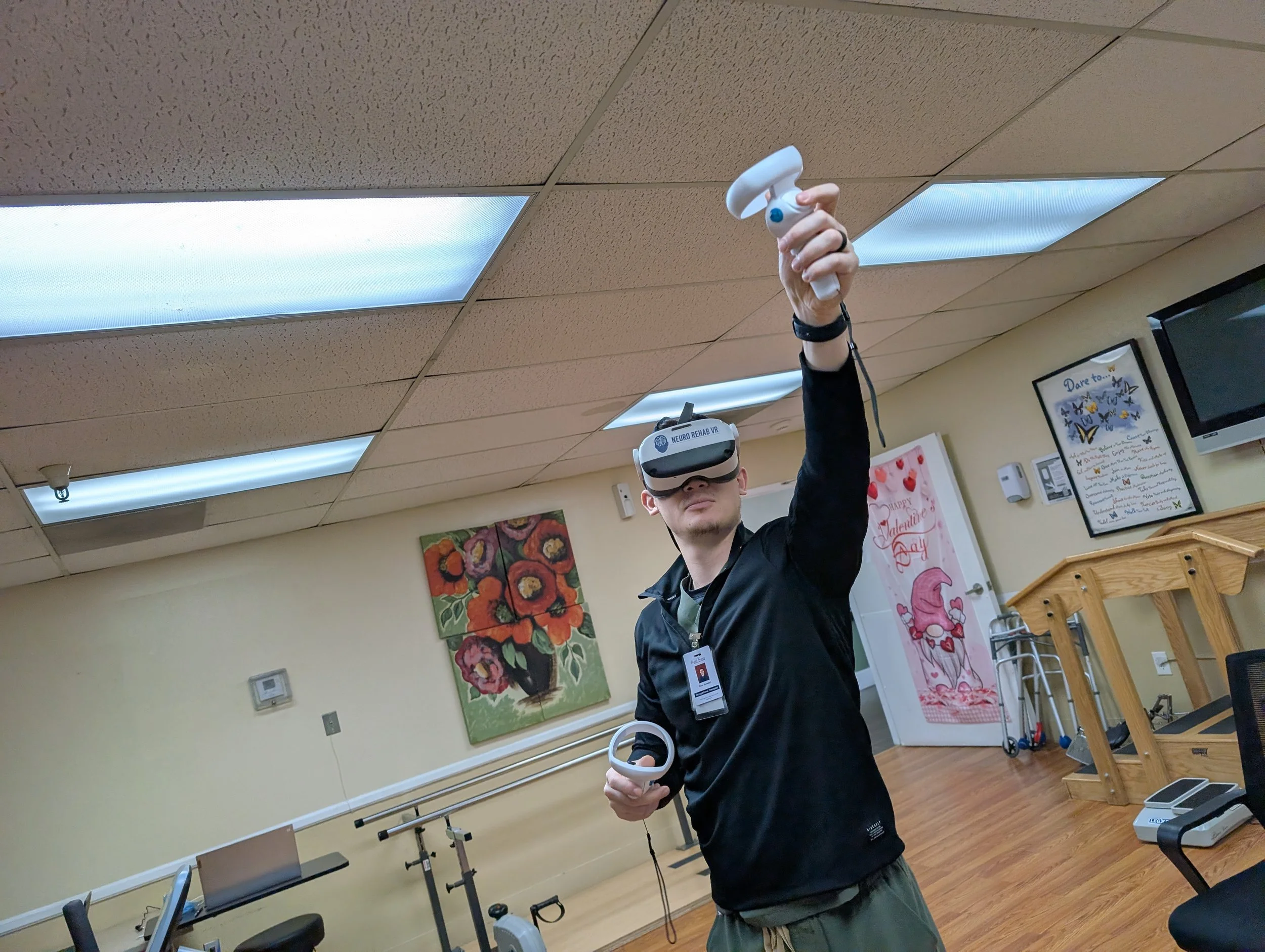
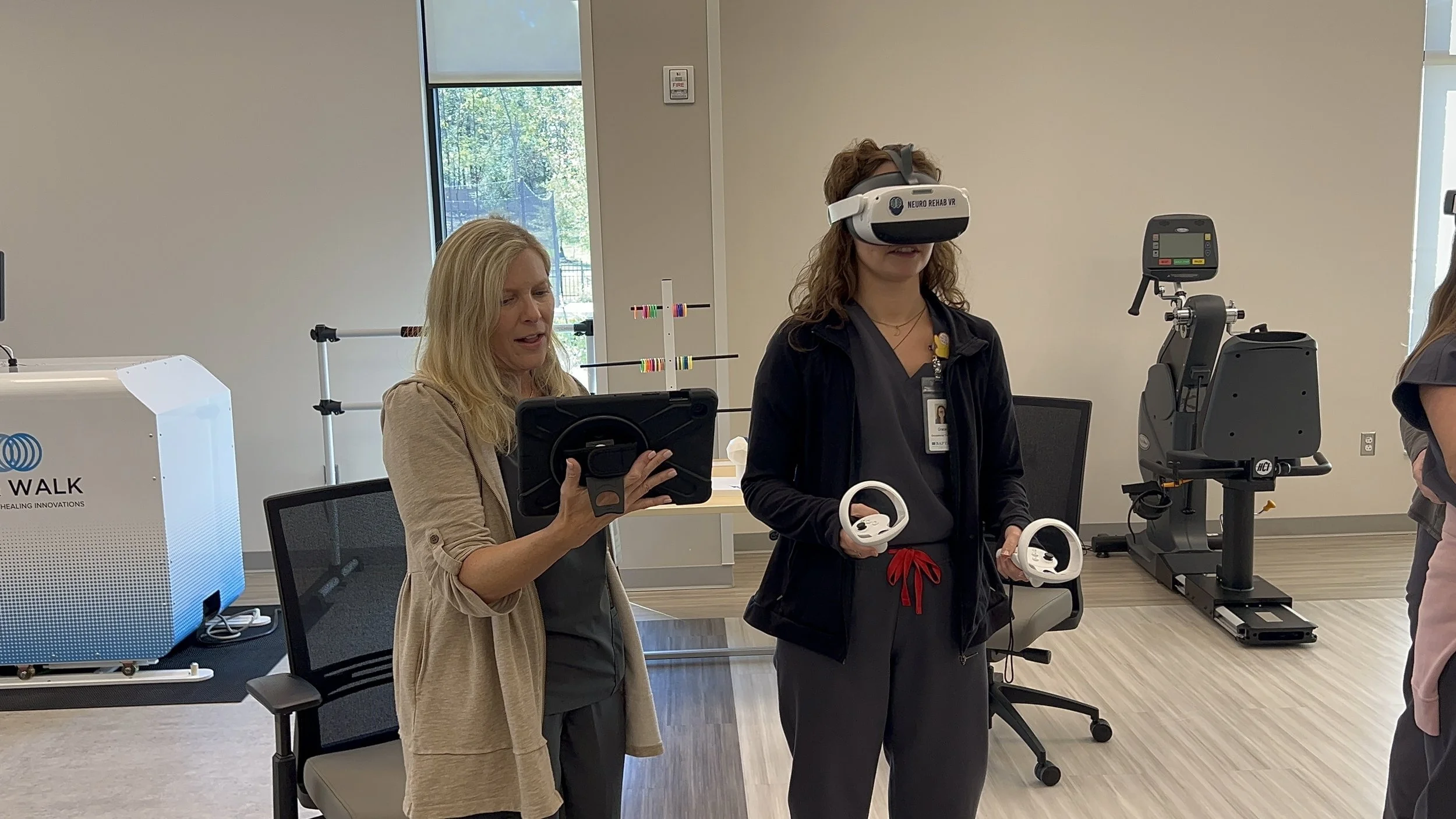
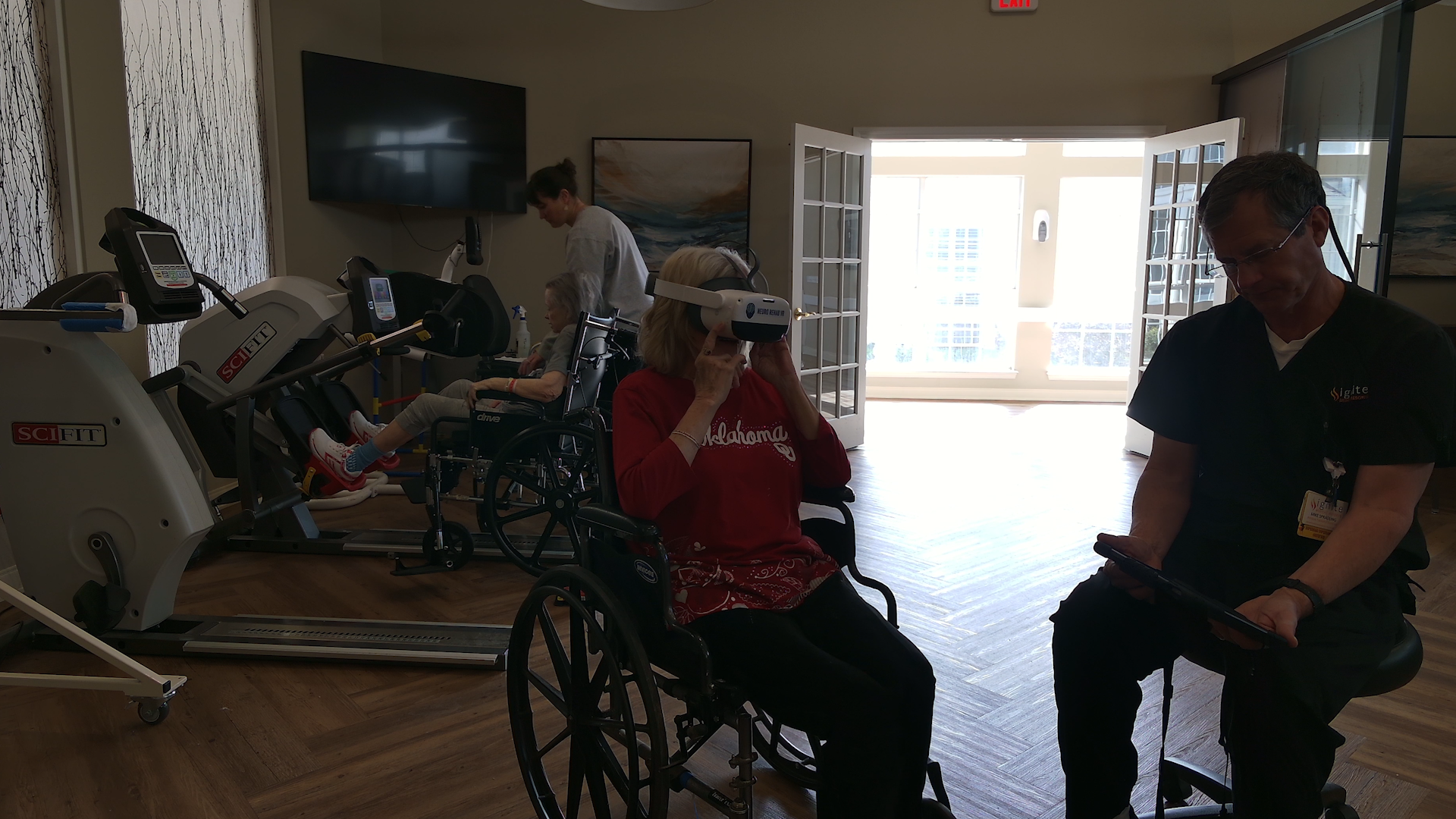
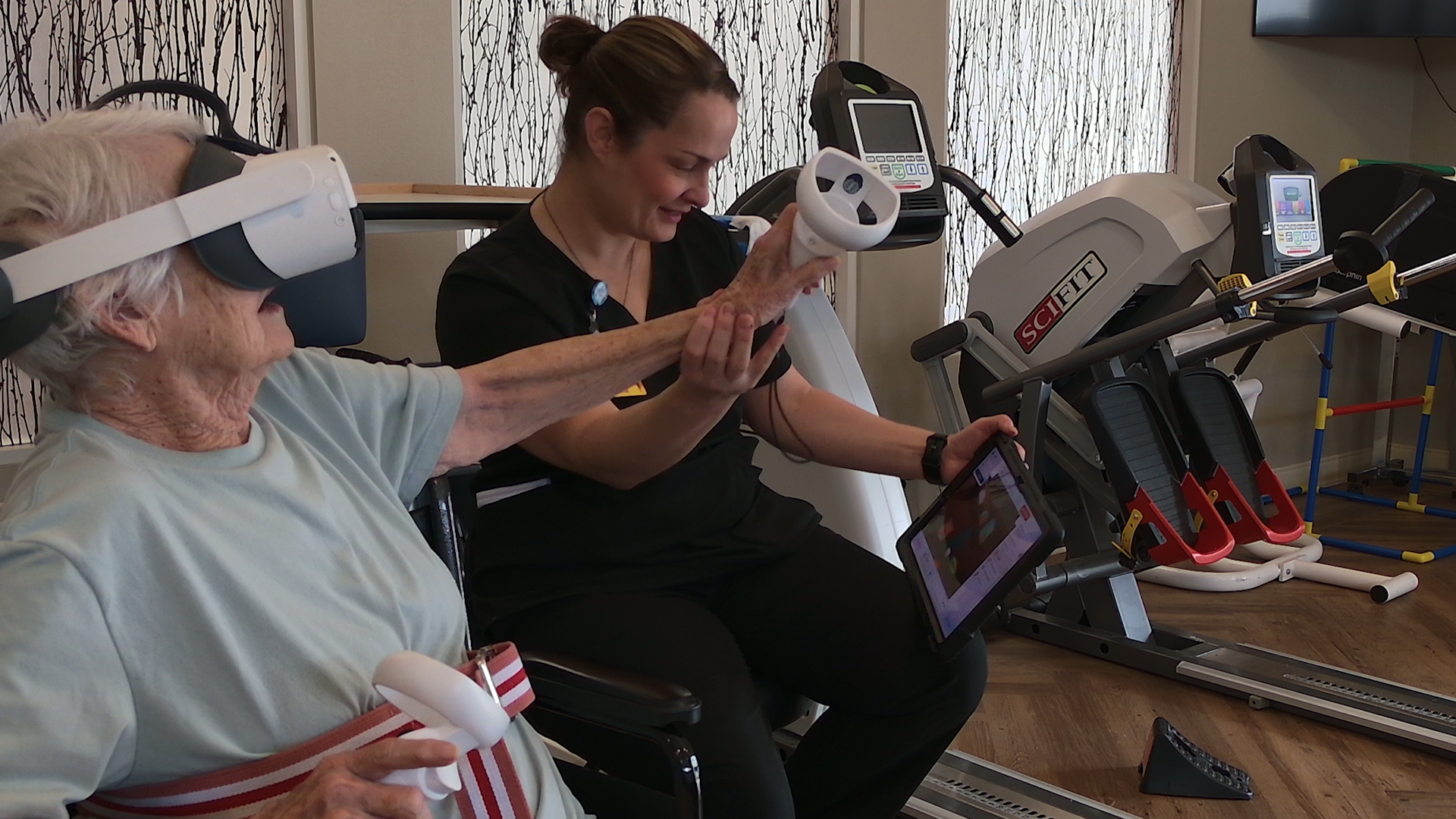
This is exactly the gap that our platform, the Smart Therapy Complete Solution, was designed to close from the ground up. Patients wear a Pico Neo 3 Pro headset, which uses hand and eye tracking to place them inside an immersive, responsive environment, while their therapist sits alongside them holding a tablet that mirrors exactly what the patient is seeing in real time as the exercise unfolds. The therapist isn't left guessing what the patient is experiencing from across the room, because they're watching it happen live and adjusting the exercise's difficulty on the fly, exercising the same clinical judgment that McCluskey and Middleton's occupational therapists relied on while standing at a real street corner, just now exercised from a tablet inside a clinic, a day room, or during a home visit.
For community mobility specifically, this setup allows a clinician to build the kind of repeated, carefully graded exposure that the research consistently points to as the missing ingredient in traditional rehab. A stroke survivor who isn't yet safe to cross a real intersection can practice walking down a track, with the therapist scaling walking speed and distance to match wherever that particular patient happens to be on any given day. A patient working toward returning to driving after a TBI can rebuild divided attention and hazard perception inside a simulated environment long before ever getting behind an actual wheel, echoing the same general approach that Cox and colleagues used with TBI patients in a military rehabilitation setting. An older adult whose fear of falling has kept her away from the grocery store can rebuild balance confidence inside a virtual aisle before she ever attempts the real one, consistent with what the fall-prevention literature shows about VR's effect on both the physical balance measures and the underlying psychological fear that drives so much avoidance behavior in the first place.
Because the headset and tablet are already in use across a wide range of physical, occupational, and neuro therapy applications throughout your clinic, adding community mobility scenarios doesn't require adopting an entirely separate piece of equipment or learning a brand-new workflow from scratch. It simply means using the same therapist-controlled, real-time-adjustable tool your team already knows well, now aimed at the specific skill set that ultimately determines whether a patient's progress in the gym actually reaches their front door and everything that lies beyond it.
What This Looks Like Across a Caseload
It helps to picture how this plays out across the full range of patients any rehab team actually sees during a typical week, since "community mobility" doesn't mean one single thing for every diagnosis that walks through the door.
For a stroke caseload, McCluskey and Middleton's data suggests the priority really comes down to fairly simple math, meaning more sessions, delivered earlier, and focused on the specific journeys a given person actually needs to make in their own life. Their audit showed that when therapists tracked preferred destinations and preferred modes of travel more consistently during intake, they also ended up delivering more outdoor journey sessions overall (McCluskey and Middleton). Simply asking the question of where a patient actually needs to go, right there in the first evaluation, rather than defaulting automatically to a generic gait program, tends to change the shape of the entire plan of care that follows.
For a TBI caseload, the research points toward driving and divided attention as the two skills most worth building deliberately, rather than simply assuming they'll return on their own with time. Cox and colleagues found that even a handful of virtual driving sessions improved measurable driving behavior in service members recovering from brain injury, all without triggering simulator sickness or requiring any live road exposure before the patient was genuinely ready for it (Cox et al.). That sequencing matters more than it might seem at first glance, since practicing inside a forgiving, repeatable environment before graduating to supervised real-world practice mirrors exactly what Logan's original stroke trial did with escorted outdoor walks, just adapted here to a population where a driving error carries considerably higher stakes.
For a geriatric or fall-risk caseload, the work involved tends to be just as psychological as it is physical. Saragih and colleagues' meta-analysis is especially useful here, since it separated fear of falling out as its own measurable outcome, distinct from balance and postural control, and found that VR interventions moved all three in a positive direction (Saragih et al.). That distinction carries real clinical weight, because a patient can regain excellent static and dynamic balance on formal testing and still avoid the grocery store entirely, simply because the fear hasn't caught up with the improved physical reality yet. Treating that fear directly, through graded and repeatable exposure to the exact scenarios a patient has been avoiding, isn't some soft, optional add-on tacked onto the end of a session. It functions as the intervention itself.
For patients living with low vision, Bowman and Liu's work serves as a helpful reminder that community mobility training doesn't have to center on walking at all. It can just as easily center on listening, on judging auditory cues, and on learning the rhythm of a signal change, skills that a certified orientation and mobility specialist can teach and reinforce inside a virtual environment just as effectively as they could on a real street corner (Bowman and Liu). The specialist's expertise doesn't get replaced in this arrangement so much as extended, allowing far more repetitions than a single specialist could ever physically deliver by walking one patient at a time down one city block.
The Part That Doesn't Show Up in a Chart
None of this research feels abstract if you've ever sat across from a patient who quietly stopped mentioning their grandchildren's games, or a parent who stopped letting their child walk to school alone after a scare at a crosswalk that shook their confidence for good. Community mobility work tends to be slow, it isn't always billable in the same tidy way a gym session is, and its real wins often sound like "I took the bus by myself last week" rather than a number improving on a standardized test somewhere in a chart. Still, the research is fairly clear that this is where independence actually lives day to day. Gait speed measured on a mat is only ever a proxy for something larger. Getting to the pharmacy on your own, without help and without fear, is the actual outcome that matters.
If you're a clinician reading this, the invitation here is a fairly simple one, which is to treat outdoor mobility, transit training, and traffic judgment as core rehab rather than as an optional extra squeezed in only when time happens to allow for it. The evidence consistently says that patients need this kind of training, want it, and continue to benefit from it for months after formal therapy has ended. And if you're a caregiver or a patient reading this instead, it's worth knowing that the fear you or someone you love feels about stepping through the front door is a documented and well-studied part of recovery rather than some kind of personal failing, and that there are real tools, real trained professionals, and yes, real technology built specifically to help close that gap safely, one repetition at a time.
-
Aida, Jared, et al. “Immersive Virtual Reality in Traumatic Brain Injury Rehabilitation: A Literature Review.” NeuroRehabilitation, vol. 42, no. 4, 29 June 2018, pp. 441–448, 10.3233/nre-172361.
Alhasan, Hammad S, and Mansour Abdullah Alshehri. “Gaming Against Frailty: Effects of Virtual Reality-Based Training on Postural Control, Mobility, and Fear of Falling Among Frail Older Adults.” Journal of Clinical Medicine, vol. 14, no. 15, June 2025, p. 5531, https://pubmed.ncbi.nlm.nih.gov/40807152/, 10.3390/jcm14155531. Accessed 19 Aug. 2026.
Bowman, Ellen Lambert, and Lei Liu. “Individuals With Severely Impaired Vision Can Learn Useful Orientation and Mobility Skills in Virtual Streets and Can Use Them to Improve Real Street Safety.” PloS One, vol. 12, no. 4, 2017, p. e0176534, https://pubmed.ncbi.nlm.nih.gov/28445540/, 10.1371/journal.pone.0176534. Accessed 19 Aug. 2026.
Cox, Daniel J, et al. “Driving Rehabilitation for Military Personnel Recovering From Traumatic Brain Injury Using Virtual Reality Driving Simulation: A Feasibility Study.” Military Medicine, vol. 175, no. 6, June 2010, pp. 411–6, https://pubmed.ncbi.nlm.nih.gov/20572473/, 10.7205/milmed-d-09-00081. Accessed 19 Aug. 2026.
Gidion, Hermito, et al. “Implementation of Community-Based Occupational Therapy for Stroke Patients in Functional Activities Using Assistive Device: Case Study.” Icveast, 9 Jan. 2023, 10.3390/proceedings2022083049.
McCluskey, Annie, and Sandy Middleton. “Increasing Delivery of an Outdoor Journey Intervention to People With Stroke: A Feasibility Study Involving Five Community Rehabilitation Teams.” Implementation Science, vol. 5, no. 1, 29 July 2010, 10.1186/1748-5908-5-59.
Saragih, Ita Daryanti, et al. “Virtual Reality Intervention for Fall Prevention in Older Adults: A Meta‐Analysis.” Journal of Nursing Scholarship, 18 June 2025, 10.1111/jnu.70028.
Schwebel, David C., et al. “Community-Based Pedestrian Safety Training in Virtual Reality: A Pragmatic Trial.” Accident Analysis & Prevention, vol. 86, Jan. 2016, pp. 9–15, 10.1016/j.aap.2015.10.002.